

Saturday 29 March 2025
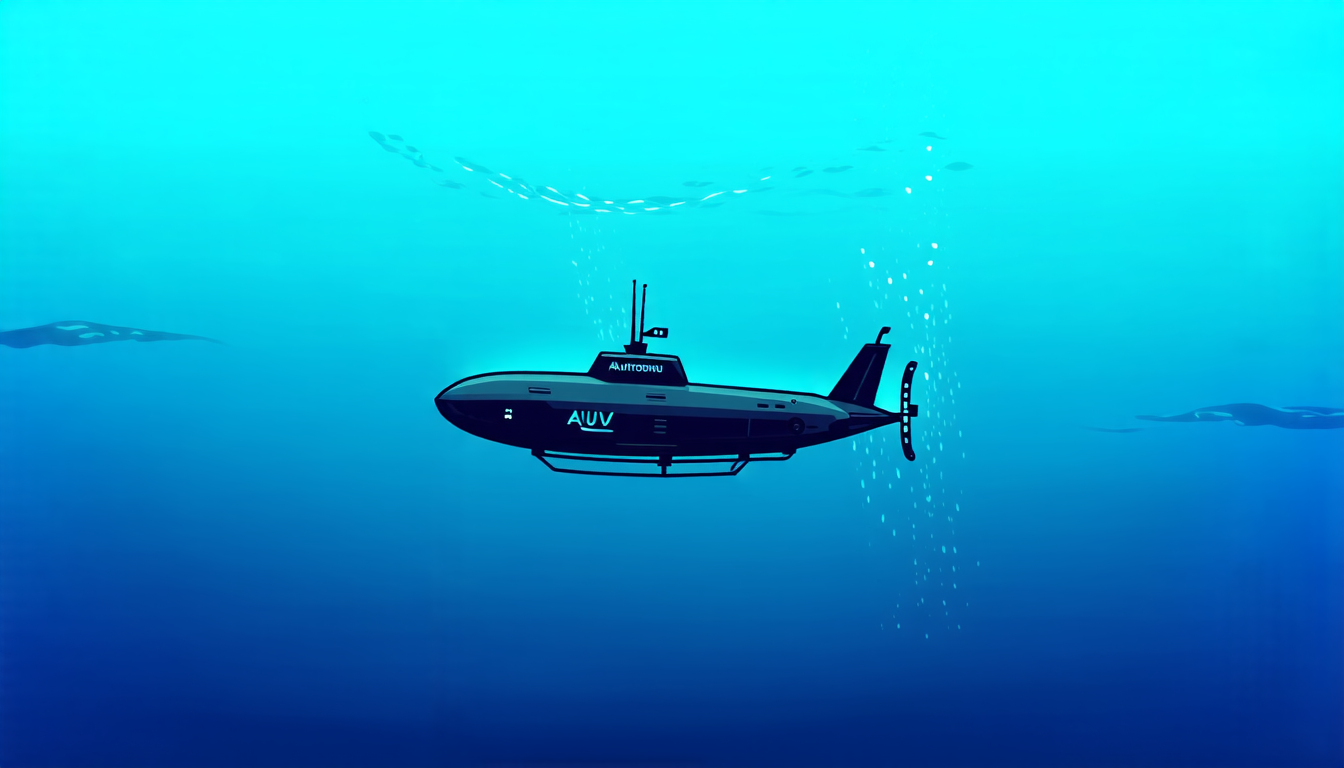
A team of researchers has made a significant breakthrough in underwater navigation, developing a new method that could revolutionize the way autonomous underwater vehicles (AUVs) explore the ocean. The approach uses a combination of machine learning and Gaussian processes to improve the accuracy of AUV velocity measurements.
Currently, AUVs rely on Doppler velocity logs (DVLs) to estimate their speed and direction. However, these devices can be prone to errors and biases, which can accumulate over time and lead to poor navigation performance. To address this issue, researchers have been exploring the use of machine learning algorithms to improve DVL measurements.
The new method, developed by a team at the University of Haifa, uses a type of machine learning called Gaussian process regression (GPR) to estimate AUV velocity. GPR is a powerful technique that can learn complex relationships between inputs and outputs, making it well-suited for this application.
In the study, the researchers used real-world data from an AUV mission to train a GPR model. The model was then tested on new, unseen data to evaluate its performance. Results showed that the GPR-based approach outperformed traditional methods, such as least squares estimation, in terms of accuracy and robustness.
One of the key advantages of this new method is its ability to adapt to changing conditions underwater. AUVs often encounter complex environments with varying water currents, temperature gradients, and other factors that can affect DVL measurements. The GPR model can learn to account for these changes and adjust its estimates accordingly, leading to more accurate navigation.
The researchers also developed a novel way to incorporate uncertainty into the estimation process. By providing an estimate of the uncertainty associated with each measurement, the GPR model can be used as a predictive filter to refine AUV velocity estimates. This approach could enable AUVs to make more informed decisions about their route and speed, reducing the risk of errors and improving overall performance.
The potential applications of this technology are vast. For example, AUVs could be used for search and rescue operations, environmental monitoring, or even underwater construction projects. With improved navigation accuracy, these vehicles could operate more efficiently and effectively, leading to a range of benefits for both the environment and human society.
While there is still much work to be done to fully integrate this technology into operational AUVs, the results are promising.
Cite this article: “Breakthrough in Underwater Navigation: Improving Autonomous Vehicle Accuracy with Machine Learning”, The Science Archive, 2025.
Autonomous Underwater Vehicles, Gaussian Processes, Machine Learning, Velocity Measurements, Doppler Velocity Logs, Navigation Performance, Uncertainty Estimation, Predictive Filtering, Search And Rescue, Environmental Monitoring.
Reference: Nadav Cohen, Itzik Klein, “Gaussian Process Regression for Improved Underwater Navigation” (2025).





