

Saturday 29 March 2025
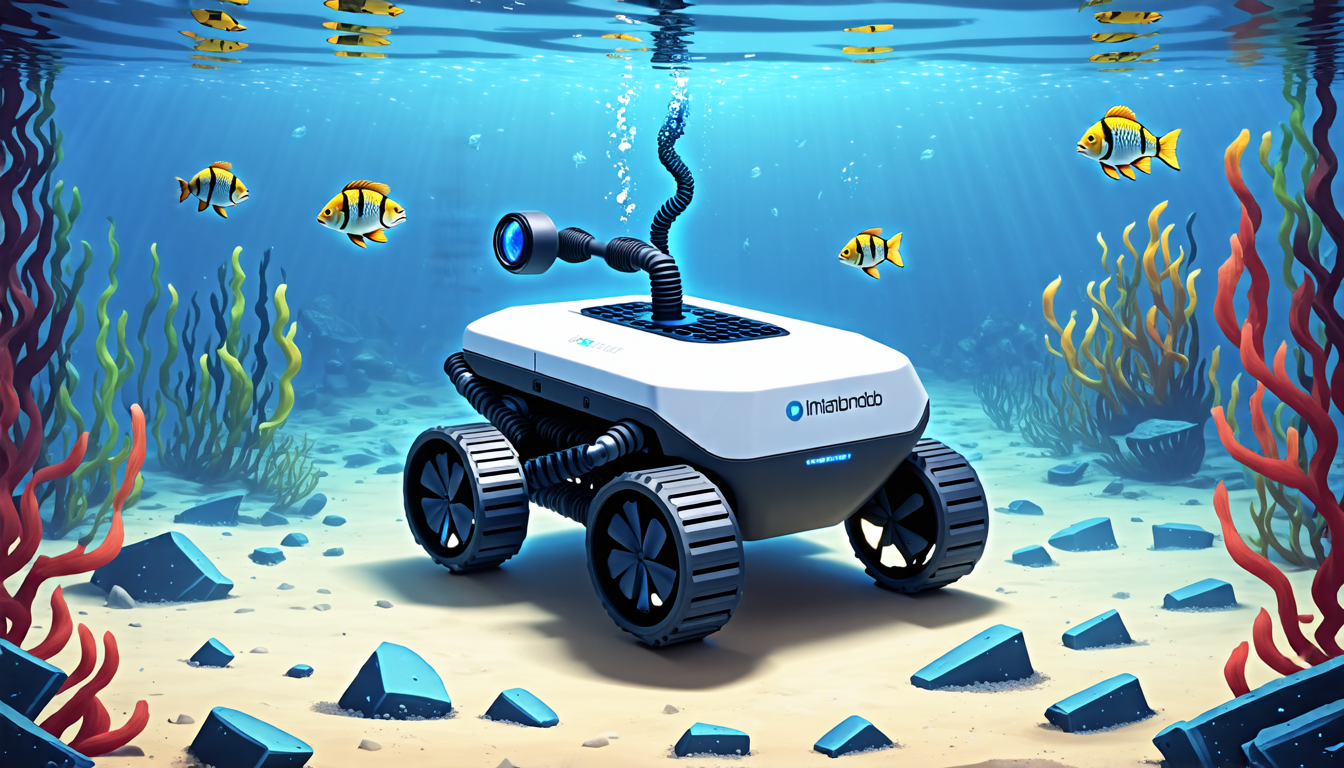
Scientists have made a significant breakthrough in developing underwater robots that can navigate and track objects with unprecedented precision. The team, led by researchers at Hamad Bin Khalifa University, has designed an innovative system that combines machine learning algorithms with specialized sensors to create a highly accurate tracking system.
The challenge of building effective underwater robots is complex, as the water environment poses many obstacles for machines to operate efficiently. Water pressure, lack of visibility, and strong currents can all hinder the performance of underwater vehicles. However, the new system has successfully overcome these challenges by developing advanced algorithms that can adapt to changing environmental conditions.
One key feature of the system is its ability to use machine learning to improve its tracking accuracy over time. The algorithm learns from its mistakes and adjusts its behavior accordingly, allowing it to refine its predictions and make more accurate decisions. This self-improving capability enables the robot to perform tasks that were previously impossible or required significant human intervention.
The team tested their system in a controlled environment, using a BlueROV2 underwater vehicle as the platform for their experiments. They designed a series of scenarios to simulate real-world challenges, such as navigating through debris-filled areas and tracking objects moving at different speeds. The results showed that the system was able to accurately track objects even in situations where visibility was limited or currents were strong.
The implications of this technology are significant. Underwater robots could be used for a wide range of applications, from search and rescue missions to environmental monitoring and maintenance tasks. They could also play a crucial role in future offshore energy production and extraction operations, helping to ensure the safety and efficiency of these activities.
One potential use case is in underwater construction projects, where accurate tracking would enable robots to work more efficiently and safely. For example, a robot could be tasked with laying pipes or cables for an offshore wind farm, while another robot tracks its progress and adjusts its path as needed.
The team’s achievement highlights the potential of machine learning to revolutionize underwater robotics. By developing systems that can adapt to changing conditions and learn from their experiences, researchers can create more reliable and effective robots that can operate in a wide range of environments. As the technology continues to evolve, it will be exciting to see how these advancements shape the future of underwater exploration and operations.
Cite this article: “Breakthrough in Underwater Robotics: Accurate Tracking System Developed”, The Science Archive, 2025.
Underwater Robots, Machine Learning, Tracking System, Navigation, Sensors, Water Environment, Obstacle Detection, Precision, Underwater Exploration, Offshore Energy Production





