

Sunday 30 March 2025
A new study has shed light on the dynamics of opinion formation and segregation in complex networks, offering insights into how our beliefs and attitudes are shaped by the social interactions around us.
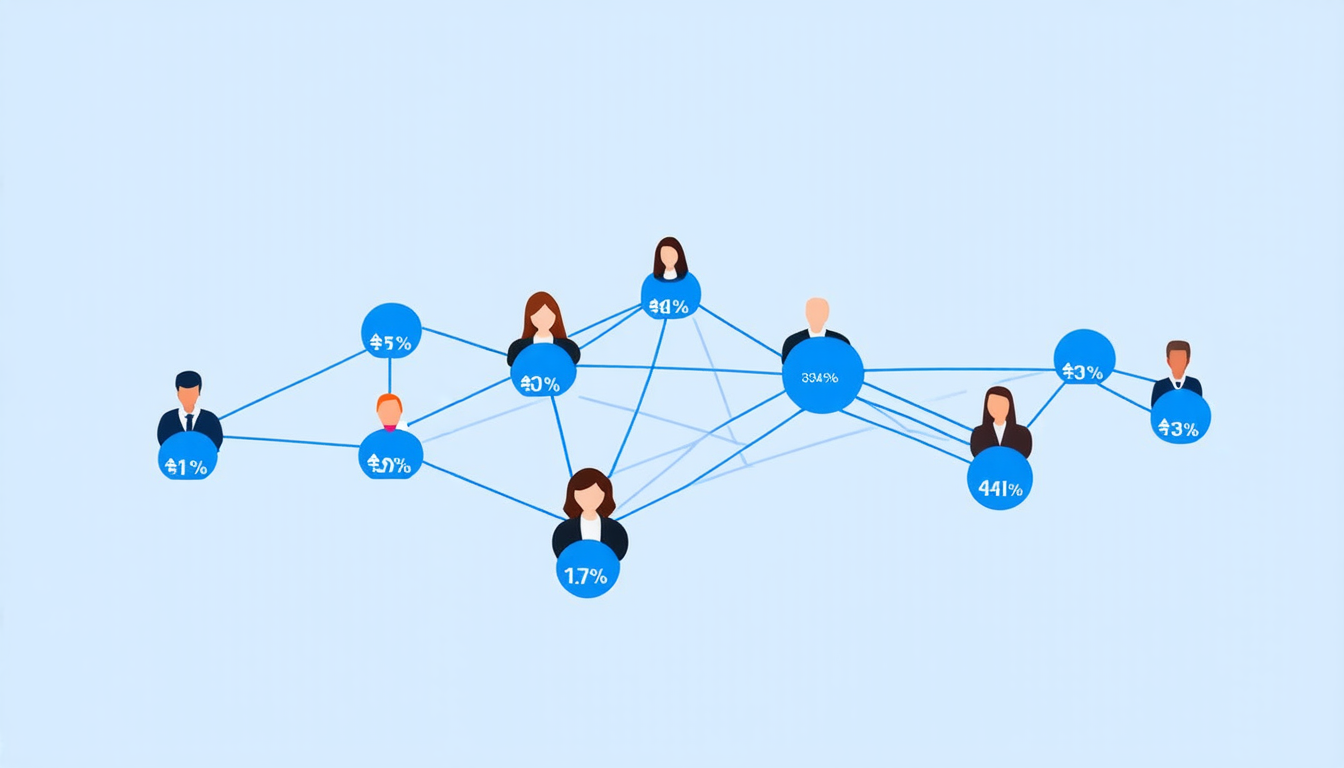
The researchers explored a variant of the voter model, a well-established framework for studying opinion dynamics. In this version, individuals with different opinions only agree to adopt each other’s views with a certain probability, while the remaining edges in the network are removed. This creates a dynamic where opinions can either coexist or converge into separate clusters.
The team discovered that, surprisingly, even when the probability of agreement is low, segregation and consensus can still occur. In fact, they found that if this probability decreases slowly enough as the population size grows, it’s possible for the network to reach a state where only one opinion remains, while the other opinions are eliminated.
This finding has important implications for our understanding of how social networks shape our beliefs and behaviors. It suggests that even in cases where people are not heavily influenced by those around them, opinion formation can still be driven by the underlying structure of the network.
The researchers also uncovered a key threshold phenomenon, where below a certain level of agreement probability, the dynamics tend towards consensus, while above this threshold, segregation occurs. This has significant implications for policy makers and social media platforms seeking to influence public opinion or promote diversity of thought.
One potential application of these findings is in the development of more effective strategies for promoting tolerance and understanding across different groups. By identifying the critical thresholds that govern opinion formation, policymakers may be able to design interventions that encourage greater agreement and cooperation between individuals with differing views.
The study also has implications for our understanding of the role of social networks in shaping public opinion. It highlights the importance of considering not just individual-level factors, such as personal beliefs and biases, but also network-level structures, such as the pattern of connections between people.
In addition to its theoretical significance, this research may have practical applications in fields such as marketing, politics, and sociology. By better understanding how opinions are formed and spread through social networks, businesses and organizations can develop more effective strategies for promoting their message or influencing public opinion.
Overall, this study offers a fascinating glimpse into the complex dynamics of opinion formation and segregation in social networks. Its findings have significant implications for our understanding of human behavior and communication, and may ultimately inform new approaches to promoting tolerance, cooperation, and understanding across different groups.
Cite this article: “Opinion Dynamics in Social Networks: A Study on Segregation and Consensus”, The Science Archive, 2025.
Opinion Dynamics, Social Networks, Opinion Formation, Segregation, Voter Model, Probability Of Agreement, Network Structure, Public Opinion, Tolerance, Diversity Of Thought
Reference: Raphael Eichhorn, Felix Hermann, Marco Seiler, “The Offended Voter Model” (2025).





