

Sunday 30 March 2025
The quest for precise sensor data has long been a challenge in industrial settings, where even slight variations can have significant consequences on production and efficiency. Researchers have now developed an innovative approach to address this issue by incorporating AutoML techniques into machine learning models to compensate for sensor drift.
Sensor drift is a common problem that occurs when sensors, often used to monitor environmental factors or gas concentrations, gradually change their response over time due to degradation or other external factors. This can lead to inaccurate readings, compromising the reliability of data-driven decisions made by industrial systems.
To tackle this issue, scientists have created an AutoML-based approach that combines feature and model selection, hyperparameter optimization, early stopping, and meta-learning to prevent overfitting. By integrating these techniques into a neural network architecture, the system can learn to adapt to evolving levels of drift severity and complex dynamics in sensor measurements.
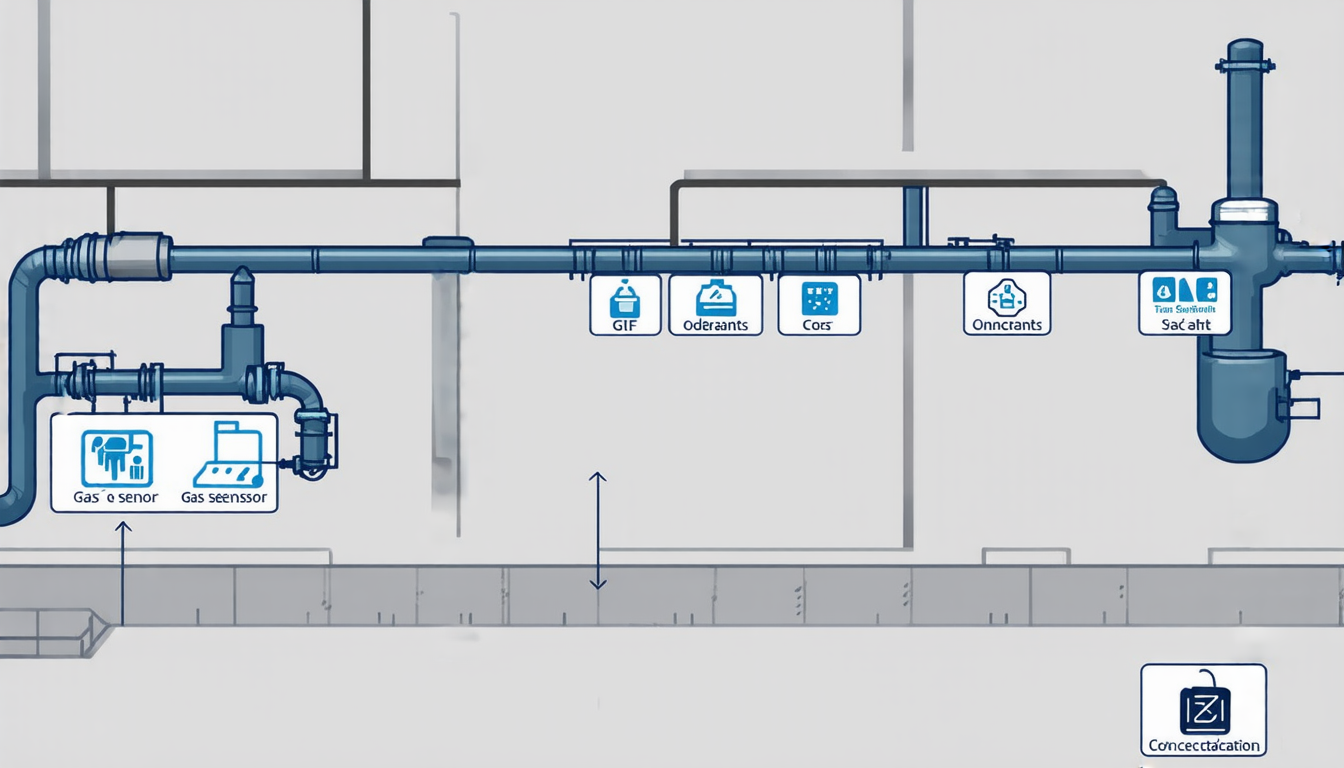
The researchers tested their approach using a dataset collected from gas sensors, which were exposed to various odorants at different concentrations. The data was then divided into batches, each containing samples from multiple months, allowing the team to analyze the effects of long-term drift on sensor performance.
Results showed that the AutoML-based model significantly outperformed traditional machine learning models in predicting sensor readings under varying conditions. By incorporating adaptive features and hyperparameter tuning, the system demonstrated improved robustness against sensor drift, enabling it to accurately predict gas concentrations even as sensors underwent changes over time.
The implications of this research are far-reaching, as accurate data is crucial for maintaining efficient production processes in industries such as manufacturing, oil refining, or environmental monitoring. By addressing the issue of sensor drift, companies can rely on more precise data-driven decisions, reducing errors and improving overall performance.
This study also highlights the potential benefits of integrating AutoML techniques into machine learning models, enabling them to adapt to changing conditions and improve their accuracy over time. As industries continue to rely on data-driven insights for decision-making, this research provides a promising solution for ensuring reliable sensor data in a wide range of applications.
Cite this article: “Adaptive Sensor Data Processing with AutoML Techniques”, The Science Archive, 2025.
Machine Learning, Automl, Sensor Drift, Industrial Settings, Sensor Readings, Gas Sensors, Odorants, Concentration, Data-Driven Decisions, Precision Data.





