

Sunday 30 March 2025
A team of scientists has developed a new method for analyzing data from small-angle neutron scattering (SANS) experiments, which could revolutionize our understanding of complex materials.
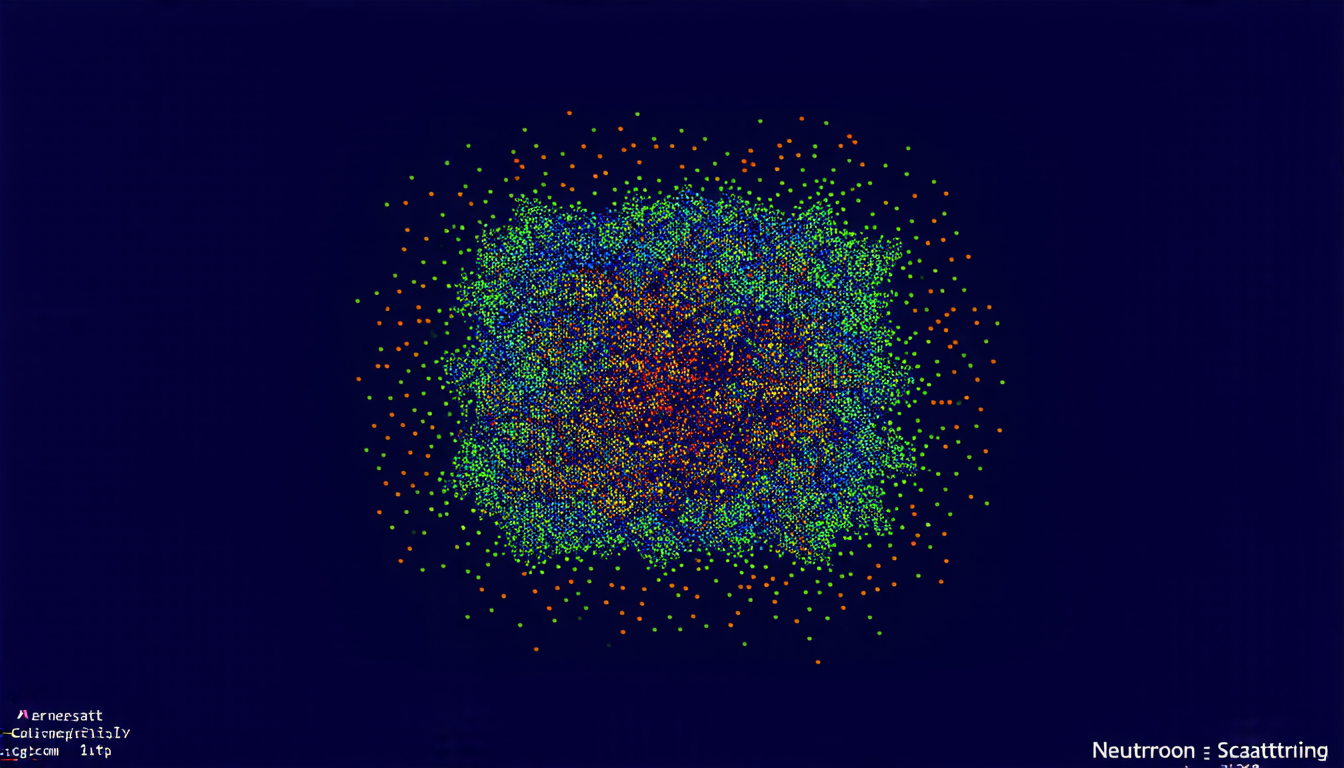
SANS is a technique used to study the structure and behavior of materials at the nanoscale. It involves bombarding a sample with neutrons and measuring how they scatter off the material’s atoms or molecules. The resulting data can provide valuable insights into the material’s properties, such as its shape, size, and arrangement.
However, SANS experiments often produce noisy and incomplete data due to limitations in neutron flux and detector sensitivity. This makes it challenging for researchers to extract meaningful information from the results.
To address this issue, the scientists developed a Bayesian statistical framework based on Gaussian process regression (GPR). GPR is a machine learning technique that can model complex relationships between variables and make predictions with uncertainty estimates.
The team applied their method to a range of SANS experiments, including measurements of polymers, surfactants, and microemulsions. They found that their approach could significantly improve the quality of the data by reducing noise and artifacts.
One of the key advantages of the new method is its ability to handle incomplete data sets, which are common in SANS experiments. The GPR algorithm can fill in gaps in the data using statistical inference, allowing researchers to analyze samples with reduced neutron flux or detector sensitivity.
The team also demonstrated that their approach could be used to study complex systems, such as micellar solutions and self-assembled structures. These systems often exhibit intricate patterns and behaviors that are difficult to understand using traditional analytical techniques.
The new method has far-reaching implications for materials science and beyond. It could enable researchers to investigate the properties of complex materials with unprecedented precision, potentially leading to breakthroughs in fields such as energy storage, catalysis, and biomedicine.
In addition, the GPR algorithm can be adapted for use in other experimental techniques, such as X-ray scattering and optical microscopy. This could broaden its impact across multiple disciplines, from physics and chemistry to biology and medicine.
Overall, the development of this new method is a significant step forward in the analysis of SANS data. It has the potential to revolutionize our understanding of complex materials and open up new avenues for research in a range of fields.
Cite this article: “Revolutionizing Materials Science: A New Bayesian Statistical Framework for Analyzing SANS Data”, The Science Archive, 2025.
Small-Angle Neutron Scattering, Bayesian Statistics, Gaussian Process Regression, Machine Learning, Data Analysis, Materials Science, Nanoscale, Complex Systems, Uncertainty Estimation, Noise Reduction





