

Sunday 30 March 2025
The quest for realistic 3D reconstruction and novel view synthesis has been a longstanding challenge in computer vision and graphics. Researchers have long sought to develop methods that can accurately capture and render complex scenes, but the task has proven daunting due to the complexity of real-world environments.
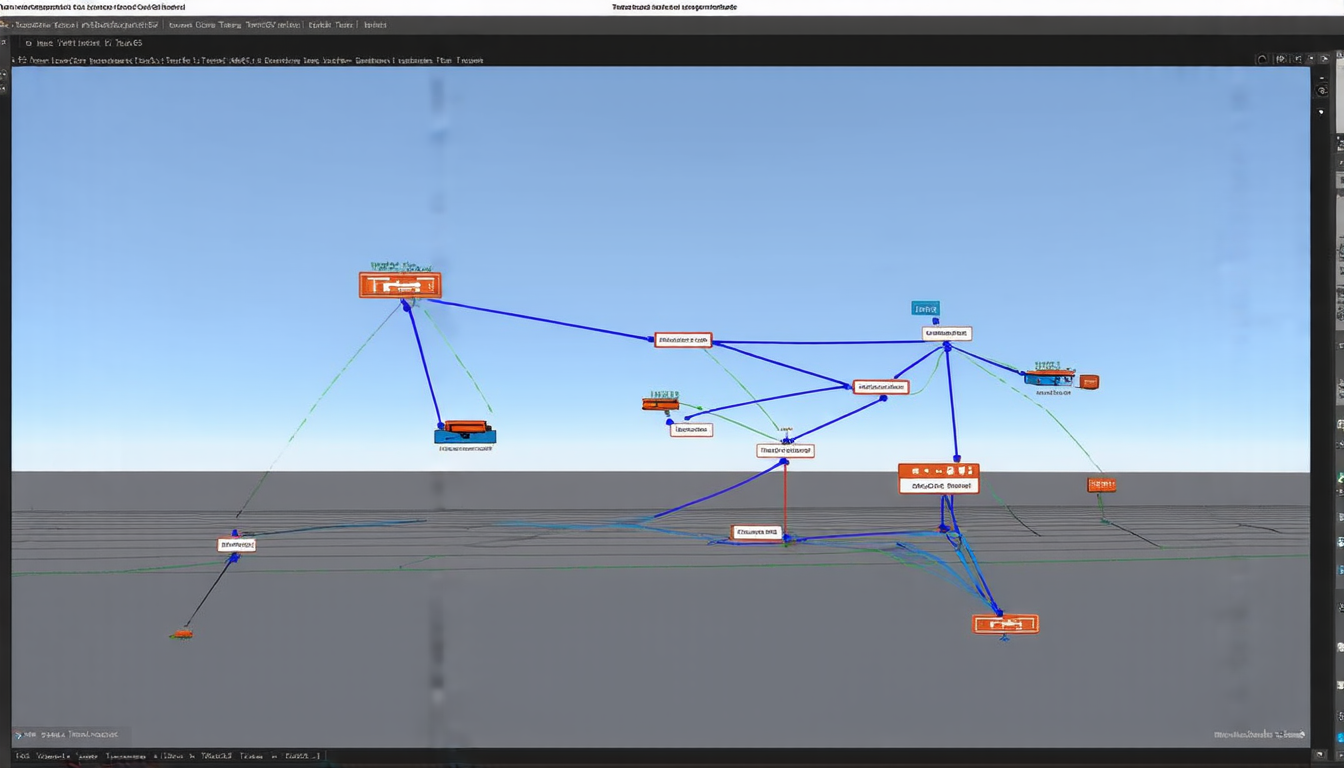
Recently, a team of researchers has made significant strides in this area by developing a novel approach that leverages global track information to constrain multi-view geometry. The method, known as TrackGS, uses feature tracks to globally constrain camera poses and 3D Gaussians, allowing for more accurate estimation of camera parameters and improved rendering quality.
The key innovation behind TrackGS is its ability to incorporate feature tracks into the optimization process, which enables the algorithm to better capture complex scene structures and relationships. By leveraging these track points, the method can effectively disentangle ambiguous correspondences and improve the accuracy of camera pose estimation.
To evaluate the effectiveness of TrackGS, researchers tested the approach on a range of datasets, including Tanks and Temples, CO3D-V2, and Synthetic datasets. The results were impressive, with TrackGS outperforming other state-of-the-art methods in terms of novel view synthesis quality and camera parameter accuracy.
One of the most striking aspects of TrackGS is its ability to handle complex scene structures and camera movements. In scenes where multiple objects move independently or interact with each other, traditional methods often struggle to capture accurate correspondences and camera poses. However, TrackGS’s use of feature tracks enables it to effectively disentangle these relationships, resulting in more accurate and realistic renderings.
The potential applications of TrackGS are vast and varied. In fields such as computer graphics, virtual reality, and augmented reality, high-quality novel view synthesis is essential for creating immersive and realistic experiences. By providing a more accurate and robust method for estimating camera parameters and rendering 3D scenes, TrackGS has the potential to revolutionize these industries.
Furthermore, the approach’s ability to handle complex scene structures and camera movements makes it particularly well-suited for applications in robotics, autonomous vehicles, and surveillance systems. In these fields, accurate estimation of camera poses and tracking of objects is critical for navigation, obstacle avoidance, and object detection.
Overall, TrackGS represents a significant advance in the field of computer vision and graphics, offering a more robust and accurate method for novel view synthesis and 3D reconstruction.
Cite this article: “Novel Approach to Realistic 3D Reconstruction and Novel View Synthesis”, The Science Archive, 2025.
Computer Vision, Graphics, Trackgs, Feature Tracks, Camera Poses, Novel View Synthesis, 3D Reconstruction, Multi-View Geometry, Global Track Information, Robotics.





