

Monday 31 March 2025
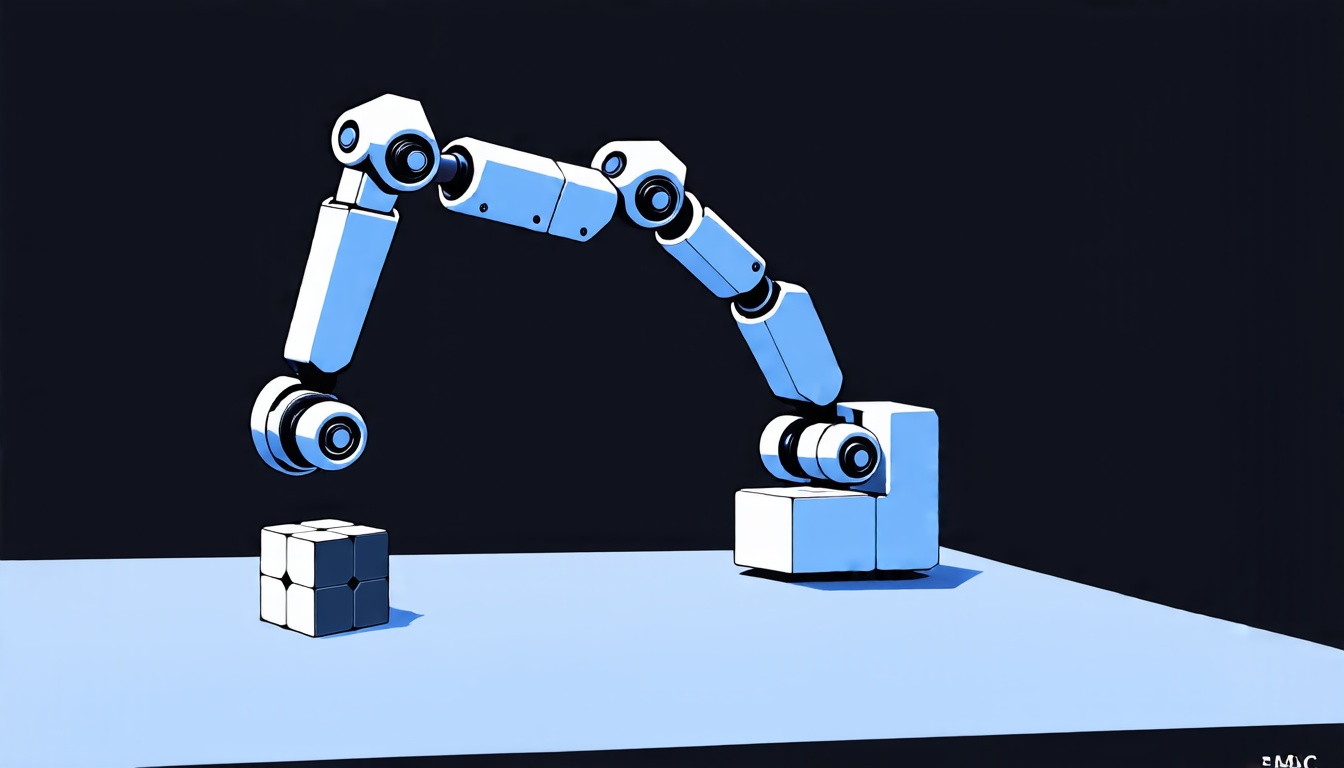
Researchers have made significant progress in developing a new approach to generating high-quality data for robotic manipulation tasks. This breakthrough has the potential to revolutionize the field of robotics, enabling robots to perform complex tasks with greater ease and precision.
The new method, known as physics-driven data generation, uses a combination of simulation, human demonstrations, and optimization-based planning to create realistic datasets for robotic manipulation tasks. By leveraging these different sources of data, researchers can generate high-quality training data that is both diverse and physically consistent.
One of the key challenges in developing robots capable of complex manipulation tasks is the lack of available data. Traditional approaches rely on large-scale datasets collected through human demonstrations or manual labeling, which can be time-consuming and costly. The new method addresses this challenge by using simulation to generate a large amount of data quickly and efficiently.
The researchers used Drake, an open-source software framework for modeling and simulating robotic systems, to simulate the manipulation tasks. They then used optimization-based planning to refine the simulations and create realistic demonstrations that could be used as training data.
To further enhance the realism of the data, the researchers incorporated human demonstrations into the process. By collecting a small number of high-quality demonstrations from humans, they were able to adapt the simulation-based data to different robotic embodiments and physical parameters.
The resulting datasets are highly diverse and physically consistent, making them ideal for training robots capable of complex manipulation tasks. The researchers demonstrated the effectiveness of their approach by training diffusion policies using the generated data and deploying them on hardware for challenging long-horizon contact-rich manipulation tasks.
The potential applications of this technology are vast, ranging from industrial automation to healthcare robotics. By enabling robots to perform complex tasks with greater ease and precision, this breakthrough has the potential to transform industries and improve people’s lives.
In addition to its practical applications, this research also highlights the importance of interdisciplinary collaboration in advancing the field of robotics. The combination of expertise from computer science, robotics, and human-computer interaction was essential to developing this innovative approach.
The researchers’ work demonstrates that by leveraging simulation, human demonstrations, and optimization-based planning, they can create high-quality training data that is both diverse and physically consistent. This breakthrough has the potential to revolutionize the field of robotics, enabling robots to perform complex tasks with greater ease and precision.
Cite this article: “Physics-Driven Data Generation Revolutionizes Robotics”, The Science Archive, 2025.
Robotics, Data Generation, Physics-Driven, Simulation, Human Demonstrations, Optimization-Based Planning, Manipulation Tasks, Diffusion Policies, Contact-Rich, Interdisciplinary Collaboration





