

Monday 31 March 2025
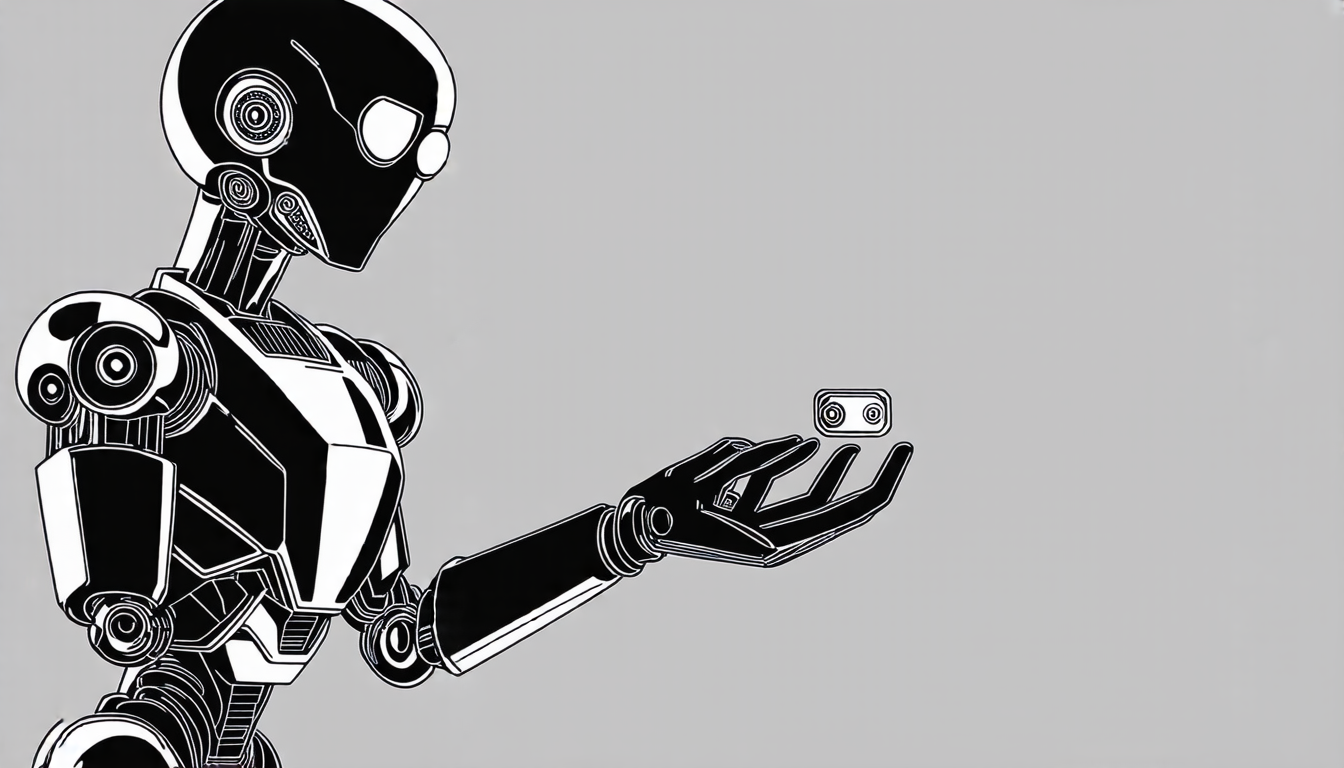
A team of researchers has developed a sophisticated system that enables humanoid robots to perform complex tasks, such as grasping and manipulating objects, with unprecedented dexterity and precision. This achievement marks a significant milestone in the field of robotics, as it paves the way for the development of robots that can work alongside humans in various settings.
The system uses a combination of machine learning algorithms and physical randomization to train the robot’s policies. Physical randomization involves simulating real-world scenarios by introducing uncertainties such as friction, mass, and shape into the environment. This approach allows the robot to learn how to adapt to different situations and make decisions based on its observations.
The researchers used a humanoid robot with two multi-fingered hands to test their system. The robot was trained to perform various tasks, including grasping and lifting objects, as well as handover scenarios where it had to transfer an object from one hand to the other. The results were impressive, with the robot achieving high success rates in all of these tasks.
One of the key challenges faced by the researchers was how to design a reward function that would encourage the robot to perform the desired actions. They developed a novel approach that combines different reward terms to create a comprehensive and generalizable reward function. This allowed the robot to learn from its mistakes and adapt to new situations.
The system also incorporates domain randomization, which involves introducing uncertainties into the environment to simulate real-world scenarios. This approach allows the robot to learn how to generalize its knowledge to new situations and make decisions based on its observations.
The researchers believe that their system has significant potential for real-world applications. For example, it could be used in manufacturing settings where robots are needed to perform complex tasks, such as assembly and inspection. It could also be used in healthcare settings where robots are needed to assist with patient care and rehabilitation.
In the future, the researchers plan to continue improving their system by incorporating more advanced machine learning algorithms and physical randomization techniques. They also hope to expand their research to include other types of robots and tasks, such as those that require more complex manipulation or interaction with humans.
Overall, this achievement represents a significant step forward in the development of humanoid robots capable of performing complex tasks with dexterity and precision. The potential applications for this technology are vast, and it is likely to have a major impact on various industries and fields in the years to come.
Cite this article: “Humanoid Robots Achieve New Level of Dexterity and Precision”, The Science Archive, 2025.
Humanoid Robots, Robotics, Machine Learning, Physical Randomization, Grasping, Manipulation, Object Recognition, Dexterity, Precision, Artificial Intelligence





