

Monday 31 March 2025
A team of researchers has made a significant breakthrough in the field of artificial intelligence, developing a new method for identifying and mitigating uncertainty in medical imaging. This technology has the potential to revolutionize the way doctors diagnose and treat diseases.
The problem is that current AI systems are only as good as the data they’re trained on, and when it comes to medical images, this can be a major issue. Medical images can be noisy, distorted, or even completely inaccurate, which can lead to incorrect diagnoses and treatments. To address this issue, the researchers developed an algorithm that can identify areas of uncertainty in medical images.
The algorithm works by first training a neural network on a large dataset of medical images. The network is then used to analyze new images and identify any areas where it’s not confident in its diagnosis. This information can be used to flag potential errors or inconsistencies, allowing doctors to review the image more closely and make a more accurate diagnosis.
But what makes this algorithm truly innovative is its ability to disentangle two types of uncertainty: aleatoric and epistemic. Aleatoric uncertainty refers to random variations in data that are inherent to the imaging process itself, while epistemic uncertainty refers to the limitations of our current understanding of medical imaging.
The researchers used a clever trick to distinguish between these two types of uncertainty. They trained multiple neural networks on the same dataset and then compared their outputs to identify areas where they disagreed. This allowed them to pinpoint regions of high aleatoric uncertainty, which can be caused by random variations in the imaging process.
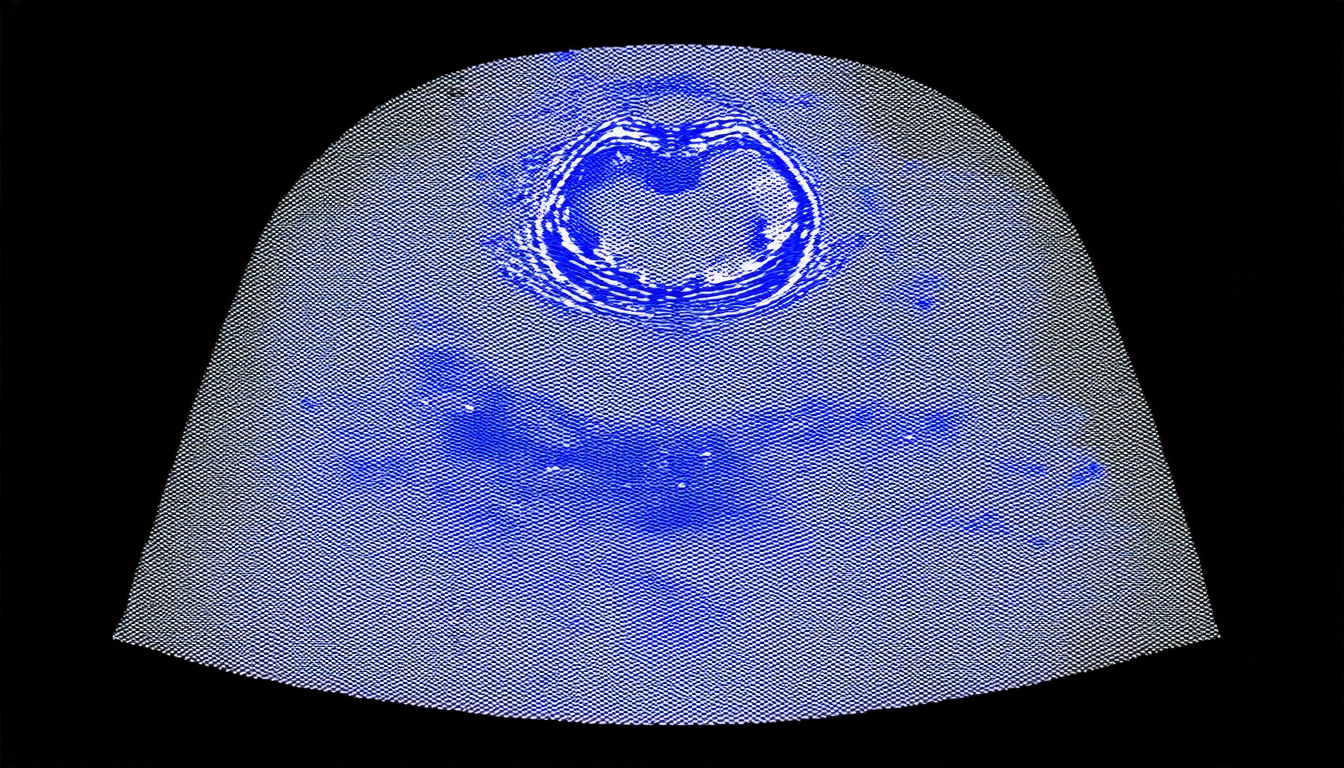
The algorithm was tested on a large dataset of breast tissue images and showed significant improvements in accuracy over traditional methods. The researchers were also able to reduce the number of false positives and false negatives, making it more reliable for diagnostic purposes.
This technology has far-reaching implications for medical imaging, allowing doctors to make more accurate diagnoses and potentially reducing the risk of misdiagnosis. It could also be used to improve the quality of medical images, which is critical for diagnosing and treating diseases.
The researchers are now working on refining the algorithm and exploring its potential applications in other fields, such as robotics and autonomous vehicles. With its ability to identify and mitigate uncertainty, this technology has the potential to make a significant impact in many areas of science and medicine.
Cite this article: “AI Breakthrough in Medical Imaging Uncovers Hidden Uncertainty”, The Science Archive, 2025.
Artificial Intelligence, Medical Imaging, Uncertainty, Diagnosis, Treatment, Neural Network, Algorithm, Machine Learning, Epistemic Uncertainty, Aleatoric Uncertainty





