

Monday 31 March 2025
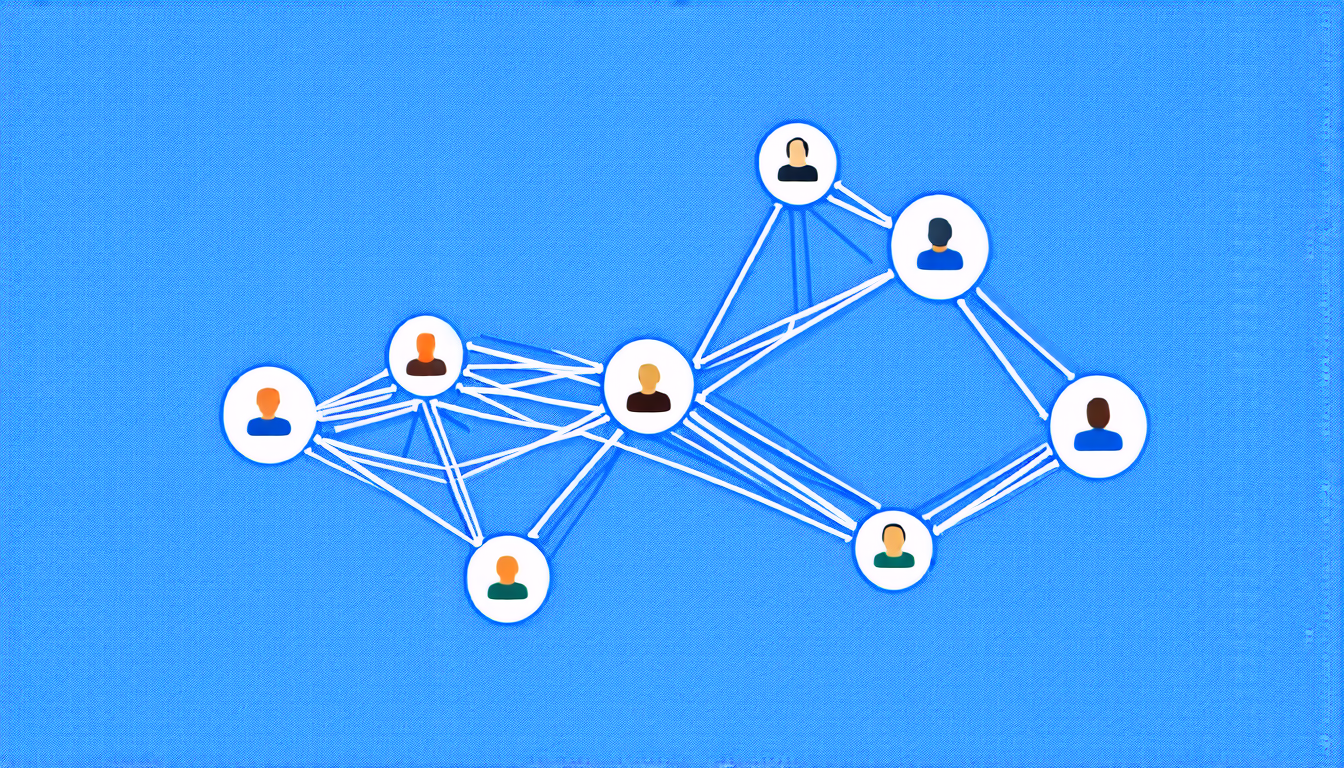
Layered graph drawing is a fundamental problem in computer science, where nodes and edges are arranged on multiple layers to minimize crossings between edges. In recent years, researchers have been working on optimizing this process by restricting the number of gaps between nodes on adjacent layers. A new study has shed light on how to achieve fewer gaps while maintaining readability.
The authors propose a novel approach that combines two existing techniques: one-sided crossing minimization and integer linear programming. One-sided crossing minimization is a method for reducing edge crossings in layered graphs by permuting the nodes on each layer. Integer linear programming, on the other hand, is a technique used to optimize problems with constraints.
The authors’ approach involves first assigning nodes to layers such that nodes connected by an edge are on different layers. Then, they use one-sided crossing minimization to reduce crossings between edges. Finally, they apply integer linear programming to minimize the number of gaps while ensuring readability.
To test their approach, the authors generated random bipartite graphs with varying numbers of nodes and edges. They then compared their method with existing algorithms for one-sided crossing minimization and integer linear programming. The results showed that their approach significantly reduced the number of crossings while maintaining readability.
One of the key insights from this study is the importance of balancing the number of gaps between layers. While reducing the number of gaps can lead to fewer crossings, it’s also important not to create too many gaps, which can make the graph difficult to read. The authors’ approach takes into account both the number of gaps and the readability of the graph.
The study’s findings have implications for a wide range of applications, from social network analysis to biological network visualization. By optimizing layered graph drawing, researchers can create more readable and intuitive visualizations that help users understand complex data.
In addition to its practical applications, this study also highlights the importance of interdisciplinary collaboration in computer science. The authors drew on insights from both theoretical computer science and operations research to develop their approach. This kind of collaboration is essential for tackling complex problems that require a deep understanding of multiple fields.
Overall, this study demonstrates the power of combining different techniques to solve complex problems in computer science. By optimizing layered graph drawing, researchers can create more effective visualizations that help users understand complex data.
Cite this article: “Optimizing Layered Graph Drawing through Novel Combination of Techniques”, The Science Archive, 2025.
Layered Graph Drawing, Node Placement, Edge Crossing Minimization, Integer Linear Programming, One-Sided Crossing Minimization, Bipartite Graphs, Graph Visualization, Readability, Optimization, Computer Science
Reference: Alexander Dobler, Jakob Roithinger, “Layered Graph Drawing with Few Gaps and Few Crossings” (2025).





