

Friday 04 April 2025
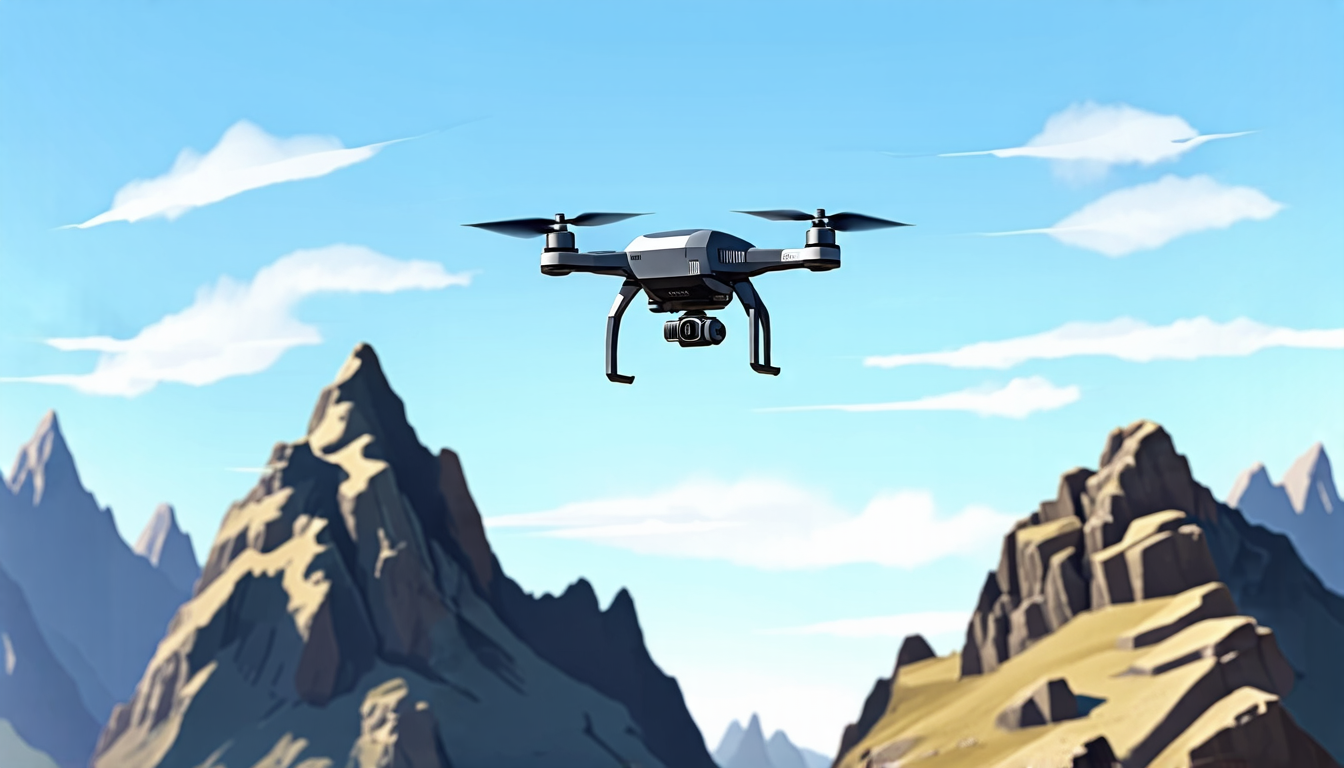
As researchers continue to push the boundaries of what is possible with unmanned aerial vehicles (UAVs), a new study has shed light on the importance of planning safe and efficient routes for these flying machines.
One of the biggest challenges facing UAV operators is navigating through windy environments. Wind can cause turbulence, making it difficult for the vehicle to stay on course, and even posing a risk to the safety of those on board. To combat this issue, researchers have developed a new approach that takes into account the uncertain nature of wind conditions.
The study, published in a recent edition of IEEE Robotics and Automation Letters, presents a novel method for planning safe and efficient routes for UAVs in windy environments. The approach involves identifying the minimum-extent wind-invariant set, which is essentially the smallest region within which the vehicle can safely operate while taking into account the uncertainty of the wind conditions.
To achieve this, researchers used a combination of mathematical modeling and simulation to analyze the behavior of UAVs in different wind conditions. They found that by using a switching strategy to select the most appropriate path type, they could minimize the extent of the wind-invariant set and ensure safe operation of the vehicle.
The study demonstrates the effectiveness of this approach through simulations in three different environments: Sargans, Dischma Valley, and Gotthard Pass. In each environment, researchers found that their new method resulted in significantly more reachable space for the UAVs compared to traditional approaches.
One of the key benefits of this approach is its ability to adapt to changing wind conditions. By continuously monitoring the wind and adjusting the route accordingly, the vehicle can ensure safe operation even in unpredictable environments.
The implications of this study are significant. As UAVs become increasingly integrated into our daily lives, it’s essential that we develop more sophisticated approaches to planning their routes. This new method has the potential to revolutionize the way we design and operate these vehicles, enabling them to navigate complex environments with greater precision and safety.
In addition to its practical applications, this study also highlights the importance of interdisciplinary research. By combining insights from fields such as mathematics, computer science, and engineering, researchers can develop innovative solutions that have far-reaching implications for a wide range of industries.
As we continue to push the boundaries of what is possible with UAVs, it’s clear that advances in route planning will play a critical role in ensuring their safe and efficient operation. This new method represents a significant step forward in this area, and its potential applications are vast and varied.
Cite this article: “Autonomous Aerial Navigation in Turbulent Winds: A Novel Approach to Safe and Efficient Flight Planning”, The Science Archive, 2025.
Uavs, Route Planning, Wind Conditions, Turbulence, Navigation, Safety, Efficiency, Mathematical Modeling, Simulation, Switching Strategy





