

Friday 04 April 2025
Scientists have made a significant breakthrough in developing a new framework for robotic systems that can adapt and learn from their environment. The Closed-Loop Embodied Agent (CLEA) is designed to enable robots to perform complex tasks, such as searching for objects or manipulating items, in real-world environments.
Traditionally, robots rely on pre-programmed instructions to complete tasks, which can lead to limited flexibility and accuracy. CLEA changes this approach by integrating a large language model (LLM) with a visual language model (VLM). The LLM is responsible for generating plans for the robot’s actions, while the VLM provides real-time feedback on the environment and detects potential errors.
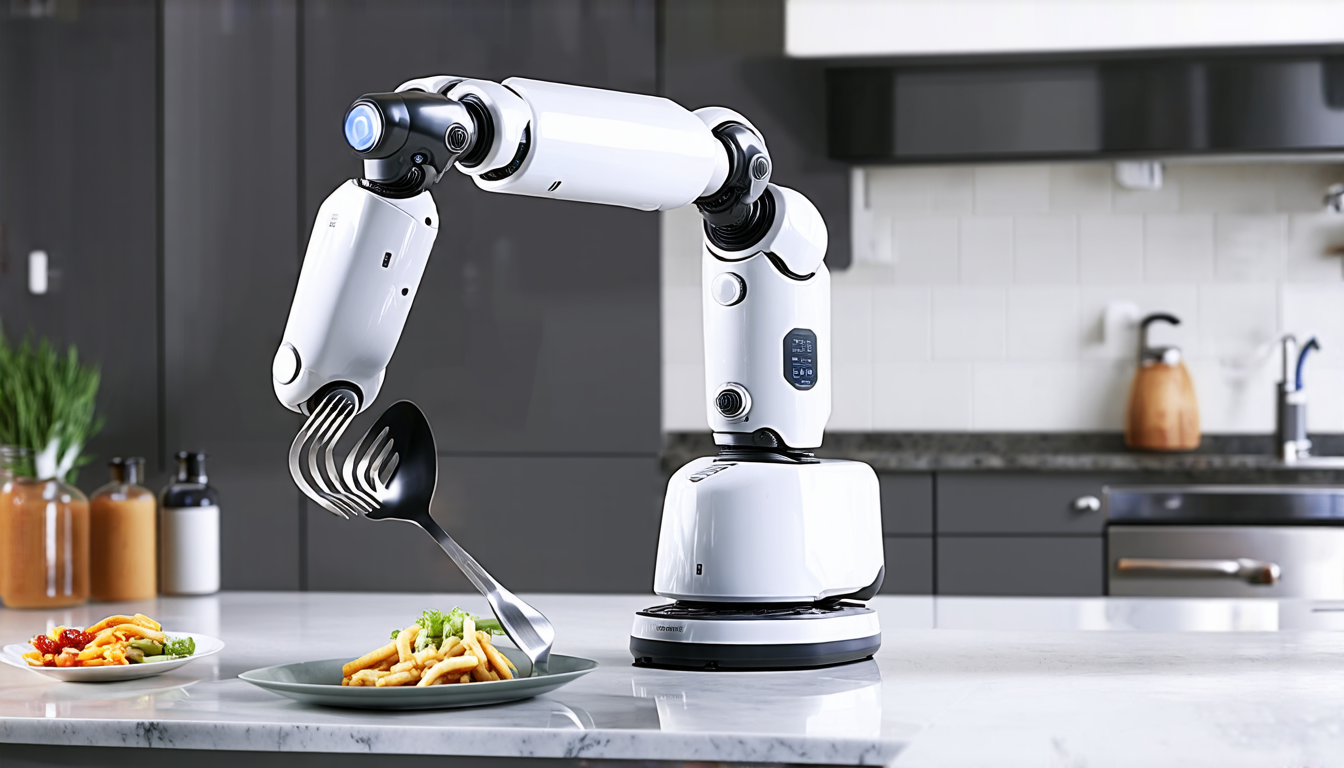
In experiments, CLEA was tested in a kitchen setting where robots were tasked with searching for objects, manipulating items, and integrating multiple tasks. The results showed that CLEA outperformed traditional approaches by completing tasks more efficiently and accurately. For example, when searching for an object, the robot would dynamically adjust its search plan based on new information from the environment.
One of the key advantages of CLEA is its ability to recover from errors and adapt to unexpected situations. If a robot encounters an obstacle or makes a mistake, the VLM detects the error and sends a signal to the LLM to re-plan the action sequence. This allows the robot to learn from its mistakes and adjust its behavior accordingly.
The potential applications of CLEA are vast. It could be used in industries such as manufacturing, logistics, and healthcare, where robots need to perform complex tasks and adapt to changing environments. Additionally, CLEA could enable robots to work alongside humans more effectively, allowing them to assist with tasks that require human judgment and creativity.
The development of CLEA highlights the importance of integrating multiple AI technologies to create more intelligent and adaptable systems. By combining LLMs and VLMs, researchers have created a framework that can learn from its environment and adapt to new situations, making it a significant step forward in robotics research.
In practical terms, CLEA could be used to improve the efficiency and accuracy of robotic systems in various industries. For example, in manufacturing, robots could use CLEA to assemble complex products more quickly and accurately. In healthcare, robots could assist surgeons with delicate procedures or provide care for patients with mobility issues.
Overall, the development of CLEA represents a significant advancement in robotics research, enabling robots to adapt and learn from their environment in real-time.
Cite this article: “Unlocking Adaptive Task Execution in Embodied Systems with Closed-Loop Language Models”, The Science Archive, 2025.
Robotics, Closed-Loop Embodied Agent, Language Models, Visual Language Model, Real-Time Feedback, Adaptability, Error Recovery, Autonomous Systems, Ai Integration, Robotics Research





