

Friday 04 April 2025
Scientists have made a significant breakthrough in developing advanced radon measurement systems, which will be crucial for future rare event detection experiments. Radon is a type of radioactive gas that can interfere with these delicate experiments, making it essential to develop methods to detect and control its presence.
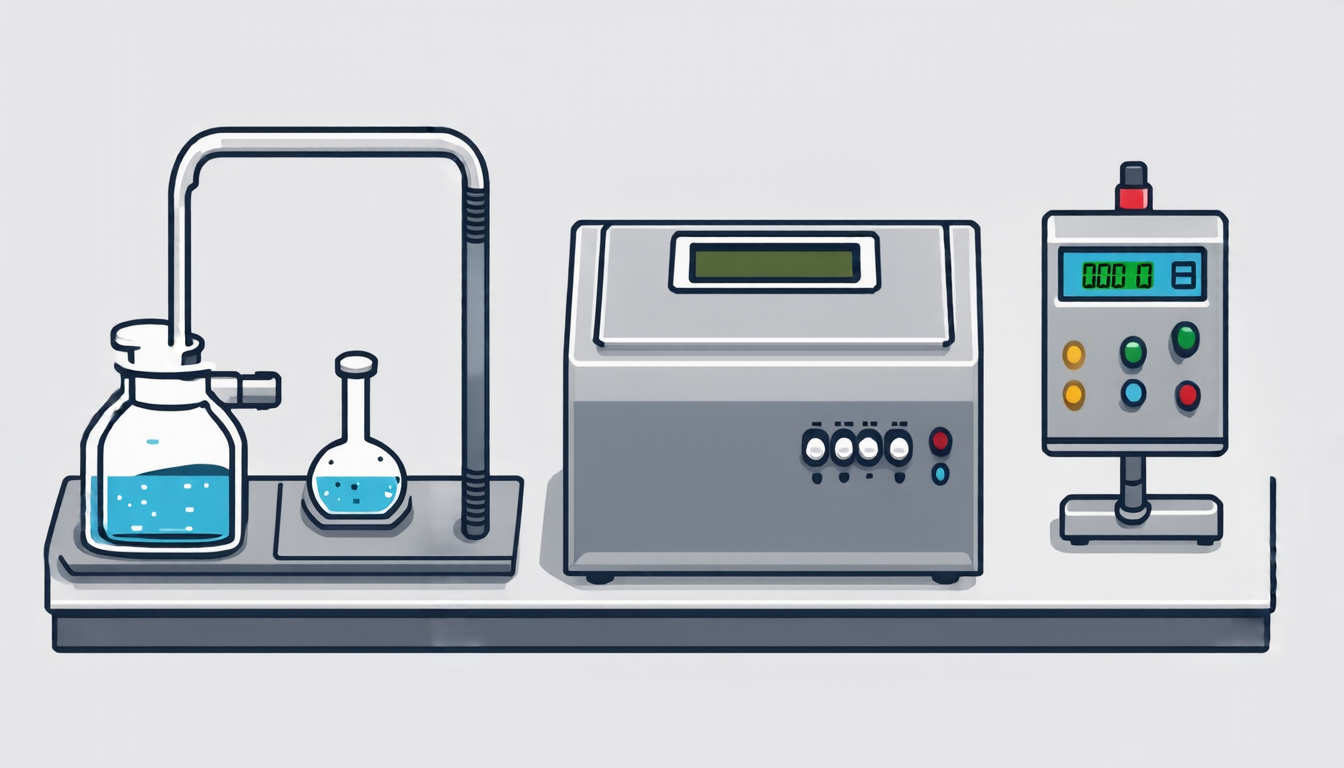
Researchers have designed two specialized radon measurement systems: one for small-sized samples and another for larger containers. The first system is ideal for measuring the amount of radon emanating from small components used in rare event detection experiments. This system uses a detector with a low background level, allowing scientists to accurately measure the tiny amounts of radon present.
The second system, designed for larger containers, utilizes a cold trap enrichment method to boost its sensitivity. The cold trap is capable of trapping radon gas and then releasing it into a detector, increasing the amount of radon available for measurement. This method has been shown to improve the detection efficiency by a factor of 30.
In addition to developing these measurement systems, scientists have also explored various surface treatments to reduce radon emanation from stainless steel chambers. The results show that smoother surfaces lead to lower radon release rates. By applying different polishing methods, such as electrochemical and mirror polishing, researchers were able to achieve significant reductions in radon emanation.
Furthermore, they found that coating the inner surfaces of the chambers with epoxy or covering them with aluminized Mylar membranes can also reduce radon emanation by 90% and 60%, respectively. These findings highlight practical approaches for controlling radon levels in rare event detection experiments.
The development of these advanced radon measurement systems and surface treatments is a significant step forward in the field of rare event detection. By accurately detecting and controlling radon, scientists can improve the sensitivity of their experiments, ultimately leading to better understanding of the universe.
In the future, these systems will be crucial for experiments searching for dark matter, neutrinoless double beta decay, and other rare events. The ability to detect and control radon will allow scientists to achieve even higher levels of precision and accuracy in their research, opening up new avenues for discovery and exploration.
Cite this article: “Unlocking the Secrets of Radon Emanation: A Breakthrough in Low-Background Experiments”, The Science Archive, 2025.
Radon, Measurement Systems, Rare Event Detection, Radioactive Gas, Detector, Cold Trap, Surface Treatments, Polishing Methods, Epoxy Coatings, Aluminized Mylar Membranes.





