

Saturday 05 April 2025
As cities continue to grow and urban areas become increasingly crowded, finding ways to improve communication networks is crucial for maintaining public safety and quality of life. A new approach to computing, known as air computing, has been gaining traction in recent years, and a team of researchers has now demonstrated its potential to revolutionize the way we access information.
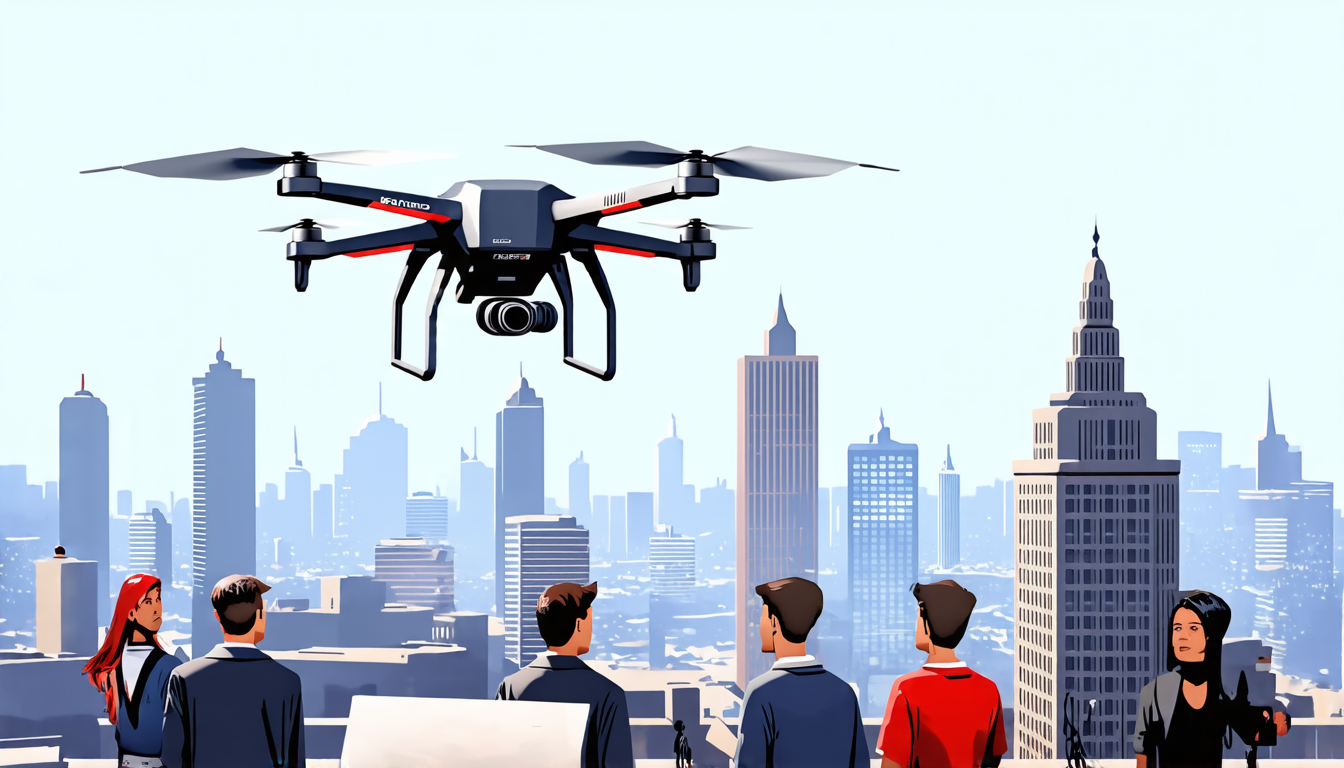
Air computing uses unmanned aerial vehicles (UAVs) equipped with artificial intelligence (AI) and machine learning algorithms to provide real-time data processing and communication services. Unlike traditional wireless networks, which rely on fixed infrastructure, air computing can be deployed in any location, making it ideal for areas with limited or no connectivity.
In a recent study, researchers used air computing to enhance disaster response efforts. They deployed UAVs equipped with AI-powered language models to process emergency calls and provide critical information to first responders. The results were impressive: the system was able to rapidly identify injured individuals, locate emergency services, and even provide real-time medical advice to paramedics.
The key to air computing’s success lies in its ability to adapt to changing conditions. As situations evolve, UAVs can dynamically reconfigure their communication networks to ensure that critical information is delivered quickly and reliably. This flexibility makes air computing particularly well-suited for emergency response scenarios, where every second counts.
But air computing isn’t just limited to disaster response. It has the potential to transform a wide range of industries, from healthcare to finance. For example, UAVs equipped with AI-powered sensors could be used to monitor environmental pollution or track disease outbreaks in real-time.
One of the biggest challenges facing air computing is its ability to scale. As more UAVs are deployed, managing the communication networks and ensuring reliable data transfer becomes increasingly complex. However, researchers are already working on developing new algorithms and protocols to address these issues.
Air computing has also raised concerns about privacy and security. With UAVs equipped with AI-powered sensors and cameras, there is a risk that sensitive information could be compromised. But researchers are taking steps to ensure that the technology is designed with privacy and security in mind.
As air computing continues to evolve, it’s clear that this innovative approach to communication has the potential to revolutionize the way we live and work. By harnessing the power of AI and machine learning, UAVs can provide fast, flexible, and reliable access to information – no matter where you are.
Cite this article: “Revolutionizing Disaster Response: The Convergence of Large Language Models and Air Computing”, The Science Archive, 2025.
Unmanned Aerial Vehicles, Artificial Intelligence, Machine Learning Algorithms, Wireless Networks, Disaster Response, Emergency Calls, First Responders, Communication Networks, Data Processing, Air Computing, Real-Time Data Transfer





