

Saturday 05 April 2025
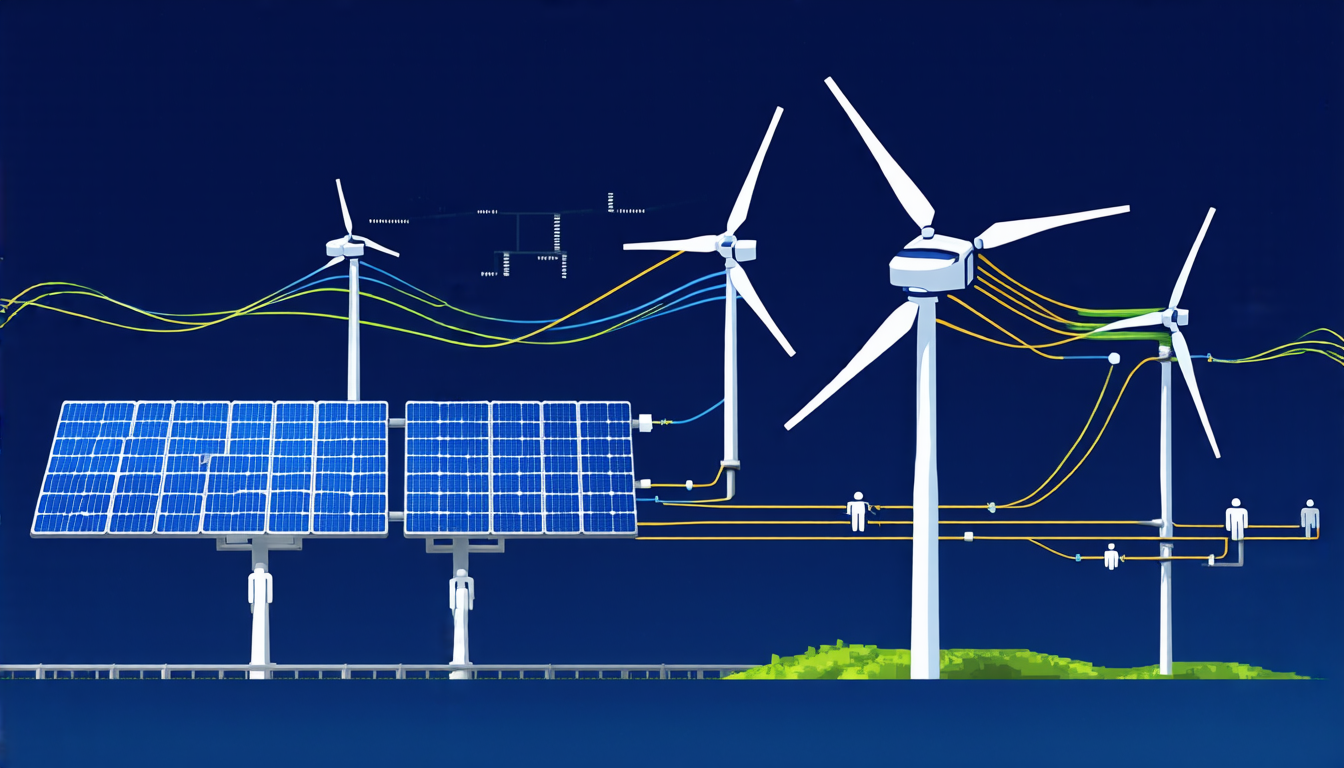
As the world continues to shift towards a renewable energy future, the electrical grid is undergoing a major transformation. Gone are the days of traditional synchronous generators, replaced by inverter-based resources like solar panels and wind turbines. But this shift has also introduced new challenges for power system stability.
Researchers have long struggled to understand how these newer devices interact with the grid, leading to complex oscillations that can threaten the entire system. To tackle this problem, a team of scientists has developed a novel approach called extended impedance modal analysis (EMAI). This method breaks down the dynamics of inverter-based resources into two key components: electromagnetic and synchronous.
The electromagnetic component is responsible for the high-frequency interactions between the inverter and the grid, while the synchronous component deals with the low-frequency oscillations caused by the inverter’s control loops. By separating these components, EMAI provides a clearer picture of how each inverter-based resource contributes to the overall stability of the system.
The team tested EMAI on two simulated power systems: a 14-bus system and a larger 68-bus system. In both cases, they found that EMAI accurately identified the dominant dynamics within each inverter-based resource, allowing them to pinpoint specific control parameters that could be adjusted to improve stability.
One of the most promising aspects of EMAI is its ability to scale up to large power systems. Unlike traditional modal analysis methods, which can become computationally expensive for complex systems, EMAI requires only local information from each inverter-based resource. This makes it an attractive solution for real-world grid operators looking to improve stability and reliability.
The implications of EMAI are far-reaching. By better understanding the dynamics of inverter-based resources, grid operators can develop more effective strategies for managing power system stability. This could involve tuning control parameters, adjusting generator settings, or even designing new grid architectures that take advantage of the unique properties of inverter-based resources.
As the energy landscape continues to evolve, EMAI represents a crucial step forward in our understanding of the electrical grid. By providing a more nuanced view of inverter-based resource dynamics, this method has the potential to unlock new efficiencies and improve the overall reliability of the system.
Cite this article: “Unlocking the Secrets of Grid Stability: A Novel Approach to Analyzing Power System Dynamics”, The Science Archive, 2025.
Renewable Energy, Electrical Grid, Inverter-Based Resources, Power System Stability, Extended Impedance Modal Analysis, Electromagnetic Component, Synchronous Component, Control Loops, Power Systems, Modal Analysis





