

Saturday 05 April 2025
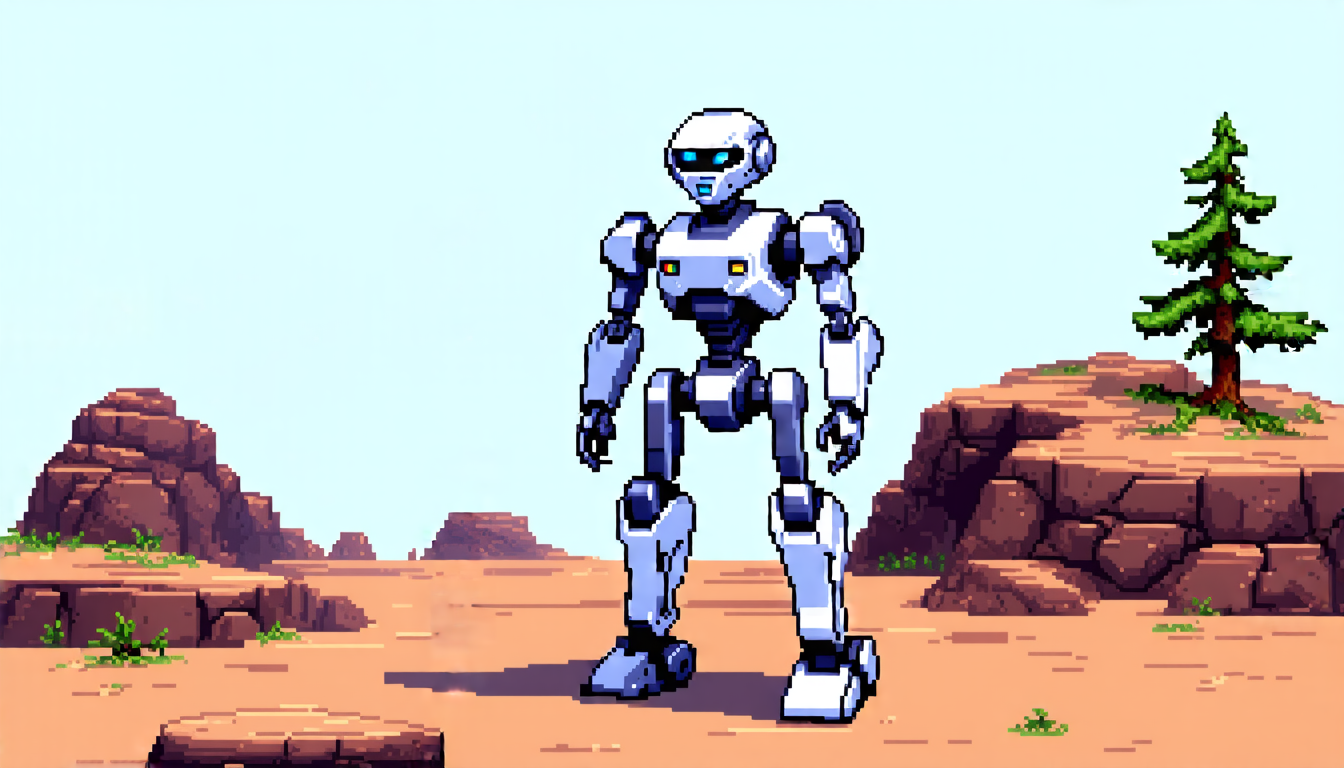
The quest for a humanoid robot that can navigate complex environments and perform tasks with the dexterity of humans has long been a holy grail in robotics research. Now, scientists have made significant progress towards achieving this goal by developing an advanced control system that enables a humanoid robot to adapt to various terrains and recover from unexpected disturbances.
The robot, called Unitree H1, is equipped with 19 degrees of freedom and can move with the agility of a human. Its control system uses machine learning algorithms to learn how to navigate different environments and respond to unexpected events. The system consists of two main components: a low-level policy that controls the robot’s movements and a high-level policy that determines when to switch between different modes, such as goal-tracking or safety recovery.
In testing, the Unitree H1 was able to successfully walk, run, and even perform parkour-like moves on complex terrain. It was also able to recover from disturbances such as external forces and hardware malfunctions. The robot’s ability to adapt to new situations and environments was impressive, with its control system learning to adjust to changing conditions in real-time.
One of the key features of the Unitree H1 is its ability to learn from experience. As it navigates different environments and responds to various stimuli, the robot’s control system updates its internal models of the world, allowing it to improve its performance over time. This ability to learn and adapt makes the Unitree H1 a highly versatile robot that can be used in a wide range of applications, from search and rescue missions to industrial manufacturing.
The development of this advanced control system is an important step towards creating humanoid robots that can truly interact with humans in complex environments. The potential benefits are significant, including improved safety, increased efficiency, and enhanced human-robot collaboration. As researchers continue to refine the technology, we can expect to see even more impressive capabilities emerge from these remarkable machines.
In a series of experiments, the Unitree H1 was tested on various terrains, including flat surfaces, obstacles, slopes, and stairs. The robot’s ability to adapt to each environment was impressive, with its control system adjusting to changing conditions in real-time. In one test, the robot was able to successfully navigate a complex terrain featuring multiple obstacles and uneven surfaces.
The Unitree H1’s advanced control system also enables it to recover from unexpected disturbances. In testing, external forces were applied to the robot, causing it to lose its balance or encounter hardware malfunctions.
Cite this article: “Humanoid Robotics Revolution: Adaptive Locomotion and Recovery Policies for Real-World Deployment”, The Science Archive, 2025.
Humanoid Robot, Advanced Control System, Machine Learning Algorithms, Navigation, Terrain, Adaptation, Recovery, Disturbance, Parkour, Robotics Research





