

Saturday 05 April 2025
Deep learning has long been a staple of computer vision, but its applications in the field of Computer-Aided Design (CAD) have been limited by the need for discrete sequences of parametric line/curve segments to represent sketches. However, researchers have now developed a novel framework that generates raster sketches and 3D extrusions for CAD models, revolutionizing the way we think about design.
The traditional approach to CAD modeling involves sketching out a design on paper or using software to create a 2D shape, which is then extruded into a 3D model. This process can be time-consuming and prone to errors, as designers must carefully plan and execute each step. The new framework, called RECAD, seeks to streamline this process by learning from rasterized sketches.
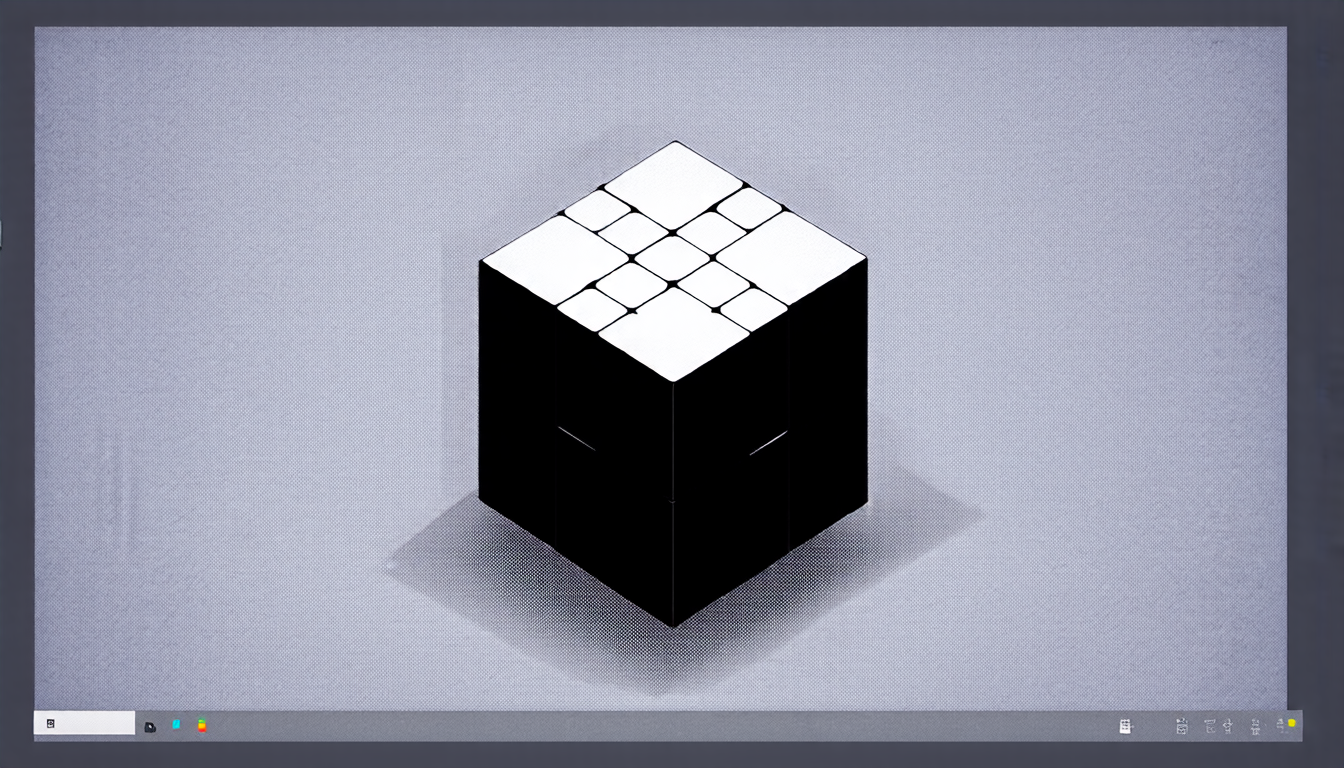
RECAD’s key innovation lies in its ability to represent sketches as continuous images, rather than discrete sequences of lines and curves. This allows for more intuitive user control over the output and enables interpolation within a latent space, making it easier to generate novel shapes and designs. The framework consists of two diffusion networks: one generates extrusion boxes conditioned on the number and types of extrusions, while the other produces sketch images conditioned on these boxes.
To train RECAD, researchers used a dataset of over 10,000 CAD models, which they rasterized and then fed into the model. They found that the framework was able to generate high-quality sketches and 3D models with remarkable accuracy, even when faced with complex designs. Moreover, RECAD’s ability to learn from rasterized images allows it to generalize well to new design tasks, making it a powerful tool for designers.
One of the most exciting aspects of RECAD is its potential to democratize CAD design. Traditionally, designing complex shapes and structures requires extensive knowledge of CAD software and programming languages. RECAD’s user-friendly interface and ability to generate novel designs make it accessible to a wider range of users, from hobbyists to professionals.
The implications of RECAD are far-reaching, with potential applications in fields such as architecture, engineering, and product design. By freeing designers from the constraints of traditional CAD software, RECAD could lead to the creation of innovative new products and structures that were previously impossible to design.
In recent years, deep learning has transformed many areas of computer science, from image recognition to natural language processing. The development of RECAD marks a significant milestone in the application of these techniques to CAD design, opening up new possibilities for creativity and innovation.
Cite this article: “Revolutionizing Computer-Aided Design with Image-Based Sketch Generation”, The Science Archive, 2025.
Computer-Aided Design, Deep Learning, Recad, Cad Modeling, Sketching, 3D Extrusions, Rasterized Images, Diffusion Networks, Latent Space, Generative Models





