

Saturday 05 April 2025
Scientists have long been fascinated by the intricate dance of cars on our roads, particularly when it comes to traffic congestion. For years, researchers have been working on ways to optimize traffic flow and reduce congestion, but a new approach is promising to revolutionize the way we think about traffic management.
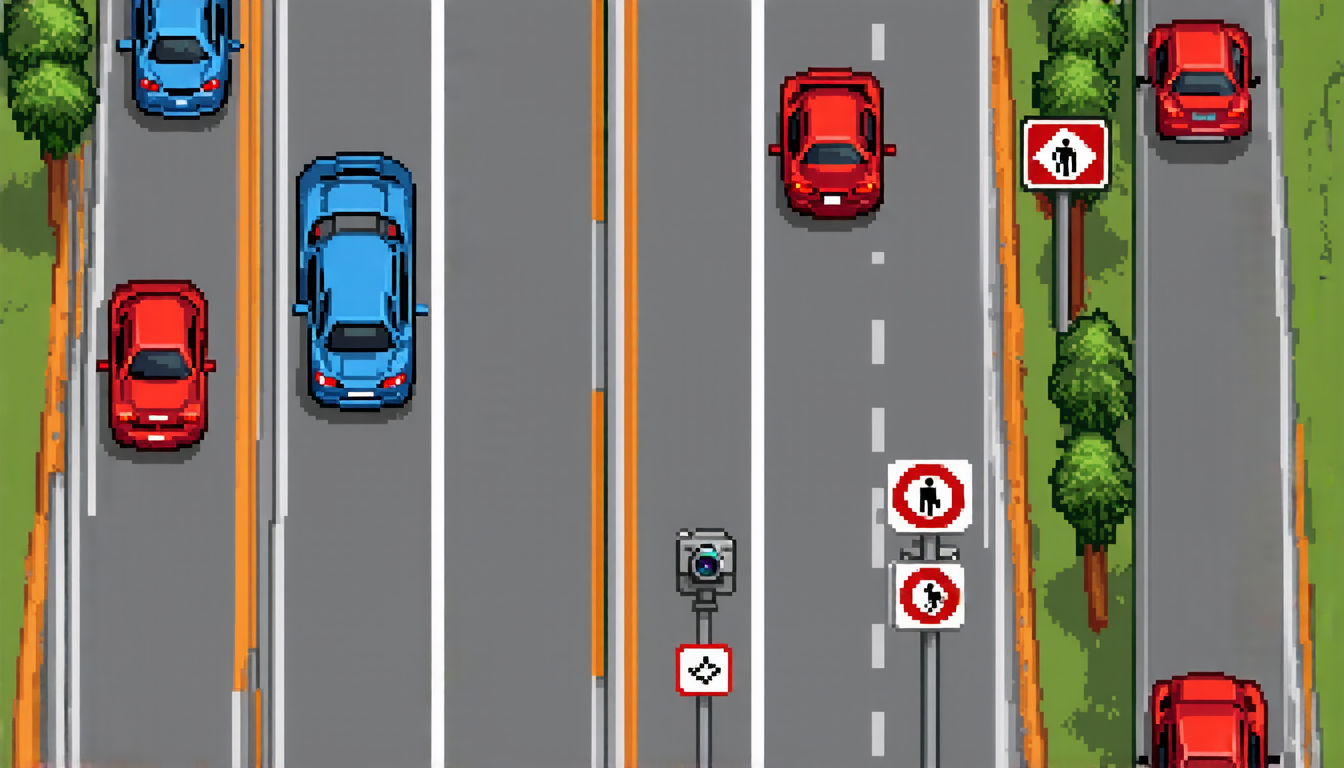
The key lies in the use of artificial intelligence and machine learning algorithms to control variable speed limits on highways. This technology, known as MARL- VSL (Multi-Agent Reinforcement Learning-based Variable Speed Limit), has been successfully tested on a 17-mile stretch of Interstate 24 in Tennessee.
In traditional traffic management systems, speed limits are typically set by humans or rely on pre-programmed algorithms. However, these approaches often fail to account for the complex and unpredictable nature of real-world traffic. MARL-VSL, on the other hand, uses machine learning to analyze data from sensors and cameras along the highway, allowing it to adapt to changing traffic conditions in real-time.
The system works by dividing the highway into small sections, each with its own speed limit set by the algorithm. The algorithm takes into account a range of factors, including traffic volume, speed, and direction, as well as weather and road conditions. By constantly monitoring these variables, MARL-VSL is able to adjust speed limits to optimize traffic flow and reduce congestion.
In the Tennessee test, the system was deployed on a stretch of highway known for its recurring bottlenecks during rush hour. The results were impressive: average speeds increased by 15% and travel times decreased by 12%. But perhaps more strikingly, the number of accidents and near-misses dropped significantly, suggesting that MARL-VSL’s adaptive speed limits are helping to reduce the risk of collisions.
One of the key benefits of MARL-VSL is its ability to respond to unexpected events, such as a sudden increase in traffic volume or a road closure. Traditional systems often struggle to adapt quickly enough to these changes, leading to congestion and frustration for drivers. In contrast, MARL-VSL’s machine learning algorithm can learn from experience and adjust speed limits accordingly.
While the Tennessee test was just one small step towards implementing this technology on a larger scale, it has significant implications for the future of traffic management. As cities and states around the world grapple with the challenges of congestion and air pollution, MARL-VSL offers a promising solution that could help to alleviate these problems.
Cite this article: “AI-Powered Traffic Management System Shows Promise in Reducing Congestion and Accidents on Busy Highway”, The Science Archive, 2025.
Traffic Management, Artificial Intelligence, Machine Learning, Variable Speed Limits, Marl-Vsl, Traffic Congestion, Highway Engineering, Road Safety, Transportation Systems, Intelligent Infrastructure.





