

Saturday 05 April 2025
The math behind random paths and percolation has been a topic of interest for many years, with researchers seeking to understand the behavior of these complex systems. In recent work, a team of scientists has made significant progress in this area, shedding light on the large deviation principles that govern the behavior of greedy animals and paths.
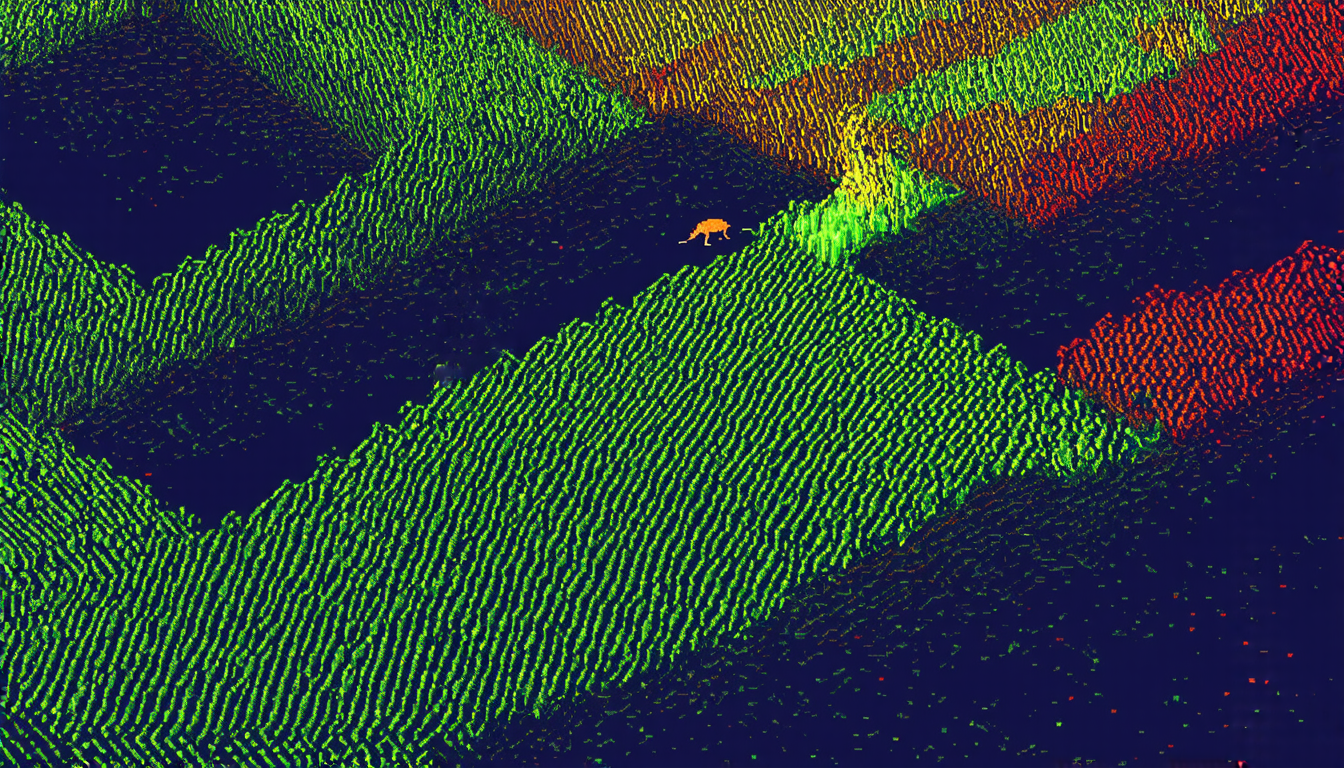
Greedy animals are mathematical constructs that resemble random walks, but with a twist: they are designed to maximize their growth over time. These creatures have been studied extensively in the field of percolation theory, which seeks to understand how networks form and evolve over time. In this context, greedy animals can be thought of as representing the most efficient paths through a network.
The team’s research focuses on the behavior of greedy animals and paths when they are embedded in a random environment. This is achieved by using a Poisson process to create a lattice structure, with each site having a random mass associated with it. The masses are then used to determine the growth rate of the greedy animal or path.
One of the key findings of the research is that the large deviation principle (LDP) can be applied to this system. This means that the probability of observing a particular behavior in the system, such as the growth rate of the greedy animal or path, can be calculated using a specific function called the rate function. The LDP provides a powerful tool for understanding the behavior of complex systems, and has been used extensively in fields such as physics, biology, and economics.
The research also explores the relationship between the LDP and the law of large numbers (LLN). The LLN states that the average value of a random variable will converge to its expected value as the size of the system increases. In this context, the LLN can be used to understand how the growth rate of the greedy animal or path behaves over time.
The implications of this research are far-reaching, with potential applications in fields such as materials science and epidemiology. For example, the study of greedy animals and paths could provide insights into how diseases spread through a population, or how materials properties change over time.
In addition to its practical applications, this research also has important theoretical implications for our understanding of complex systems. The development of new mathematical tools and techniques is essential for advancing our knowledge in these areas, and this work represents an important step forward.
Overall, the study of greedy animals and paths provides a fascinating example of how mathematical theory can be used to understand complex phenomena.
Cite this article: “Unlocking the Secrets of Random Networks: A Study on Large Deviations and Greedy Animals”, The Science Archive, 2025.
Percolation, Random Paths, Greedy Animals, Large Deviation Principles, Rate Function, Law Of Large Numbers, Complex Systems, Mathematical Theory, Materials Science, Epidemiology





