

Sunday 06 April 2025
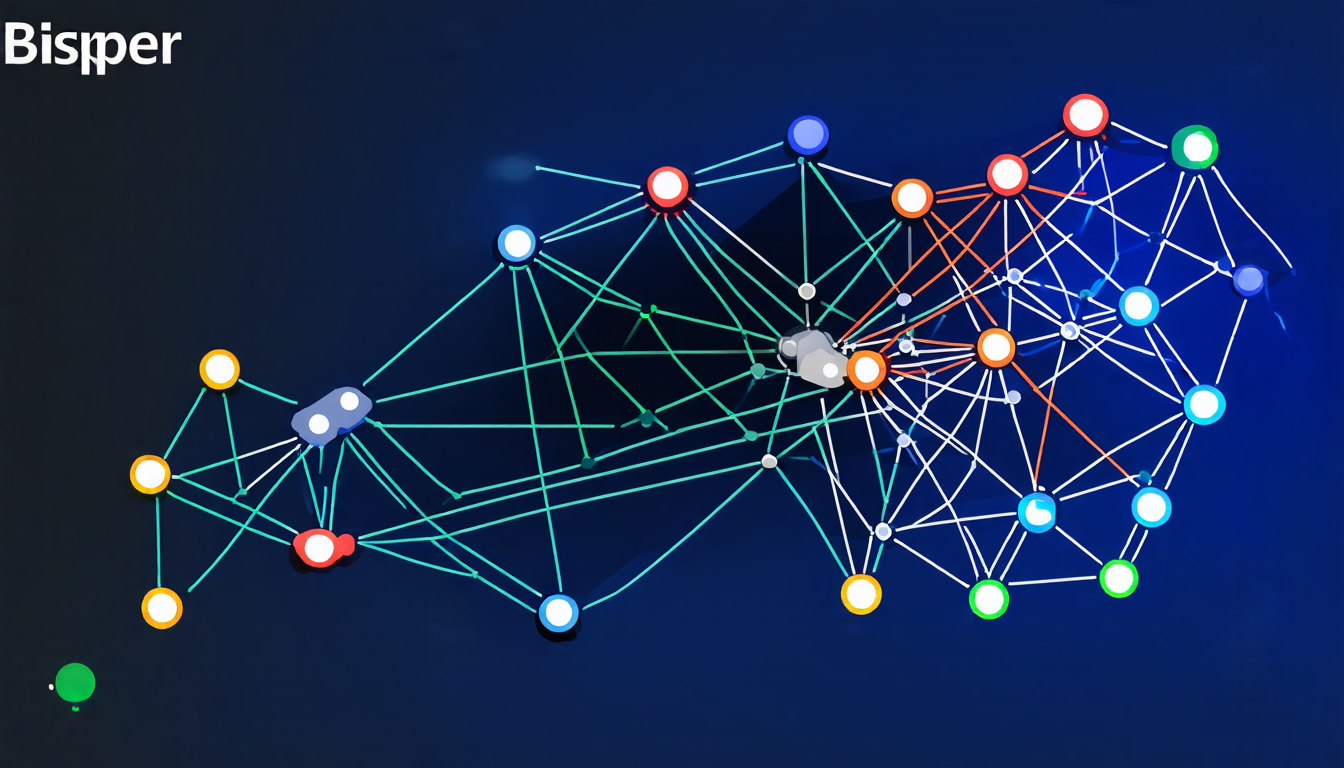
A new algorithm has been developed that can efficiently estimate a crucial property of complex networks, known as effective resistance. Effective resistance is a measure of how well connected two nodes in a network are to each other, and it’s an important concept in many fields, including computer science, biology, and social sciences.
The problem with estimating effective resistance is that it requires calculating the shortest paths between all pairs of nodes in the network, which can be computationally expensive. The new algorithm, called BiSPER, tackles this challenge by using a combination of random walks and adaptive Monte Carlo methods to estimate the effective resistance between two given nodes.
BiSPER works by first performing a series of random walks on the network, starting from one node and ending at another. Each walk generates a set of residues that represent the probability of transitioning from one node to another. These residues are then used to calculate an estimator for the effective resistance between the two nodes.
The key innovation in BiSPER is its ability to adaptively adjust the number of random walks based on the estimated effective resistance. This allows the algorithm to focus more resources on areas of the network where the effective resistance is highest, resulting in a more accurate estimate.
The developers of BiSPER have tested their algorithm on a range of real-world networks, including social media platforms and biological systems. The results show that BiSPER can accurately estimate effective resistance with significantly less computational effort than previous methods.
One of the most promising applications of BiSPER is in network analysis and visualization. By estimating effective resistance between nodes, researchers can gain insights into the structure and behavior of complex networks. For example, they can identify clusters or communities within a network, or detect anomalies that may indicate the presence of malicious actors.
Another potential application of BiSPER is in machine learning and artificial intelligence. Effective resistance has been shown to be an important feature in many machine learning algorithms, including those used for recommendation systems and natural language processing. By using BiSPER to estimate effective resistance, these algorithms could become more accurate and efficient.
Overall, the development of BiSPER represents a significant advance in our ability to analyze and understand complex networks. Its applications are wide-ranging, and it has the potential to make a real impact in many fields.
Cite this article: “Accelerating Effective Resistance Estimation in Networks via Bi-Directional Sampling”, The Science Archive, 2025.
Networks, Effective Resistance, Bisper Algorithm, Random Walks, Monte Carlo Methods, Network Analysis, Visualization, Machine Learning, Artificial Intelligence, Complex Systems





