

Sunday 06 April 2025
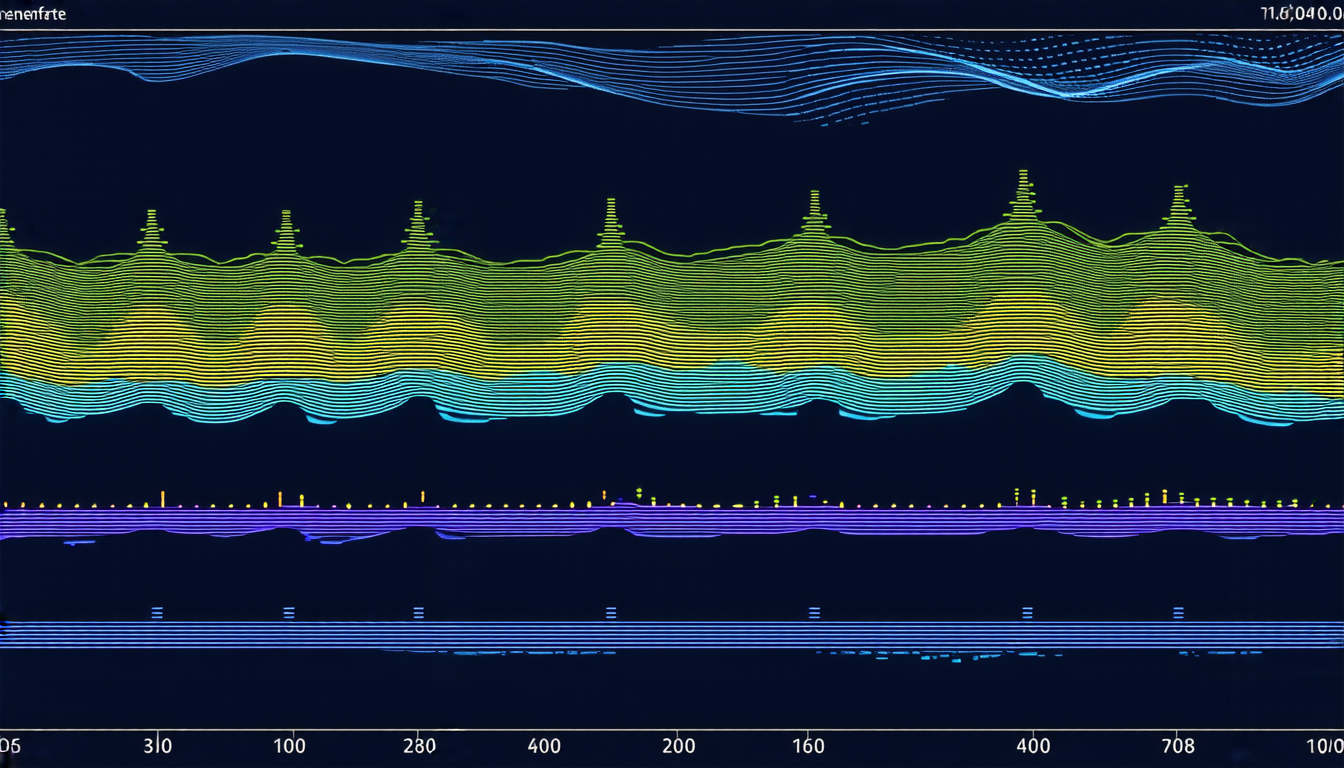
A new approach to time series forecasting has been proposed, one that could potentially revolutionize the way we predict complex patterns in data. The method, called Channel-Wise Dynamic Fusion Model (CDFM), uses a combination of machine learning techniques and mathematical modeling to analyze non-stationary time series data.
In traditional time series analysis, data is often treated as stationary – meaning that the underlying pattern remains constant over time. However, many real-world datasets exhibit non-stationarity, where the patterns change over time. This can make it challenging to accurately predict future values in the dataset.
CDFM addresses this challenge by using a dual-predictor module that captures both stable and dynamic patterns in the data. The model is trained on a combination of historical data and metadata, such as seasonality and trend information, to learn the underlying structure of the time series.
One of the key innovations of CDFM is its ability to selectively recover non-stationary information from specific channels in the data. This is achieved through a fusion weight learner that evaluates the importance of each channel based on its similarity, distribution consistency, and non-stationarity. By focusing on the most relevant channels, CDFM can improve the accuracy of its predictions.
The authors of the paper tested CDFM on seven real-world datasets, including weather and electricity consumption patterns. The results showed that CDFM outperformed several state-of-the-art models in terms of mean absolute error (MAE) and mean squared error (MSE).
The potential applications of CDFM are vast, from predicting stock prices to analyzing climate change patterns. By better understanding the underlying dynamics of complex systems, we can make more informed decisions and develop more effective strategies for mitigating risk.
In addition to its practical implications, CDFM also has theoretical significance. The model’s ability to selectively recover non-stationary information challenges traditional notions of stationarity in time series analysis, and opens up new avenues for research into the nature of complex systems.
Overall, the CDFM represents a significant step forward in the field of time series forecasting, and has the potential to transform the way we analyze and predict complex patterns in data.
Cite this article: “Advances in Non-Stationary Time Series Forecasting: A Dynamic Fusion Approach”, The Science Archive, 2025.
Time Series Forecasting, Machine Learning, Non-Stationarity, Channel-Wise Dynamic Fusion Model, Dual-Predictor Module, Metadata, Stationarity, Mean Absolute Error, Mean Squared Error, Complex Systems.





