

Sunday 06 April 2025
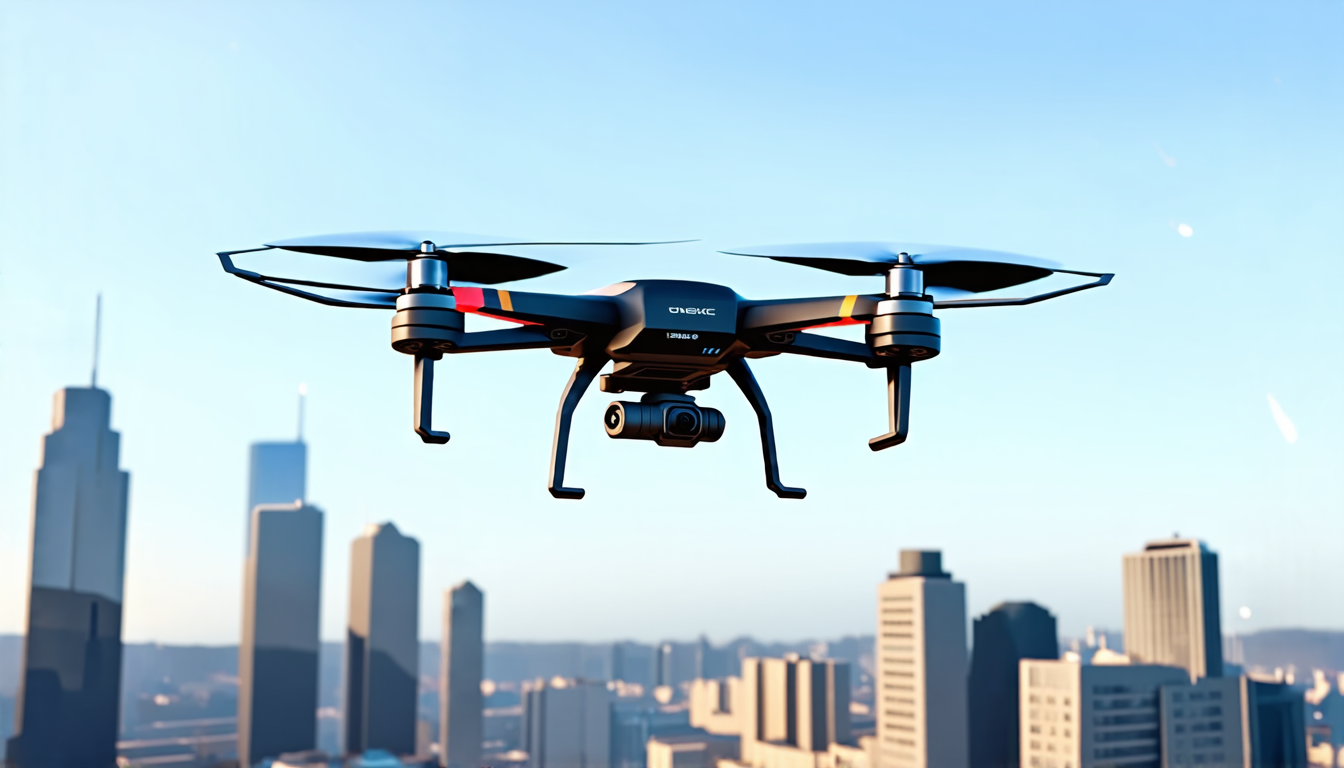
A team of researchers has developed a new system that allows quadcopters to recover from complete rotor failure, a common problem in autonomous flight. The innovation could have significant implications for the development of reliable and efficient aerial vehicles.
Quadcopters are popular among hobbyists and professionals alike due to their agility and precision. However, they can be prone to mechanical failures, particularly rotor loss, which can cause them to crash or become unstable. Traditionally, quadcopters rely on manual intervention or specialized controllers to recover from such failures, but these solutions often require significant expertise and can be costly.
The new system, developed by a team of scientists, uses machine learning algorithms to teach the quadcopter how to adapt to rotor failure. The algorithm is integrated with a controller that adjusts the remaining rotors’ speed and direction to maintain stability and control. This approach allows the quadcopter to recover from complete rotor failure without human intervention.
The system was tested using simulations and real-world experiments, and the results showed significant improvements in recovery time and stability compared to traditional methods. The researchers also found that the algorithm can adapt to different types of failures, including partial rotor loss and simultaneous failure of multiple rotors.
The potential applications of this technology are vast. Autonomous delivery drones, for example, could use this system to recover from mechanical failures and continue their missions without human intervention. Search and rescue teams could also utilize this technology to quickly locate and retrieve people in emergency situations.
Furthermore, the development of this system has also shed light on the importance of adaptability in autonomous systems. As quadcopters become increasingly sophisticated, they will face more complex challenges, such as unexpected weather conditions or environmental changes. The ability for these vehicles to adapt and recover from failures could be critical in ensuring their safety and effectiveness.
The researchers’ work is a significant step forward in the development of reliable and efficient autonomous aerial vehicles. As technology continues to advance, we can expect to see more innovative solutions that push the boundaries of what is possible with quadcopters and other autonomous systems.
Cite this article: “Fault-Tolerant Flight Control of Quadrotors via Reinforcement Learning and Behavioral Cloning”, The Science Archive, 2025.
Quadcopter, Rotor Failure, Machine Learning, Autonomous Flight, Recovery System, Stability Control, Algorithm, Simulation, Experiment, Adaptability





