

Sunday 06 April 2025
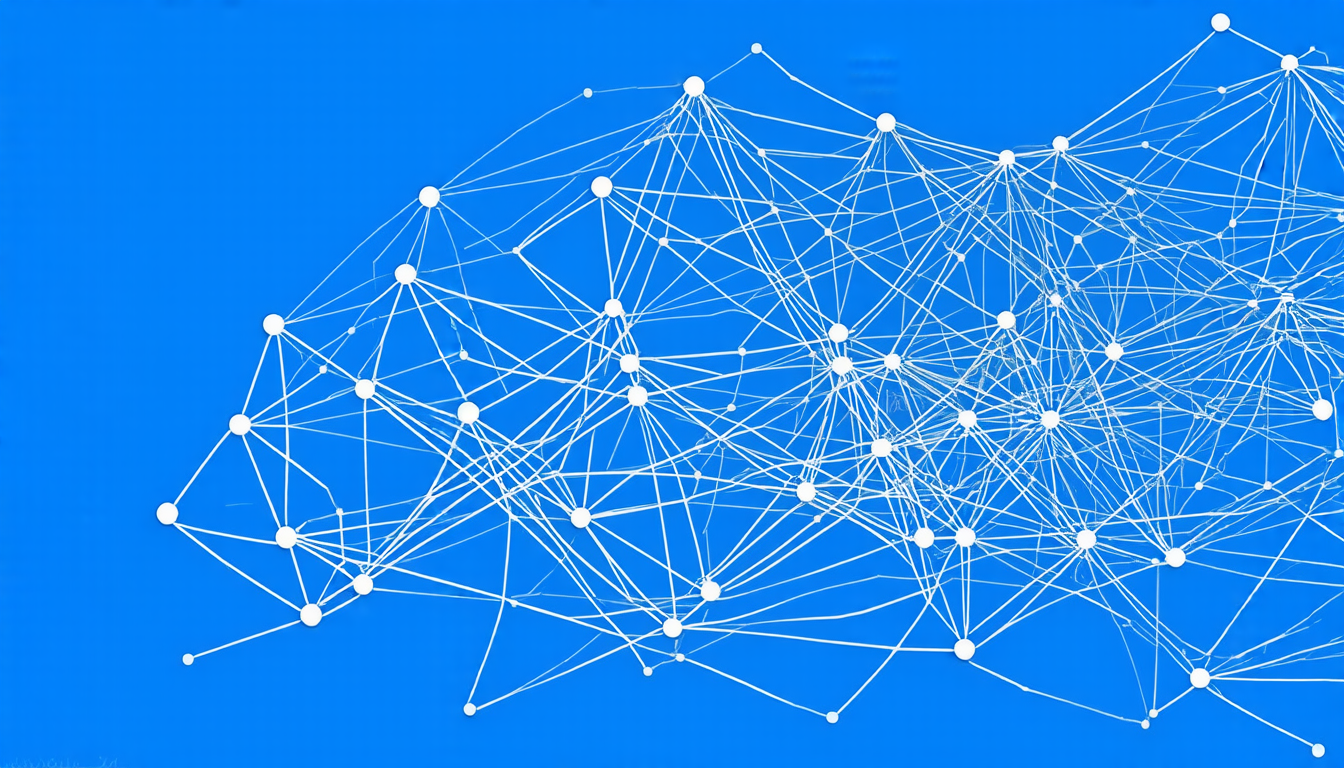
A recent paper has shed new light on the complex world of graph theory, a branch of mathematics that deals with the relationships between objects. The study explores the properties of a special type of graph called a quasi-tree, which is like a tree but can have cycles and loops.
Quasi-trees are used to model real-world networks, such as social media platforms or transportation systems, where nodes represent individuals or locations and edges represent connections between them. Understanding the structure and behavior of these networks is crucial for designing efficient algorithms and making predictions about their dynamics.
The researchers began by defining a quasi-tree as a graph that has a hierarchical partial order, meaning that there is a linear ordering of its elements based on their relationships. They then developed a set of rules, or axioms, to describe the properties of these graphs. These axioms are used to determine whether a given graph is a quasi-tree and to identify its underlying structure.
One of the key findings of the study is that quasi-trees can be characterized by a special type of relation called betweenness. Betweenness measures the distance between two nodes in the graph, taking into account not only the direct path between them but also any intermediate nodes that may affect their relationship. The researchers showed that this concept of betweenness is essential for understanding the behavior of quasi-trees and can be used to identify patterns and structures within the graphs.
The study also explored the connection between quasi-trees and another area of mathematics, monadic second-order logic (MSO). MSO is a formal system used to describe the properties of graphs and other mathematical objects. The researchers demonstrated that there is a close relationship between the axioms they developed for quasi-trees and the language of MSO.
The implications of this study are far-reaching, with potential applications in many fields. For example, it could be used to develop more efficient algorithms for analyzing complex networks, such as those found in social media or transportation systems. It could also help researchers better understand the dynamics of these networks and make predictions about their behavior over time.
Overall, this study provides a deeper understanding of quasi-trees and their properties, which can have significant impacts on our ability to analyze and model real-world networks. The findings have important implications for many areas of mathematics and computer science, and will likely be an important area of research in the years to come.
Cite this article: “Unlocking the Secrets of Graph Decompositions: A New Frontier in Computational Complexity”, The Science Archive, 2025.
Graph Theory, Quasi-Trees, Network Analysis, Betweenness, Monadic Second-Order Logic, Mso, Hierarchical Partial Order, Graph Properties, Algorithm Development, Complex Networks
Reference: Bruno Courcelle, “On describing trees and quasi-trees from their leaves” (2025).





