

Sunday 06 April 2025
The quest for expertise in online communities has long been a challenge. With millions of users sharing their knowledge and experiences, it’s crucial to identify the most reliable sources of information. A new approach, dubbed TUEF (Topic-oriented User-Interaction model for Expert Finding), aims to revolutionize this process by combining content and social information.
The problem lies in the sheer volume of data available online. Even with sophisticated algorithms, sifting through user profiles and question-answer histories can be a daunting task. Enter TUEF, a novel solution that leverages the power of topic modeling and social network analysis to pinpoint experts within community question-answering platforms.
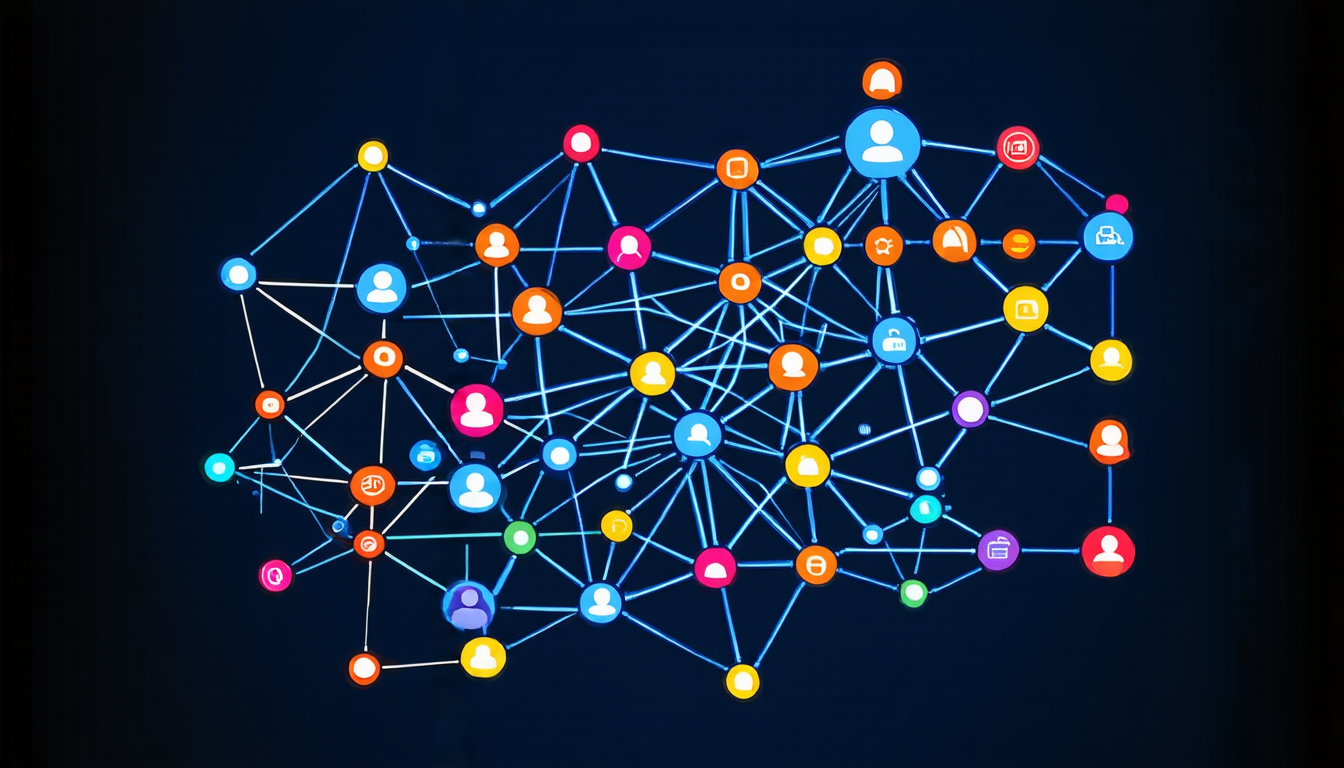
TUEF works by creating a multi-layered graph (MLG) that represents users’ relationships based on their similarities in providing answers. This graph is then used to identify key nodes, which are subsequently ranked according to their expertise. By analyzing the interactions between users and topics, TUEF can accurately predict whether an individual is likely to provide high-quality responses.
The researchers tested TUEF using a dataset from Stack Overflow, one of the largest online communities for programmers. The results were impressive: TUEF outperformed existing methods in identifying experts, with a remarkable 65% improvement in mean reciprocal rank (MRR). This metric measures the relevance of returned answers to the original query.
But what makes TUEF so effective? For starters, it takes into account both content and social information. By analyzing users’ answers and interactions within the community, TUEF can identify patterns and relationships that would be missed by relying solely on one or the other. Additionally, TUEF’s graph-based approach allows for a more nuanced understanding of expertise, recognizing that users may have varying levels of knowledge across different topics.
The implications of this research are far-reaching. By accurately identifying experts within online communities, TUEF can help improve the quality of answers and reduce the noise-to-signal ratio. This is particularly important in fields like medicine, where accurate information can literally be a matter of life and death.
TUEF also has potential applications beyond expert finding. Its graph-based approach could be used to analyze other types of complex networks, such as social media or citation graphs. By developing more sophisticated models that incorporate multiple sources of data, researchers may uncover new insights into human behavior and decision-making.
In short, TUEF represents a significant step forward in the quest for expertise online.
Cite this article: “Expert Finding in Community Question Answering: A Novel Approach Combining Content and Social Information”, The Science Archive, 2025.
Online Communities, Expert Finding, Topic Modeling, Social Network Analysis, Multi-Layered Graph, Stack Overflow, Programmers, Mean Reciprocal Rank, Content Information, Social Information





