

Sunday 06 April 2025
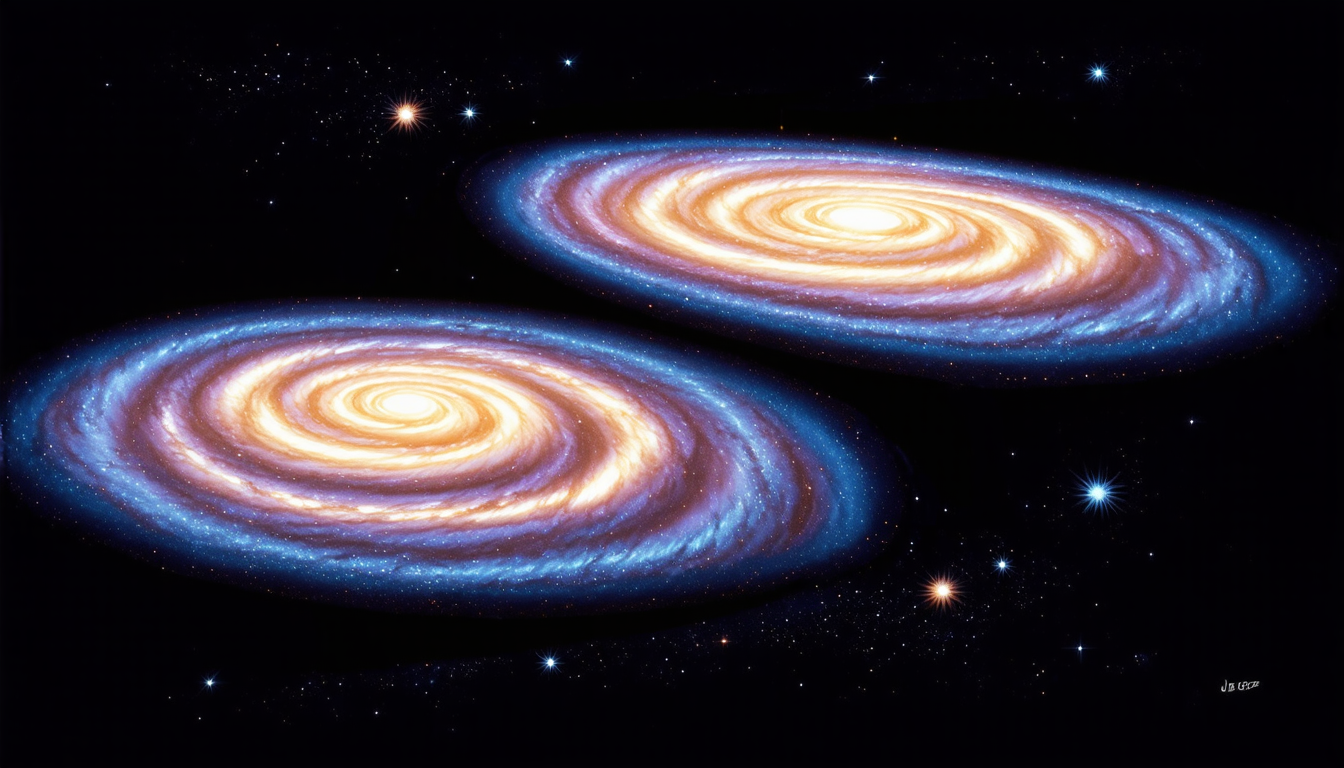
A recent study has shed new light on the complex dance between galaxies and their star-forming regions. Researchers have been observing two interacting galaxy systems, NGC 7252 and NGC 5291, using the Ultraviolet Imaging Telescope (UVIT) onboard AstroSat. The UVIT instrument is capable of capturing high-resolution images of these systems in various wavelengths, allowing scientists to study the properties of star formation within.
The findings suggest that both galaxies are experiencing intense star-forming activity, with multiple knots of newly formed stars scattered throughout their spiral arms. These knots, known as tidal dwarf galaxies (TDGs), are thought to be the result of interactions between the galaxies and their surrounding gas and dust. The TDGs are believed to be responsible for the observed increase in star formation rates within these systems.
One of the most striking features of this study is the stark contrast between the two galaxy systems. NGC 7252, a relatively nearby galaxy, is undergoing a more intense period of star formation than its farther-away counterpart, NGC 5291. This difference may be attributed to the varying levels of gas and dust present within each system.
The researchers used UVIT’s FUV and NUV filters to observe the galaxies in different wavelengths, allowing them to isolate specific regions of interest. The FUV filter, which observes light with a wavelength of around 1481 Å, is particularly useful for studying young, hot stars. Conversely, the NUV filter, with a wavelength of approximately 2418 Å, is better suited for examining older, cooler stars.
The study’s authors employed a variety of methods to analyze their data, including the calculation of star formation rates (SFRs) and the determination of gas surface densities. These calculations allowed them to draw conclusions about the relationship between star formation and gas availability within each system.
One intriguing aspect of this research is the discovery that both galaxy systems adhere to the same Kennicutt-Schmidt relation, a mathematical formula describing the link between gas surface density and SFR. This suggests that there may be underlying physical mechanisms governing the star-forming activity within these galaxies, despite their differing environments.
The study’s findings have significant implications for our understanding of galaxy evolution and the role of interactions in shaping the properties of star-forming regions. Further research into this topic will undoubtedly provide valuable insights into the complex interplay between galaxies, gas, and stars.
Cite this article: “Unveiling the Secrets of Star Formation in Merging Galaxies: Insights from UV Imaging and Spectroscopy”, The Science Archive, 2025.
Galaxies, Star Formation, Interactions, Tidal Dwarf Galaxies, Ngc 7252, Ngc 5291, Astrosat, Ultraviolet Imaging Telescope, Kennicutt-Schmidt Relation, Galaxy Evolution





