

Sunday 06 April 2025
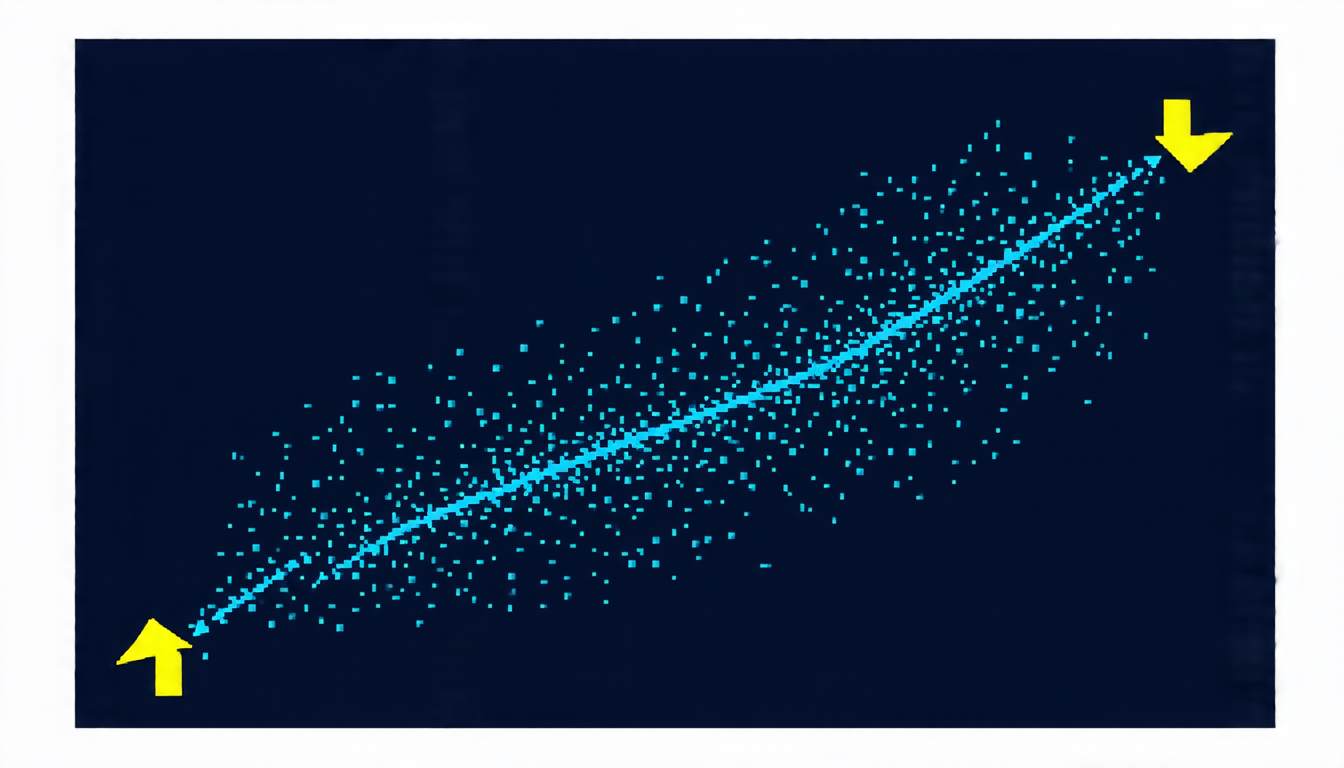
A new approach to understanding mass diffusion, a fundamental process in many fields of science and engineering, has been developed by researchers. The method uses particles to represent the movement of molecules or atoms, allowing for more accurate simulations of complex systems.
Mass diffusion is the process by which particles move from an area of higher concentration to one of lower concentration, driven by random thermal motion. It’s a crucial aspect of many natural phenomena, such as the spread of heat through a material, the transport of nutrients in living organisms, and the flow of fluids through porous media.
Traditionally, researchers have used numerical methods to simulate mass diffusion, but these can be limited by their simplifying assumptions and lack of physical insight. The new approach, developed by a team of scientists, uses an optimal-transport framework to model the movement of particles. This allows for a more accurate representation of the complex interactions between particles and the underlying physical environment.
The method is based on the idea that mass diffusion can be viewed as a problem of transport of measures, rather than a problem of evolution in linear spaces of functions. This perspective enables researchers to capture the essential features of particle movement, such as their spatial distribution and velocity, in a more nuanced way.
One of the key advantages of this approach is its ability to handle complex boundary conditions, which are common in many real-world systems. For example, in fluid flow problems, particles may be injected or removed at boundaries, or may interact with external forces that affect their movement. The new method can accurately simulate these interactions and capture the resulting behavior of the particle ensemble.
The researchers have tested their approach using a range of examples, including the diffusion of particles through a sphere and the flow of fluid through pipes with complex geometries. Their results show that the method is capable of producing accurate and physically insightful simulations of mass diffusion in a wide range of scenarios.
This new approach has significant implications for many fields, from materials science to biology and environmental engineering. By providing a more accurate and flexible way to simulate mass diffusion, it could lead to breakthroughs in our understanding of complex systems and the development of innovative technologies.
The method’s versatility is also evident in its ability to be applied to different physical contexts. For example, it can be used to study the behavior of particles in magnetic or electric fields, or to investigate the dynamics of interacting particle systems.
Overall, this new approach offers a powerful tool for researchers seeking to understand and simulate mass diffusion in complex systems.
Cite this article: “Unlocking the Secrets of Mass Transport: A Novel Finite-Particle Method for Simulating Complex Diffusion Phenomena”, The Science Archive, 2025.
Mass Diffusion, Particles, Simulation, Transport, Measures, Optimal Transport, Fluid Flow, Boundary Conditions, Complex Systems, Materials Science





