

Sunday 06 April 2025
Computer scientists have been working on a new way to help artificial intelligence systems learn and make decisions more accurately, especially when faced with unexpected data or situations. This is crucial because as AI becomes increasingly integrated into our daily lives, it needs to be able to adapt to changing circumstances and make smart choices.
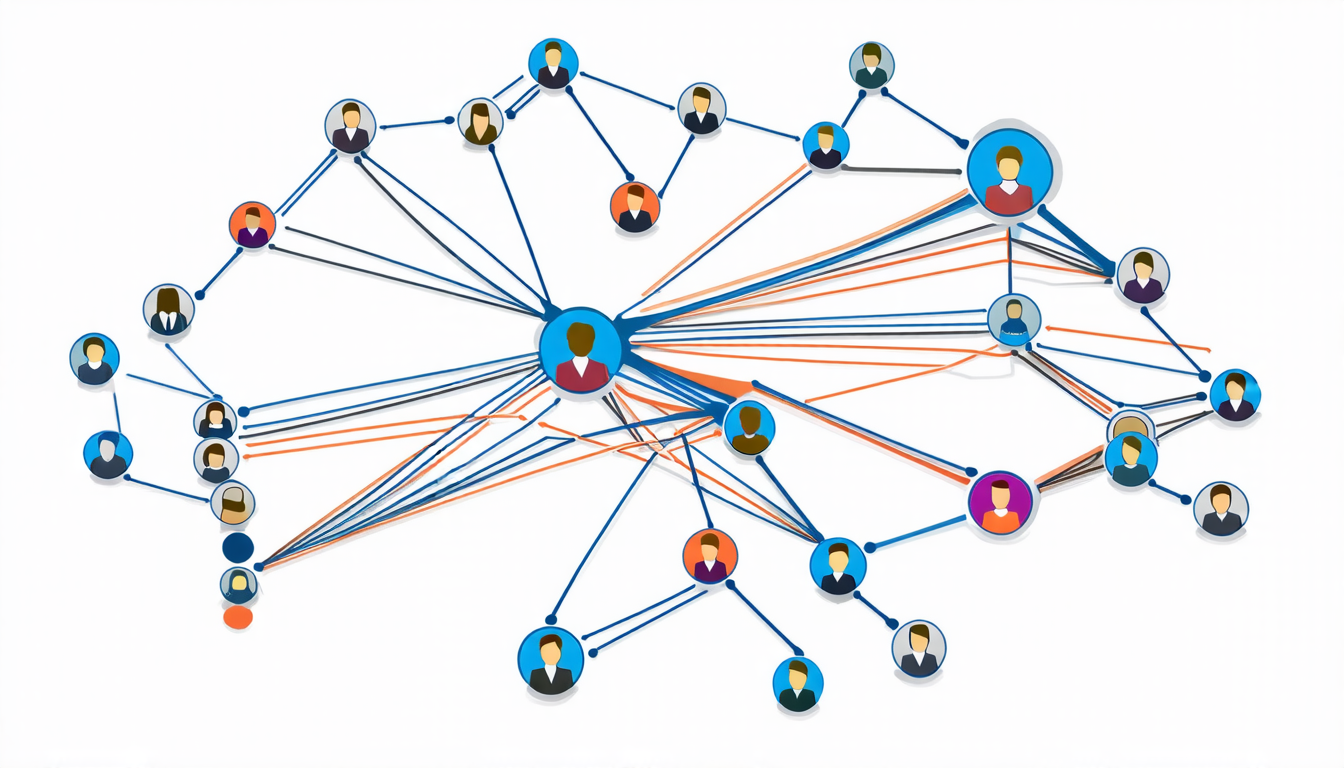
The researchers focused on graph neural networks (GNNs), which are a type of AI designed to analyze complex relationships between objects or entities in the world. Think of a social network, where people are connected to each other through friendships or followings. GNNs can learn patterns and relationships within these networks to make predictions or recommendations.
However, when faced with new data that’s different from what they were trained on, GNNs often struggle to generalize correctly. This is because they tend to rely too heavily on specific patterns or correlations in the training data, rather than understanding the underlying causes or causal relationships between things.
The new approach, called Graph Progressive Inference (GPro), aims to address this issue by encouraging GNNs to learn more about the causal relationships within a graph. Causal relationships are the underlying reasons why certain events or patterns occur. For example, in a social network, the causal relationship might be that people who have similar interests tend to become friends.
GPro works by gradually introducing new information and relationships into the training data, allowing the GNNs to learn about these causal relationships in a step-by-step fashion. This is different from traditional machine learning approaches, which often try to fit all the data at once.
The researchers tested GPro on several datasets, including ones related to molecular biology and social networks. They found that GPro significantly improved the performance of GNNs when faced with new or unseen data. In some cases, the accuracy increased by over 12%.
One important implication of this work is that it could lead to more reliable and trustworthy AI systems in fields such as healthcare, finance, and transportation. For example, a doctor might use an AI system to analyze medical images and make diagnoses. If the system can better understand the underlying causes of certain diseases or conditions, it may be able to provide more accurate and effective treatments.
Overall, GPro represents a significant step forward in the development of graph neural networks, and its potential applications are vast. By helping AI systems learn more about causal relationships, we can build more intelligent and adaptable machines that can better serve humanity.
Cite this article: “Unlocking Graph Causal Invariance: A Progressive Framework for Generalized Graph Classification”, The Science Archive, 2025.
Artificial Intelligence, Graph Neural Networks, Machine Learning, Causal Relationships, Graph Progressive Inference, Training Data, Social Networks, Molecular Biology, Healthcare, Finance





