

Sunday 06 April 2025
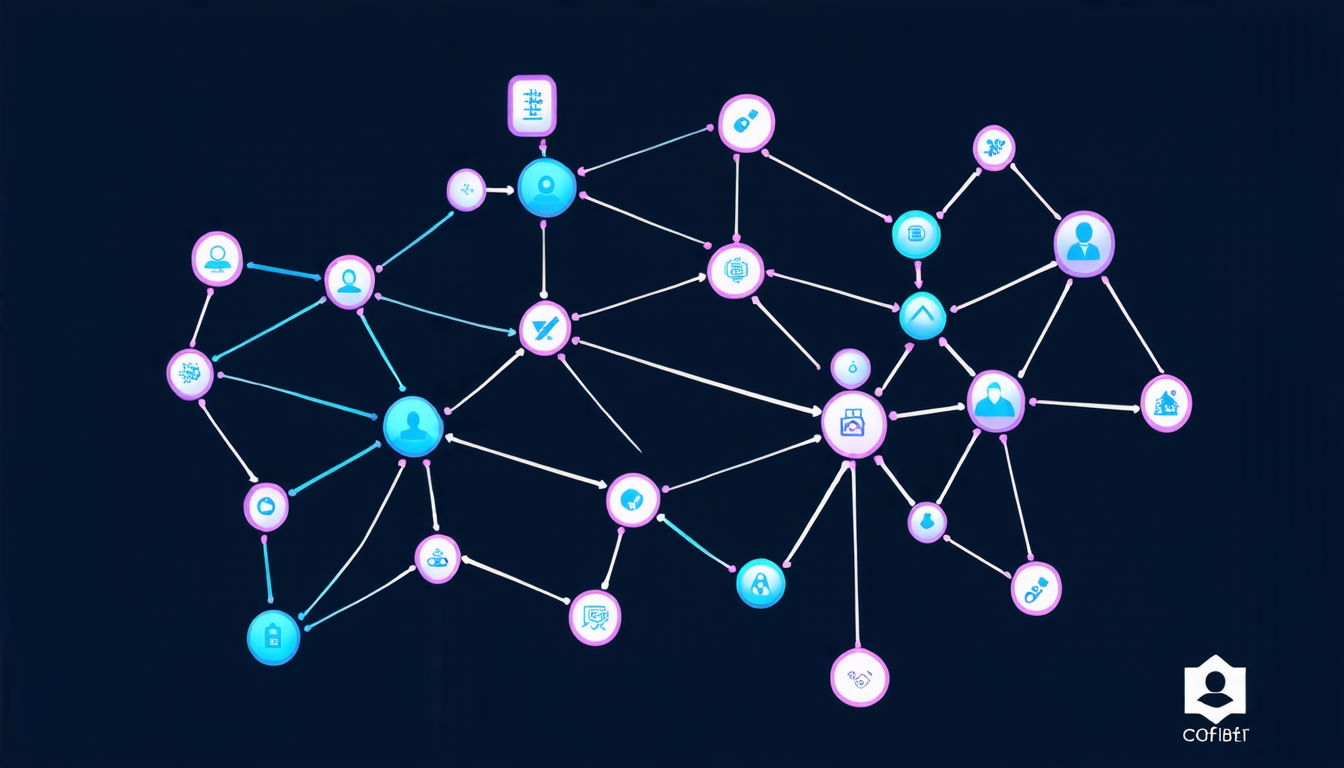
The Human Interactome, a vast network of protein interactions within our cells, holds the key to understanding complex diseases and developing effective treatments. But deciphering this intricate web has proven to be a daunting task. Recently, a team of researchers made a significant breakthrough by introducing a novel approach that leverages the power of transformer models, typically used in natural language processing, to predict disease comorbidities.
Comorbidity refers to the simultaneous occurrence of two or more diseases in an individual, often making treatment and diagnosis more challenging. By analyzing the Human Interactome, scientists can identify patterns and relationships between proteins that may contribute to the development of comorbidities. However, the sheer scale and complexity of this data have hindered efforts to develop accurate predictive models.
Enter the Transformer Model, a neural network architecture designed for sequence-to-sequence tasks like language translation. By adapting this model for graph-based data, researchers can capture subtle relationships between proteins in the Human Interactome. The key innovation lies in the use of subgraph positional encoding, which integrates disease association information into the node embeddings.
In practical terms, this means that the model is trained on a dataset of protein interactions and their corresponding disease associations. When predicting comorbidities, the model incorporates not only the protein interactions but also the specific diseases associated with each protein. This hybrid approach enables the model to identify patterns and relationships between proteins that may contribute to the development of comorbidities.
The results are impressive: in a benchmark study using real-world clinical data, the novel approach outperformed existing methods by significant margins. The model achieved an average increase of 28.24% in ROC-AUC (a measure of predictive accuracy) and 4.93% in accuracy compared to state-of-the-art methods.
This breakthrough has far-reaching implications for disease diagnosis and treatment. By accurately predicting comorbidities, healthcare providers can develop targeted interventions and personalized treatments. Moreover, the model’s ability to capture subtle relationships between proteins opens up new avenues for understanding complex diseases and identifying potential therapeutic targets.
The Human Interactome is a vast and complex network, but with the power of transformer models and subgraph positional encoding, scientists are now better equipped to unravel its secrets. As researchers continue to refine this approach, we can expect even more accurate predictions and novel insights into the intricate workings of our bodies.
Cite this article: “Unlocking Comorbidity Secrets: A Novel Transformer Architecture Outperforms State-of-the-Art Methods in Predicting Disease Associations”, The Science Archive, 2025.
Human Interactome, Protein Interactions, Disease Comorbidities, Transformer Models, Neural Networks, Graph-Based Data, Subgraph Positional Encoding, Disease Associations, Predictive Accuracy, Personalized Treatments.





