

Sunday 06 April 2025
Scientists have long been fascinated by the intricate dance of forces that govern the breakage of rocks and minerals. A new study has shed light on this complex process, using cutting-edge technology to capture the high-speed dynamics of particle fragmentation in real-time.
The research team, led by experts at the Australian National University, developed a custom-built drop weight test apparatus to simulate the intense forces involved in rock crushing. This innovative setup allowed them to record the breakage process at a resolution of 50 microseconds per frame, providing an unprecedented level of detail.
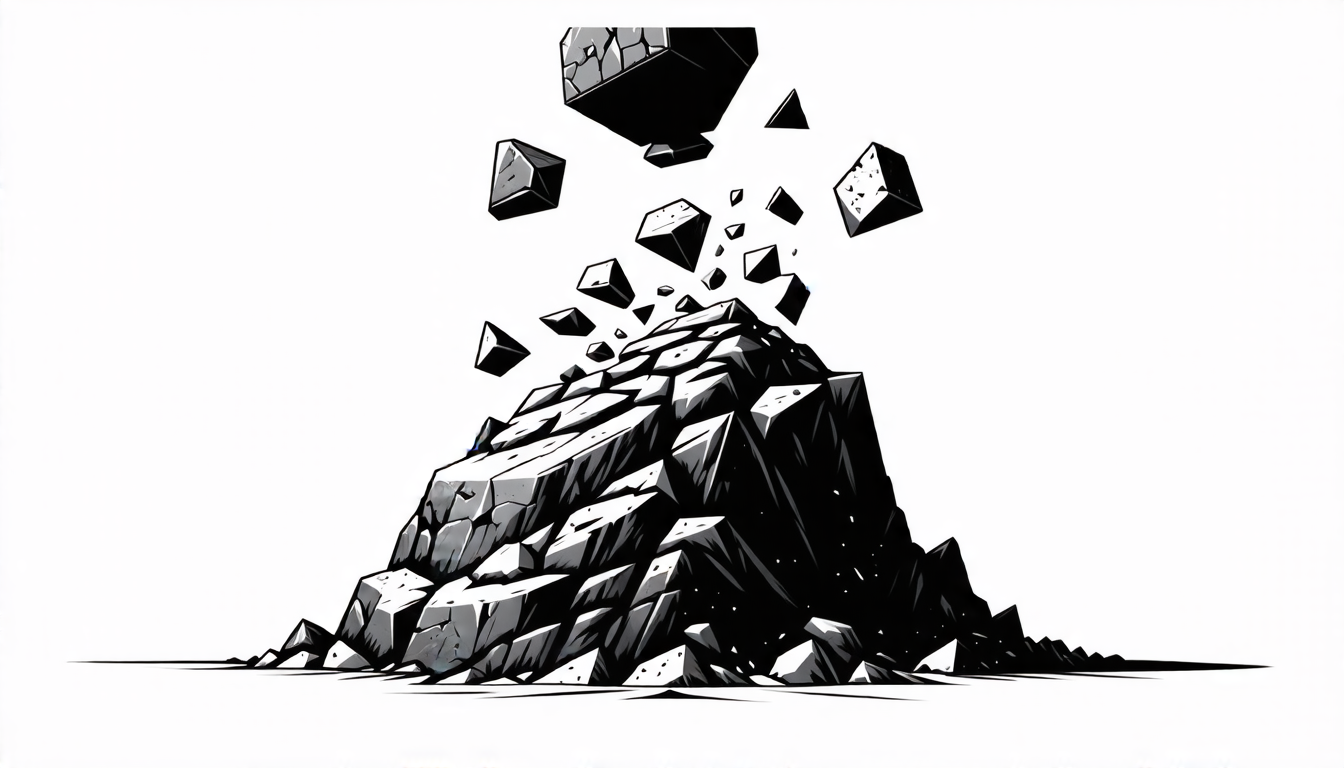
In their experiment, the researchers focused on the fragmentation of a single iron ore particle, carefully monitoring its response to the impactor’s forceful descent. The data revealed a two-stage breakage regime, with the particle initially fracturing into large fragments before undergoing further fragmentation into smaller particles.
By analyzing the 3D morphology of these fragments using X-ray micro-computed tomography (micro-CT), the team was able to quantify their size and shape in unprecedented detail. This information is crucial for understanding the mechanical behavior of rocks and minerals, as it can inform the development of more efficient mining and processing techniques.
One of the most striking aspects of this study is its ability to capture the intricate interplay between the particle’s internal structure and the external forces acting upon it. The researchers observed that the fragments’ shapes and sizes were closely tied to their position within the original particle, with larger fragments forming near the surface and smaller ones emerging from the interior.
This newfound understanding of rock fragmentation has significant implications for a range of industries, including mining, construction, and geotechnical engineering. By better grasping the complex dynamics of particle breakage, scientists can develop more effective methods for extracting valuable minerals, predicting rock stability, and mitigating the risks associated with natural disasters such as landslides.
The authors’ innovative approach to studying rock fragmentation has opened up new avenues for research in this field, offering a glimpse into the intricate mechanisms that govern the behavior of rocks and minerals under extreme conditions. As scientists continue to push the boundaries of their understanding, we can expect even more exciting breakthroughs in the years to come.
Cite this article: “Unveiling the Secrets of Iron Ore Breakage: A High-Speed Imaging Study”, The Science Archive, 2025.
Rock Fragmentation, Particle Breakage, Iron Ore, Drop Weight Test, X-Ray Micro-Ct, Micro-Computed Tomography, Mechanical Behavior, Mining, Construction, Geotechnical Engineering





