

Sunday 06 April 2025
A dwarf galaxy has been discovered lurking in the shadows of a nearby spiral galaxy, its presence only revealed through subtle changes in the chemical makeup of the stars within. The find is a significant one, offering astronomers new insights into how galaxies like our own Milky Way formed and evolved over billions of years.
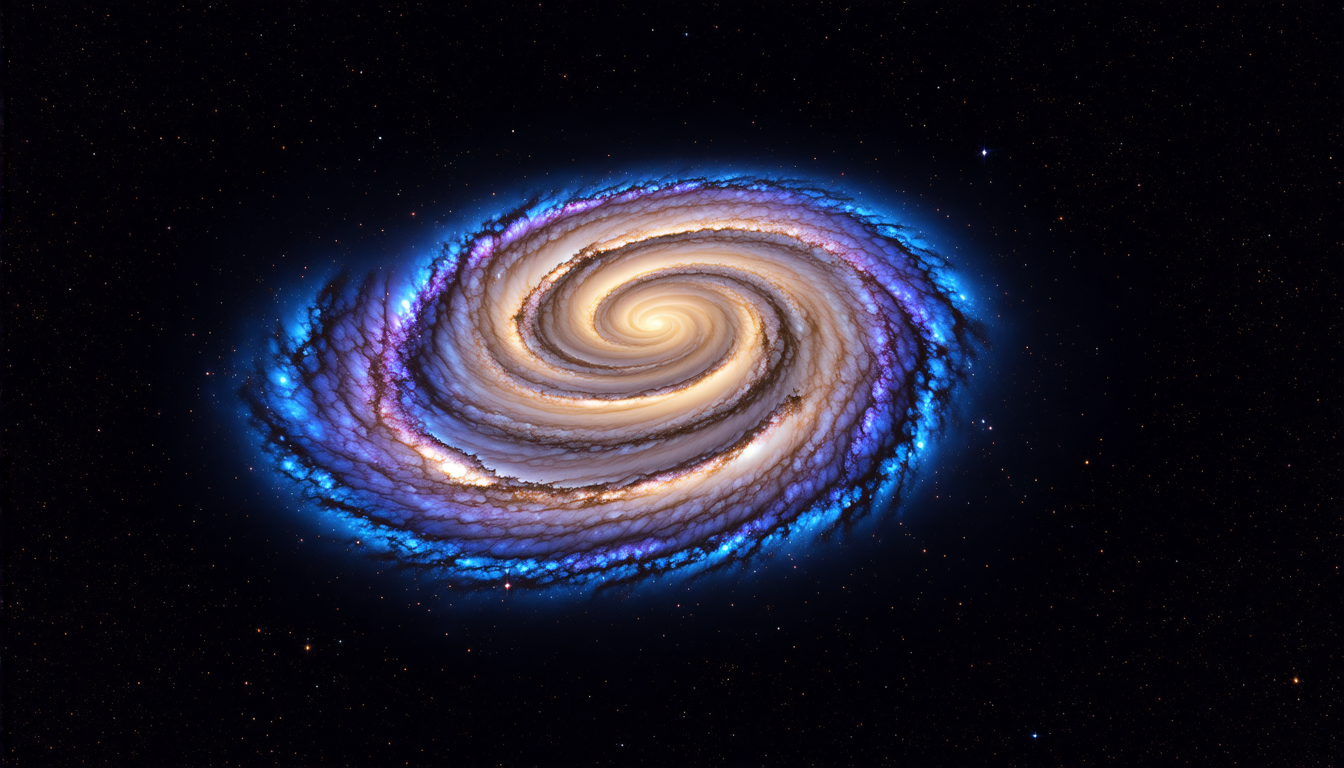
The spiral galaxy in question, known as IC 1553, is a massive disk-shaped system with a bright central bulge and sweeping arms of stars, gas, and dust. It’s the kind of galaxy that astronomers have been studying for decades, but despite its familiarity, scientists still don’t fully understand how it came to be.
That’s where the dwarf galaxy comes in. Using data from the Multi-Unit Spectroscopic Explorer (MUSE) instrument on the Very Large Telescope in Chile, researchers were able to map the chemical composition of stars within IC 1553 with unprecedented precision. What they found was a subtle but significant anomaly – a region of the galaxy where the stars were more metal-poor and had higher levels of certain elements, like alpha particles, than the surrounding areas.
Further analysis revealed that this anomaly was not simply a local phenomenon, but rather a sign of a much larger structure lurking just beyond the edge of IC 1553’s central bulge. The dwarf galaxy, which is about one-tenth the size and mass of its spiral companion, had been hiding in plain sight, its presence masked by the glare of the brighter stars around it.
The discovery offers several exciting avenues for further research. For one, it provides a unique opportunity to study the interaction between galaxies like IC 1553 and their smaller, more distant companions. This can help astronomers better understand how galaxies merge and evolve over time, potentially shedding light on the formation of our own Milky Way.
Additionally, the discovery highlights the importance of MUSE’s ability to map the chemical composition of stars at high resolution. By analyzing the subtle changes in the chemical makeup of stars across IC 1553, researchers were able to detect the presence of the dwarf galaxy and its unique properties.
As scientists continue to study this new dwarf galaxy and its relationship with IC 1553, they’re likely to uncover even more secrets about the formation and evolution of galaxies like our own. And who knows – maybe one day we’ll discover that our own Milky Way has a similar hidden companion waiting to be discovered.
Cite this article: “Stellar Sleuths Uncover Hidden Galaxy Satellite”, The Science Archive, 2025.
Galaxies, Dwarf Galaxy, Spiral Galaxy, Ic 1553, Muse, Very Large Telescope, Chemical Composition, Alpha Particles, Star Formation, Galaxy Evolution





