

Sunday 06 April 2025
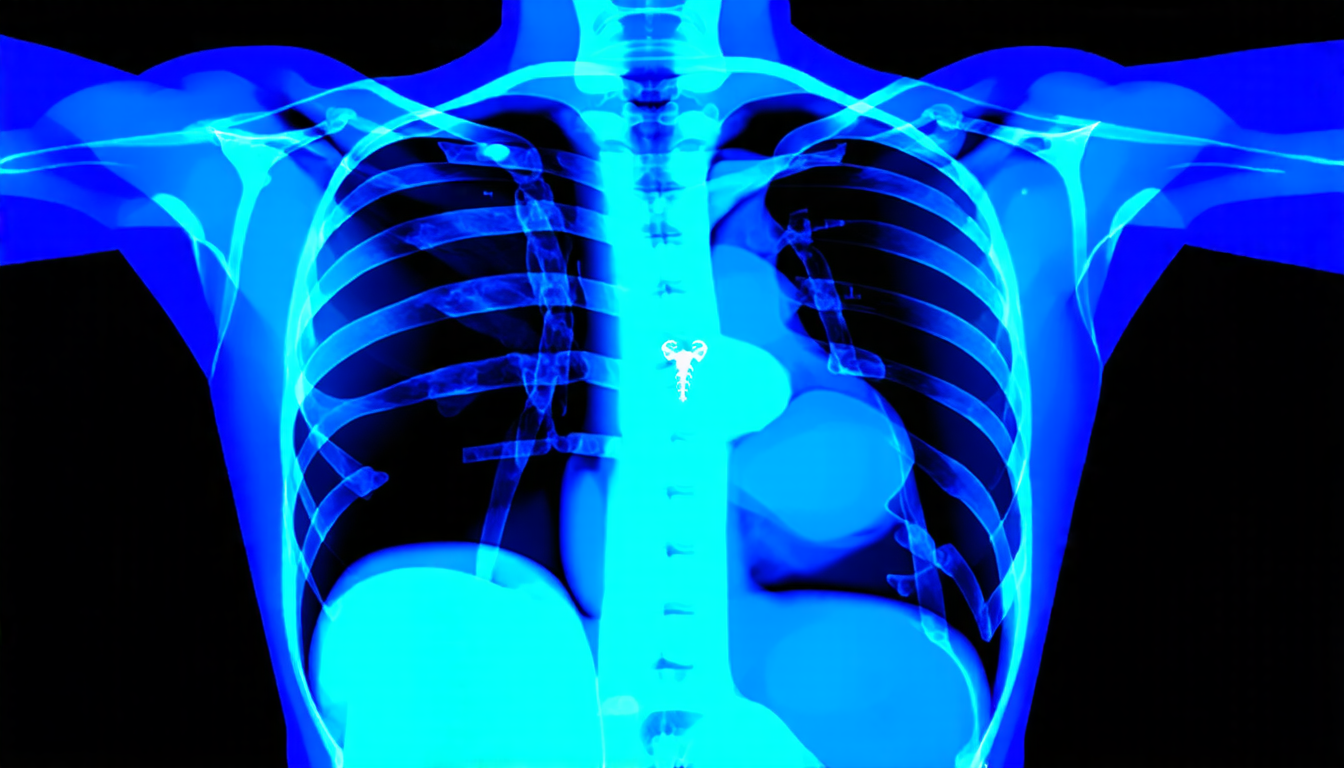
The quest for AI-powered medical diagnosis has long been a holy grail for researchers and clinicians alike. One major hurdle in achieving this goal is the challenge of accurately identifying abnormal findings in medical images, such as X-rays and CT scans. A team of scientists has made significant strides in addressing this issue by developing an innovative approach that leverages large language models to enhance visual understanding.
The key innovation lies in decomposing medical concepts into fundamental attributes and common visual patterns. This strategy promotes a stronger alignment between textual descriptions and visual features, allowing the AI system to better recognize and localize abnormalities within images. By integrating fine-grained, disease-specific knowledge into the model, researchers have demonstrated that smaller, task-specific models can achieve performance comparable to much larger VLMs trained on extensive datasets.
The study’s authors have evaluated their approach on several public datasets, including VinDr-CXR and PadChest-GR, with impressive results. In particular, they’ve shown that their knowledge-enhanced prompts method outperforms the baseline across all evaluation metrics, including mAP50 and mAP75. Moreover, the model exhibits strong generalization capabilities, even when tested on unseen datasets and disease classes.
This breakthrough has significant implications for medical imaging analysis. By leveraging large language models to enhance visual understanding, researchers can develop more accurate and efficient diagnostic tools. This could lead to improved patient outcomes, reduced healthcare costs, and enhanced clinician productivity.
The study’s authors have also highlighted several avenues for future research. Expanding the knowledge base to include a broader range of diseases and integrating multimodal data sources are two key areas of focus. Additionally, exploring dynamic prompt adjustment for each disease could further optimize model performance.
While the prospect of AI-powered medical diagnosis is still in its early stages, this innovative approach represents a significant step forward. As researchers continue to refine their methods and expand their datasets, we can expect to see even more impressive results in the future.
Cite this article: “Unlocking the Power of Knowledge-Enhanced Vision Language Models for Abnormality Detection in Medical Images”, The Science Archive, 2025.
Ai-Powered Medical Diagnosis, Medical Images, X-Rays, Ct Scans, Large Language Models, Visual Understanding, Disease-Specific Knowledge, Medical Imaging Analysis, Patient Outcomes, Healthcare Costs, Clinician Productivity





