

Sunday 06 April 2025
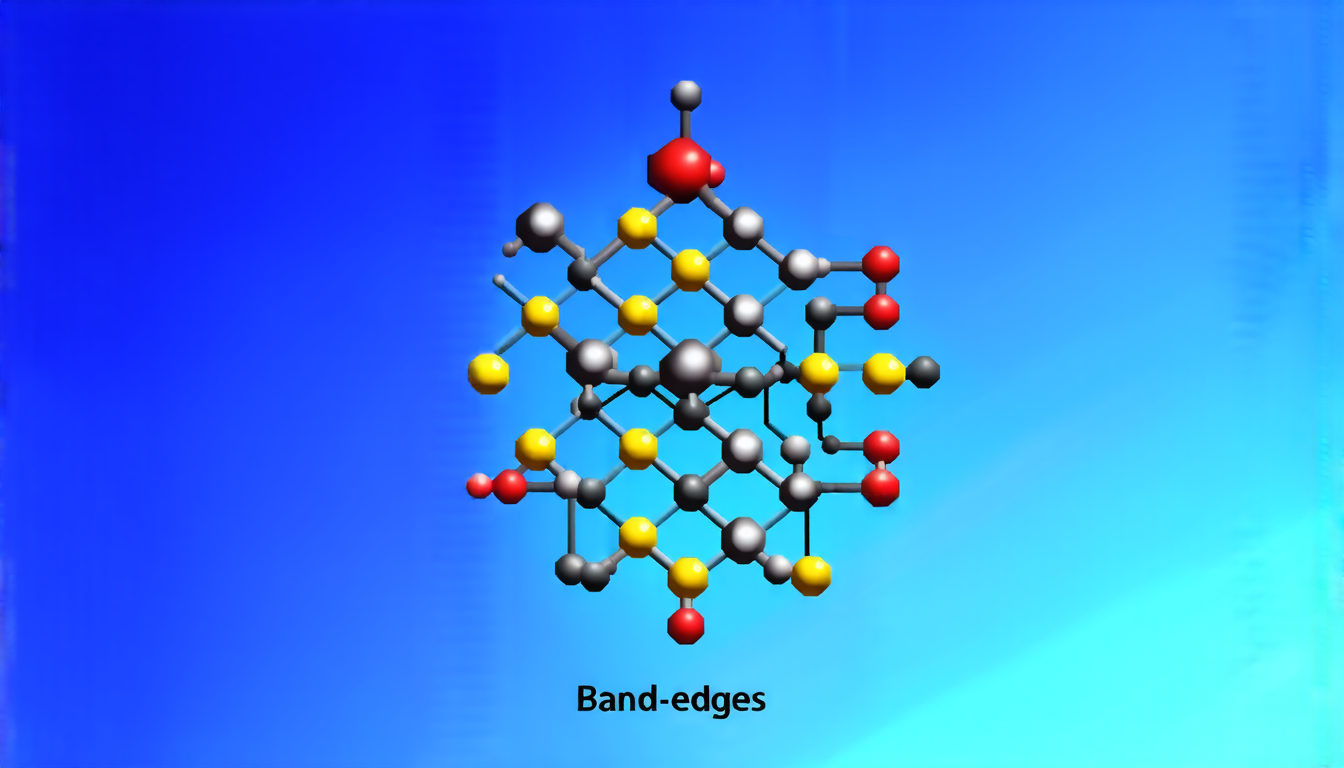
The quest for tunable electronics has led researchers to the realm of transition metal dichalcogenides (TMDs), a class of materials that have captivated scientists due to their unique electronic properties. The latest development in this field comes from a team of scientists who have successfully demonstrated gate-tunable band-edges in four-layer MoS2, a crucial step towards realizing valleytronic and electronic applications.
MoS2 is a 2D material composed of molybdenum and sulfur atoms arranged in a hexagonal lattice. Its electronic structure is characterized by multiple valleys, which are regions where the conduction or valence bands meet the Fermi level. In previous studies, researchers have explored the properties of MoS2 with varying numbers of layers, but the behavior of four-layer MoS2 remained largely unexplored.
To investigate this material, the scientists employed a dual-gated device architecture, which allowed them to independently control the density and valley occupation in the top layer. By applying gate voltages, they were able to modulate the conduction band edge and observe a transition from Q-valley to K-valley occupation. This transition was accompanied by changes in the density of states, which reflected the shifting of electrons between the two valleys.
The researchers used a hybrid k·p tight-binding model to simulate the behavior of four-layer MoS2 under various gate biases. Their model accounted for interlayer screening effects and layer-specific charge accumulation, allowing them to accurately predict the experimental results. By extending their model to bilayer and three-layer MoS2, they were able to resolve discrepancies between previous theoretical predictions and experimental observations.
This study has significant implications for the development of valleytronic devices, which rely on precise control over electron occupation in specific valleys. The ability to tune the band-edges in four-layer MoS2 opens up new possibilities for designing electronic devices that can operate at high speeds while minimizing power consumption.
Furthermore, this research highlights the importance of considering interlayer screening effects and layer-specific charge accumulation when modeling the behavior of TMDs. By incorporating these factors into their simulations, scientists can gain a deeper understanding of the complex interactions between electrons in these materials.
The discovery of gate-tunable band-edges in four-layer MoS2 is a significant step forward in the pursuit of tunable electronics.
Cite this article: “Gate-Tuning Valley Occupation in Multilayer MoS2: A Key to Unlocking Valleytronics”, The Science Archive, 2025.
Mos2, Transition Metal Dichalcogenides, Gate-Tunable Band-Edges, Valleytronics, Electronic Properties, Dual-Gated Device Architecture, K·P Tight-Binding Model, Interlayer Screening Effects, Layer-Specific Charge Accumulation, Tun





