

Sunday 06 April 2025
The curious phenomenon of light-induced currents in materials has long fascinated scientists and engineers alike. Recently, researchers made a significant breakthrough in understanding this process, shedding light on the intricate dance between light, matter, and electricity.
To grasp the concept, consider a material that exhibits time reversal symmetry – think of it as a mirror reflecting its own image. When subjected to circularly polarized light, electrons within the material begin to move in harmony with the photons. This movement creates an electric current, which would seem innocuous if not for the peculiar properties of the material.
The key insight lies in the geometric quantities that govern this process. Geometric tensors and triple phase products emerge as crucial components, governing the behavior of the electrons within the material. These tensors describe the relationships between the material’s energy landscape, its symmetry properties, and the light-induced currents.
The researchers’ findings reveal a fascinating interplay between real and imaginary parts of these geometric quantities. In materials with time reversal symmetry, the injection current conductivity – responsible for generating electric fields – is purely imaginary. Conversely, in materials with centrosymmetry, this conductivity becomes purely real.
Furthermore, the study highlights the importance of relaxation times, which determine how quickly electrons adjust to changes in their environment. This has significant implications for designing and optimizing materials for specific applications.
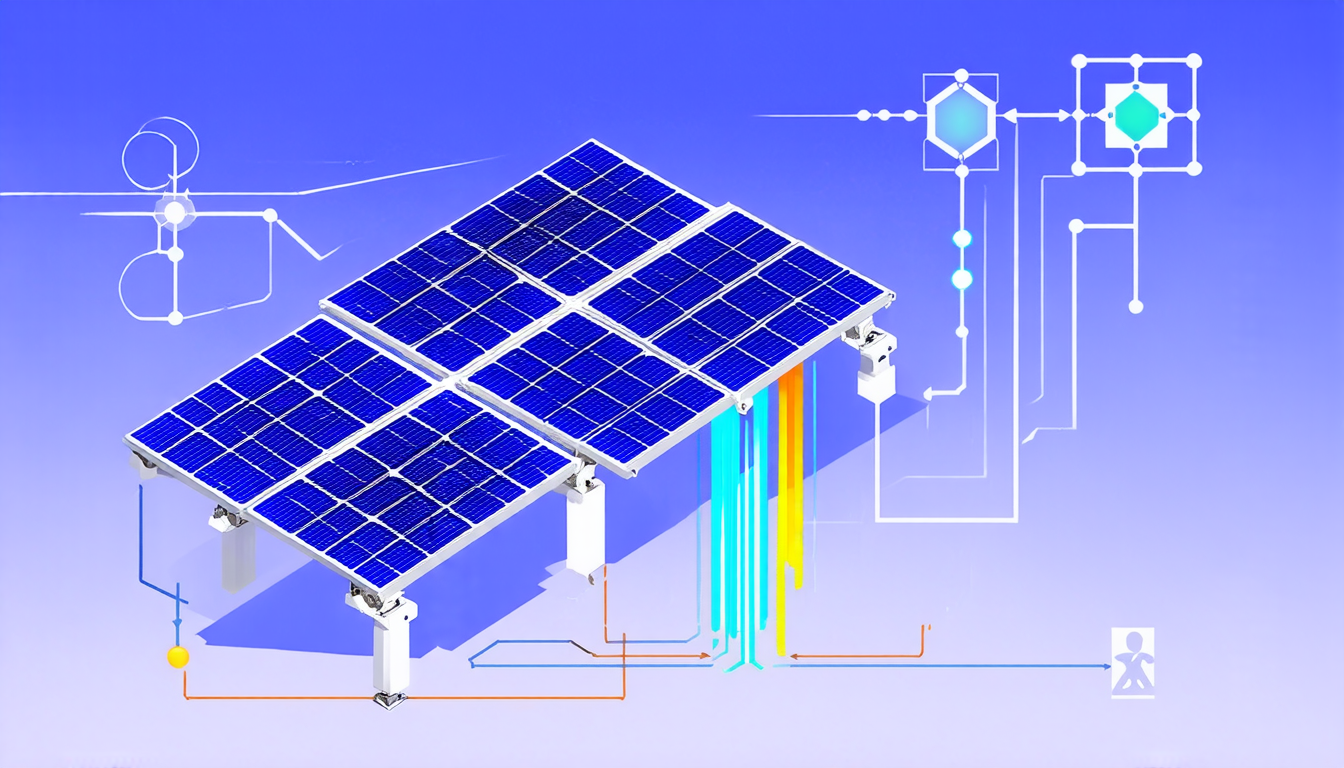
One application that’s particularly exciting is the potential for photovoltaic devices. By carefully crafting materials with tailored geometric properties, researchers may be able to enhance the efficiency of solar panels or even create new classes of devices capable of harnessing light-induced currents.
The research also opens up avenues for studying topological insulators and other exotic materials, where the interplay between geometry and physics becomes particularly intricate. The possibilities are vast, as scientists explore the boundaries of what’s possible in these strange and fascinating states of matter.
In essence, this breakthrough represents a significant step forward in our understanding of light-matter interactions, with far-reaching implications for fields such as materials science, optics, and electronics. As researchers continue to probe the mysteries of geometric tensors and triple phase products, we can expect even more surprising discoveries that will shape the future of innovation.
Cite this article: “Unveiling the Geometric Secrets of Quantum Transport in Solids”, The Science Archive, 2025.
Light-Induced Currents, Geometric Tensors, Triple Phase Products, Time Reversal Symmetry, Centrosymmetry, Injection Current Conductivity, Relaxation Times, Photovoltaic Devices, Topological Insulators, Optics





