

Sunday 06 April 2025
Scientists have long been fascinated by the intricate patterns and structures that emerge in complex systems, such as networks of connections between people or molecules. In a recent study, researchers have made a significant breakthrough in understanding one particular type of pattern: cycles in graphs.
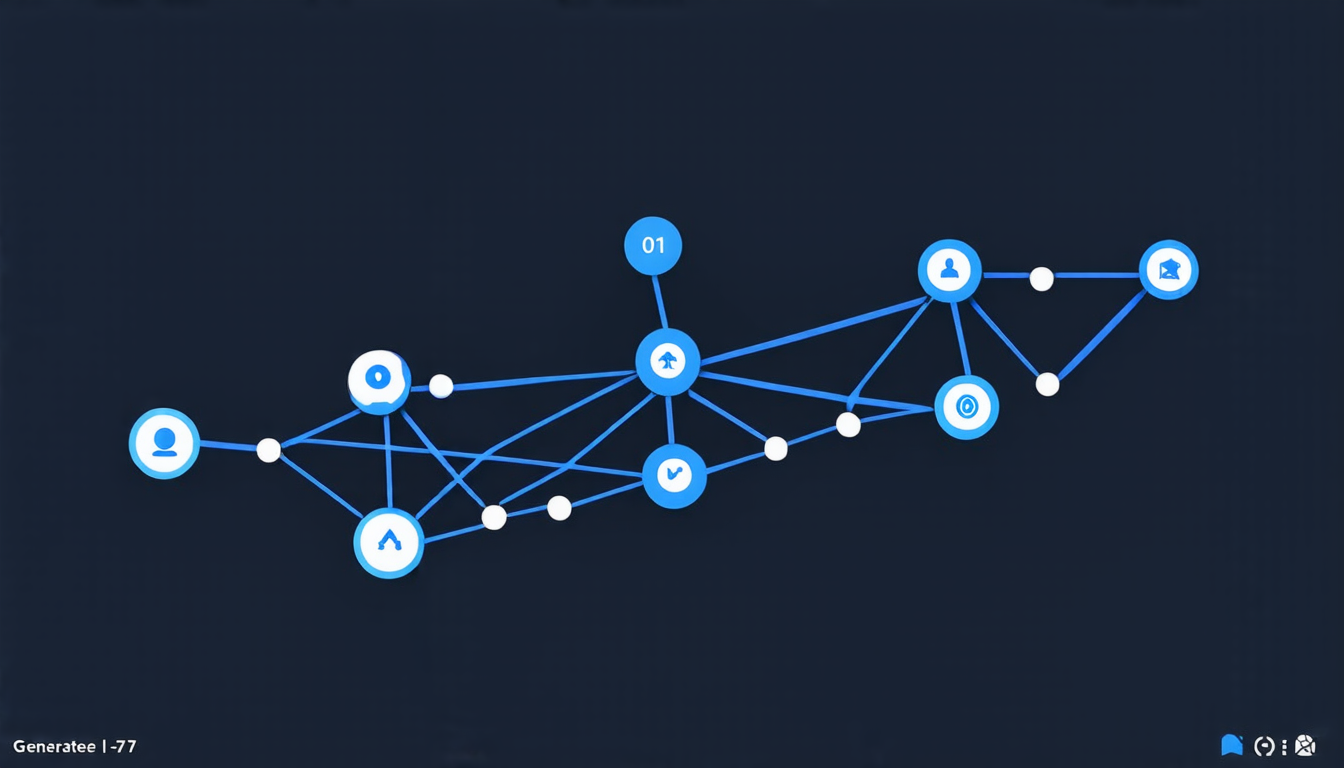
A graph is essentially a collection of points connected by lines, which can represent relationships between objects, individuals, or even concepts. Cycles are loops within the graph where you can start at any point and follow the connections until you return to the starting point. In this case, the researchers focused on cycles with lengths that differ by one or two modulo three.
The study revealed that there is an upper limit to the number of edges in a graph without cycles of length one modulo three. This may seem like a abstract concept, but it has important implications for our understanding of complex systems. For example, consider a social network where individuals are connected by friendships or online interactions. If we want to identify clusters or groups within this network, we need to be able to distinguish between different types of relationships.
The researchers used mathematical techniques and computer simulations to analyze large datasets and identify patterns that emerge in graphs with cycles of length one modulo three. They found that there is a threshold beyond which the number of edges in the graph becomes too great for these cycles to exist. This threshold is surprisingly low, especially considering that many real-world networks have far more connections than this.
One surprising aspect of their findings is that the same patterns emerge regardless of the size or complexity of the graph. Whether it’s a small network of friends or a vast online community, the same rules apply. This suggests that there may be underlying principles governing the behavior of complex systems, even if we can’t always see them at work.
The study also raises questions about how these patterns might be exploited to improve our understanding and control of complex systems. For example, identifying clusters within a network could help us target specific areas for interventions or optimize communication strategies. By understanding the underlying structure of these networks, we may be able to make more informed decisions and create more effective solutions.
The researchers’ work has far-reaching implications for fields such as social network analysis, epidemiology, and computer science. It provides a new framework for understanding complex systems and identifying patterns that were previously hidden. As our world becomes increasingly interconnected, this research offers valuable insights into the intricate web of relationships that surrounds us.
Cite this article: “Unlocking the Secrets of Graph Cycles: A Study on Consecutive Lengths”, The Science Archive, 2025.
Graph Theory, Complex Systems, Networks, Cycles, Patterns, Connections, Relationships, Social Network Analysis, Epidemiology, Computer Science.





