

Sunday 06 April 2025
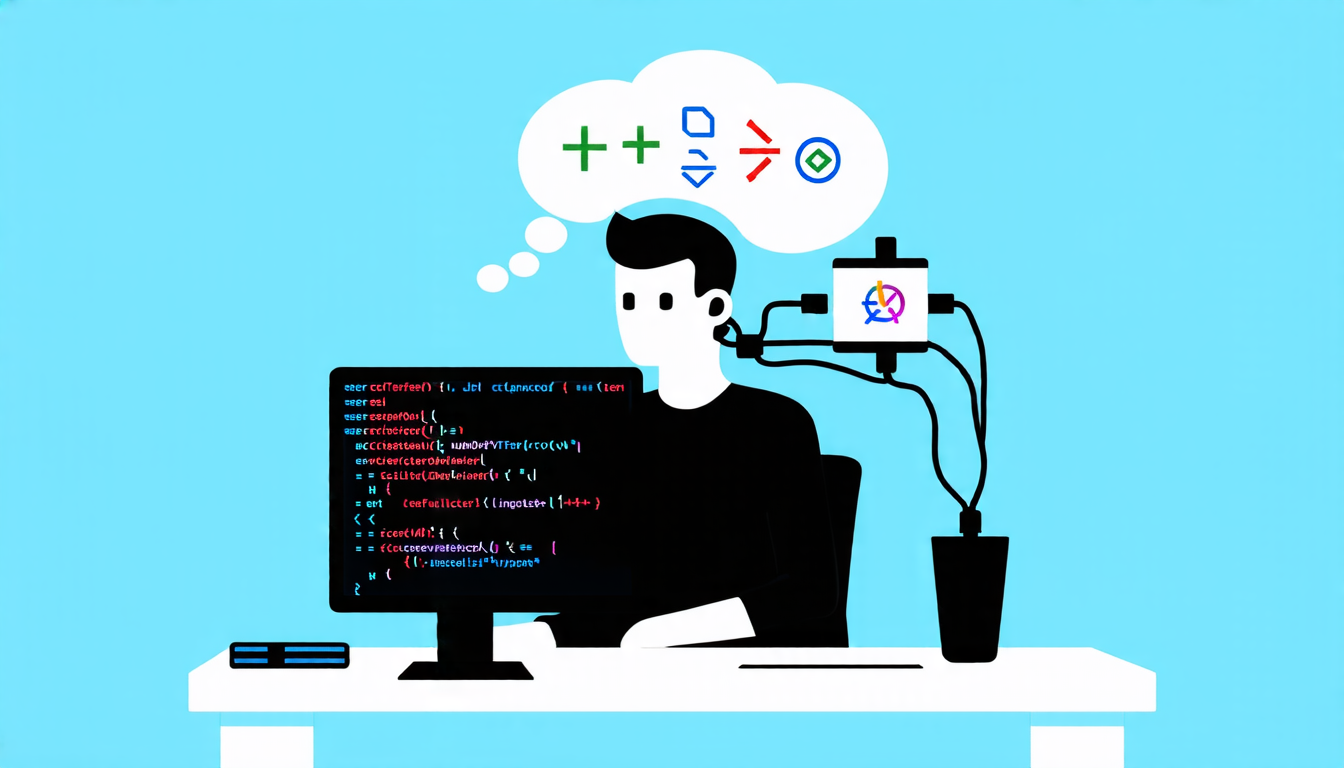
Software developers spend countless hours staring at lines of code, trying to make sense of it all. But have you ever wondered what’s going on in their brains while they work? A team of researchers has been investigating this very question, using special sensors and software to track the physiological responses of developers as they work.
The goal is to better understand how cognitive load affects developers’ productivity and code quality. Cognitive load refers to the amount of mental effort required to complete a task, which can be influenced by factors such as complexity, uncertainty, or distractions. By tracking physiological responses like heart rate, electrodermal activity, and brain waves, researchers hope to identify patterns that correspond to different levels of cognitive load.
The study used an open-source tool called CognitIDE, which integrates with popular Integrated Development Environments (IDEs) like IntelliJ. This allows developers to work on their code while wearing special sensors that track their physiological responses in real-time. The data is then analyzed to identify patterns and correlations between specific coding tasks and cognitive load.
The researchers recruited four participants, including students and research assistants, who completed a series of simulated coding tasks. These tasks were designed to mimic everyday software development activities, such as debugging, code documentation, and email writing. Between each task, the participants filled out questionnaires assessing their perceived workload using the NASA Task Load Index (NASA-TLX).
The results showed that physiological activity increased during programming tasks compared to baseline recordings. Specifically, heart rate and electrodermal activity were higher during coding tasks, indicating a greater mental effort required to complete them. Brain wave analysis revealed changes in alpha and theta frequency bands, which are associated with cognitive load.
But what does this mean for developers? By identifying patterns of physiological responses corresponding to specific coding tasks, researchers can develop strategies to reduce cognitive load and improve productivity. For example, highlighting code sections that induce higher cognitive load could help developers focus on the most challenging parts of their code.
The study also highlights the potential benefits of using wearable sensors in software development settings. By tracking physiological responses in real-time, developers can gain insights into their own thought processes and adjust their work habits accordingly. This could lead to improved code quality, reduced errors, and increased job satisfaction.
While this study is just a starting point, it holds promise for revolutionizing our understanding of the complex relationships between software development, cognitive load, and physiological responses.
Cite this article: “Unraveling Cognitive Load in Software Development: A Study on Physiological Activity and Source Code Interaction”, The Science Archive, 2025.
Software Development, Cognitive Load, Physiological Responses, Heart Rate, Electrodermal Activity, Brain Waves, Coding Tasks, Productivity, Code Quality, Wearable Sensors





