

Sunday 06 April 2025
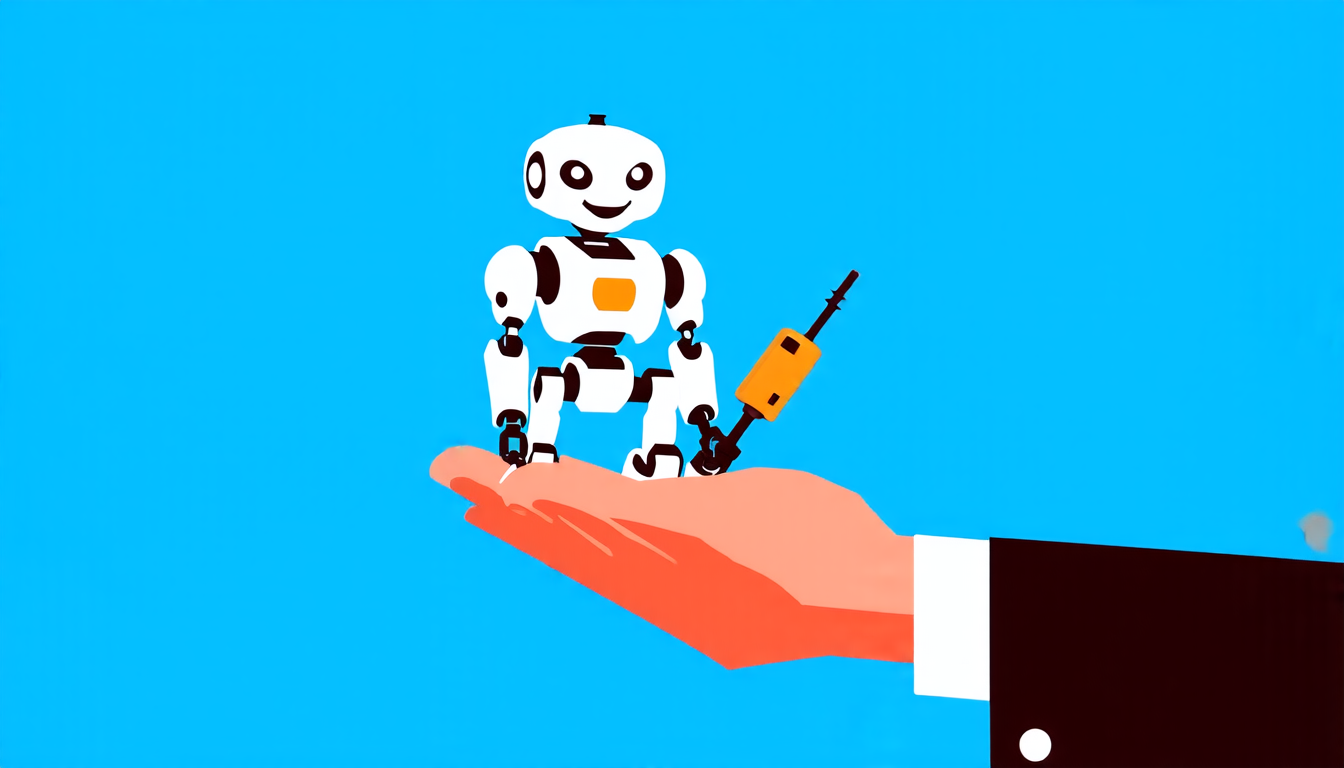
Scientists have made a significant breakthrough in developing a system that allows robots to hand over objects to humans seamlessly, mimicking the way we naturally transfer items to each other. This achievement has the potential to revolutionize human-robot collaboration and open up new possibilities for robotics applications.
The system, developed by researchers at the University of Leicester, uses a combination of language processing and computer vision to enable robots to infer the intent behind a human’s request to hand over an object. For instance, if a person asks a robot to pass them a screwdriver, the robot will not only identify the correct tool but also determine which hand the person is holding out for it.
The researchers used a dataset of daily household objects, including tools, kitchenware, and electronic devices, to train their model. They then tested the system using 16 different objects, with promising results. The robotic gripper was able to accurately deliver the object to the human’s hand in almost all cases, without making contact with the human’s hand.
One of the key challenges the researchers faced was developing a system that could understand subtle cues from humans, such as eye gaze and body language. They achieved this by using multimodal large language models (LLMs) to analyze both visual and verbal inputs. These LLMs are capable of processing complex sentences and identifying specific objects mentioned within them.
The system also includes a diffusion-based model that generates the handover configuration, taking into account the spatial relationship between the robot’s gripper, the object, and the human’s hand. This ensures that the object is transferred safely and efficiently.
While this technology has significant potential applications in areas such as manufacturing, healthcare, and logistics, it also raises interesting questions about the future of human-robot interaction. As robots become increasingly integrated into our daily lives, we may see a shift towards more seamless and natural interactions between humans and machines.
The researchers are continuing to refine their system and explore new applications for this technology. They hope that their work will contribute to the development of more advanced and sophisticated robotic systems that can assist us in various ways. With its potential to improve safety, efficiency, and collaboration, this breakthrough has far-reaching implications for the future of robotics.
Cite this article: “Unlocking Human-Robot Collaboration: A Novel Approach to Object Handover Using Multimodal Language Models and Diffusion Techniques”, The Science Archive, 2025.
Robotics, Human-Robot Collaboration, Object Transfer, Language Processing, Computer Vision, Multimodal Large Language Models, Handover Configuration, Diffusion-Based Model, Robotic Gripper, Seamless Interaction.





