

Sunday 06 April 2025
As our planet continues to grapple with the challenges of climate change, transportation is emerging as a key area for innovation. In Addis Ababa, Ethiopia’s bustling capital city, researchers have been working on a solution that could revolutionize the way we get around: electric vehicles.
The problem is that many cities in developing countries don’t have the infrastructure to support widespread adoption of electric cars. Charging stations are scarce, and the grid isn’t equipped to handle the added demand. But what if you could harness the power of the sun to charge your car?
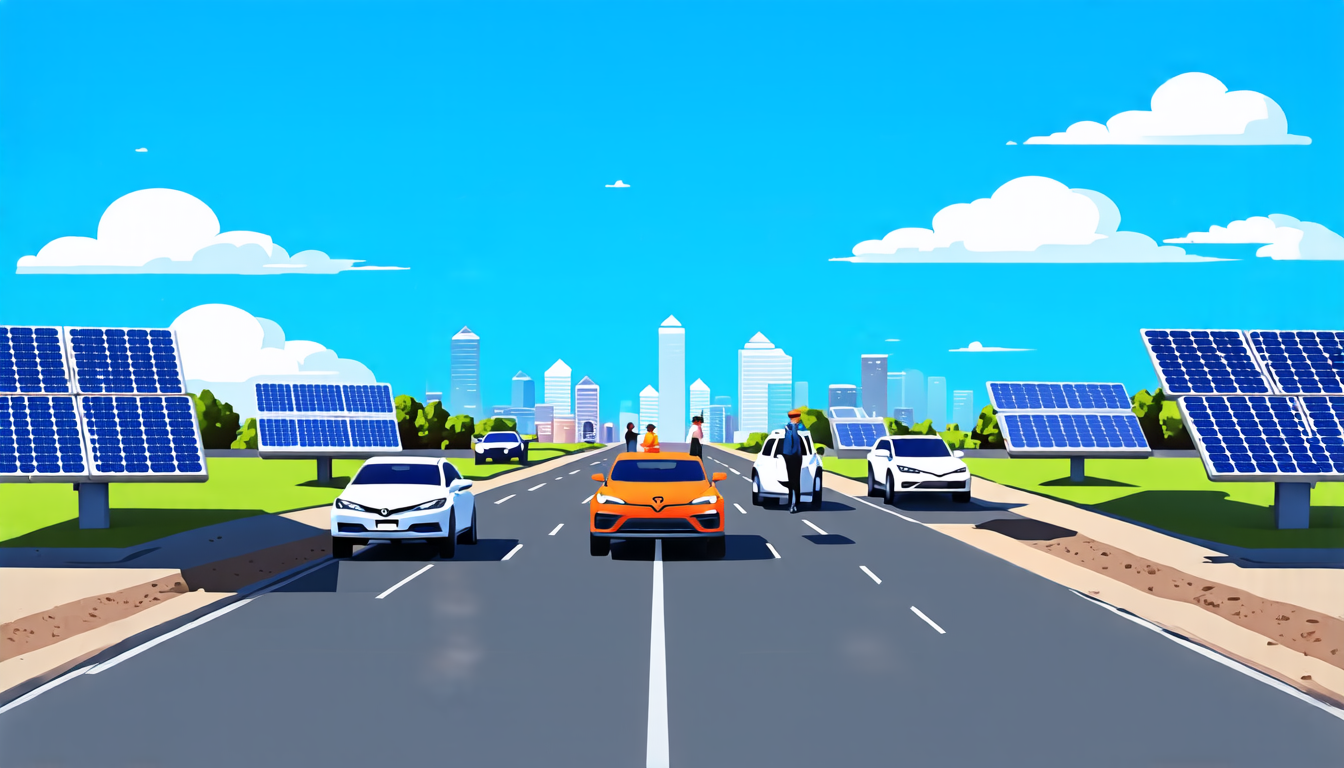
A team of scientists has been working on a novel approach that combines solar energy with electric vehicle charging. Using advanced computer simulations, they’ve developed a framework that can predict where and when people are most likely to need charging stations. The result is a system that’s both efficient and cost-effective.
One of the key challenges was figuring out how to balance the demand for electricity with the capacity of the grid. By analyzing data on traffic patterns and energy usage, the researchers were able to identify areas where charging stations would be most useful. They also developed a sophisticated algorithm that can adjust the charging speed based on the time of day and the availability of renewable energy.
But how does it all work? The system starts by using satellite imagery and mapping software to create a detailed picture of Addis Ababa’s roads and neighborhoods. From there, researchers use machine learning algorithms to analyze traffic patterns and identify areas where people are most likely to need charging stations.
Once they’ve identified the hotspots, the team uses another algorithm to determine how many charging stations would be needed to meet demand. This is where solar energy comes in – by integrating rooftop solar panels with charging stations, the system can harness the power of the sun to charge cars during peak hours.
The results are impressive: simulations show that the system could reduce carbon emissions from transportation by as much as 50% in Addis Ababa alone. And it’s not just about reducing emissions – the system also has the potential to create jobs and stimulate local economies.
As cities around the world grapple with the challenges of climate change, this innovative approach offers a glimpse into a future where transportation is cleaner, more efficient, and more sustainable. By combining cutting-edge technology with careful planning, we can build a better, brighter future for all – one that’s powered by the sun, not fossil fuels.
Cite this article: “Accelerating Electric Vehicle Adoption in Africa: A Spatial Analysis of Charging Infrastructure and Energy Demand”, The Science Archive, 2025.
Electric Vehicles, Solar Energy, Transportation, Climate Change, Addis Ababa, Ethiopia, Charging Stations, Grid Capacity, Renewable Energy, Machine Learning





