
Monday 07 April 2025
In a major breakthrough, scientists have cracked the code to understanding how initial conditions impact the timing of biological events in complex systems. By developing an exact formula for calculating the distribution of time it takes for these events to occur, researchers are now one step closer to unraveling the mysteries of cellular biology.
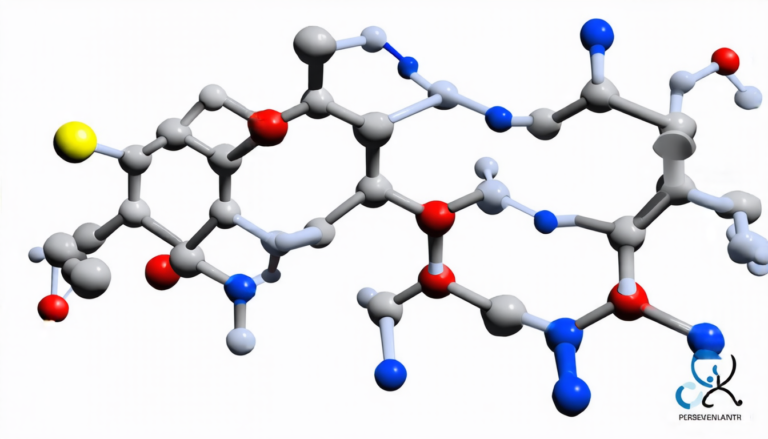
The study focused on a class of biochemical networks, where multiple reactions and interactions between molecules take place simultaneously. To better comprehend how these networks function, scientists needed a way to accurately predict the timing of key biological events, such as gene expression or protein synthesis. However, this proved to be a daunting task due to the inherent complexity of these systems.
The researchers employed a novel approach, using linear stochastic differential equations (SDEs) to model the biochemical network’s behavior over time. By analyzing the solutions to these SDEs, they were able to derive an exact formula for calculating the distribution of first-passage times – the time it takes for a specific biological event to occur.
This breakthrough is significant because it allows scientists to accurately predict the timing of biological events in complex systems. For example, in gene regulation networks, understanding how long it takes for a particular gene to be expressed can have important implications for disease diagnosis and treatment.
The study’s findings also shed light on the relationship between initial conditions and the timing of biological events. The researchers discovered that even small changes in initial conditions can lead to significant variations in the distribution of first-passage times. This has important implications for our understanding of how complex systems function, as it highlights the importance of considering initial conditions when modeling these networks.
In practical terms, this research could have far-reaching applications in fields such as medicine and biotechnology. For instance, by accurately predicting the timing of gene expression, scientists may be able to develop more effective treatments for diseases caused by genetic mutations. Additionally, the study’s findings could inform the design of new biochemical processes and biosensors.
The researchers’ work is a testament to the power of mathematical modeling in understanding complex biological systems. By using a combination of theoretical mathematics and computational simulations, they were able to gain valuable insights into the behavior of these networks and develop new tools for predicting biological events.
In the future, this research could be used as a foundation for further studies on complex biological systems. By combining these findings with other mathematical models and experimental data, scientists may be able to gain an even deeper understanding of how these systems function and develop more accurate predictions of biological events.
Cite this article: “Unlocking the Secrets of Biochemical Networks: A Novel Approach to Analyzing First Passage Times”, The Science Archive, 2025.
Biochemical Networks, Gene Regulation, Initial Conditions, Linear Stochastic Differential Equations, Sdes, First-Passage Times, Biological Events, Cellular Biology, Mathematical Modeling, Complex Systems