

Monday 07 April 2025
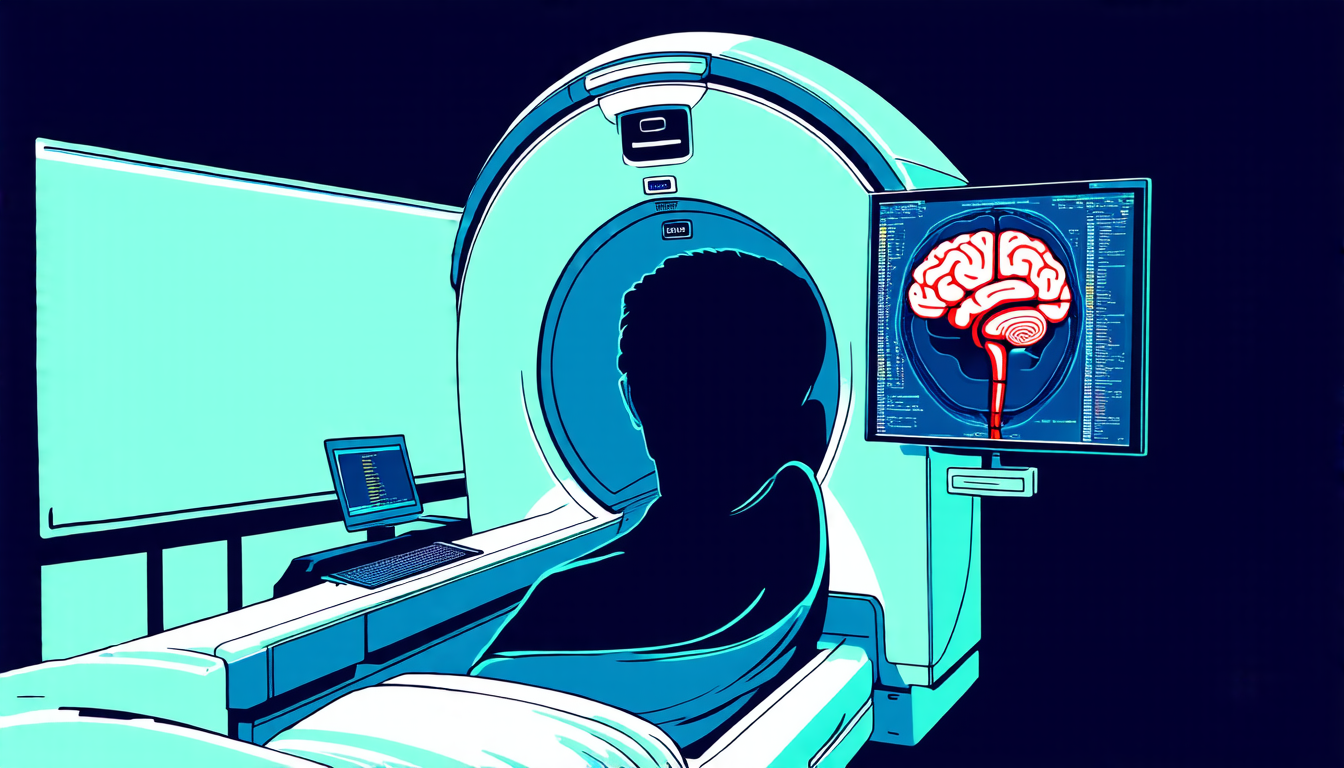
Scientists have made a significant breakthrough in developing a new technology that can synthesize high-quality, ultra-high-field magnetic resonance imaging (MRI) data from low-field MRI scans. This innovation has the potential to revolutionize medical imaging and open up new possibilities for diagnosing and treating various diseases.
Traditional MRI scans are typically performed at high fields strengths, such as 3 Tesla or higher, which provide high-resolution images of internal organs and tissues. However, these machines are expensive, bulky, and often limited in their availability, making it difficult to access them for patients who need them most.
In contrast, low-field MRI scanners are smaller, more portable, and less expensive, but they produce lower-quality images with reduced resolution and signal-to-noise ratio. This has made it challenging to accurately diagnose certain conditions or monitor disease progression using these machines.
To address this issue, researchers have developed a new method called Pretext Task Adversarial (PTA) learning, which can synthesize high-quality, ultra-high-field MRI data from low-field scans. The PTA framework uses a combination of techniques, including slice-wise gap perception, local structure correction, and adversarial training, to improve the accuracy and realism of the synthesized images.
The process begins by pre-training a network on a dataset of paired low- and high-field MRI scans, which helps it learn to identify patterns and relationships between the two. The network is then fine-tuned using an unpaired dataset, where it must generate high-quality, ultra-high-field MRI data from low-field scans without any direct supervision.
The results are impressive: the PTA framework can produce images that are almost indistinguishable from those obtained with a high-field MRI scanner. This has significant implications for medical imaging and diagnosis, as it could enable doctors to access high-quality MRI data more easily and accurately diagnose conditions that were previously difficult or impossible to detect.
For example, in the case of brain tumors, accurate diagnosis is critical for effective treatment. However, low-field MRI scanners often struggle to produce clear images of tumor margins, making it challenging for doctors to determine the best course of action. By synthesizing high-quality, ultra-high-field MRI data from low-field scans using the PTA framework, doctors could potentially gain a more accurate understanding of tumor size and location, leading to better treatment outcomes.
The potential applications of this technology extend far beyond brain tumors, however.
Cite this article: “Revolutionizing MRI Synthesis: A Pretext Task Adversarial Framework for Unpaired Low-Field to Ultra-High Field Image Translation”, The Science Archive, 2025.
Magnetic Resonance Imaging, Mri Technology, Medical Imaging, Disease Diagnosis, Brain Tumors, Low-Field Scanning, High-Field Scanning, Image Synthesis, Artificial Intelligence, Pretext Task Adversarial Learning





