

Tuesday 08 April 2025
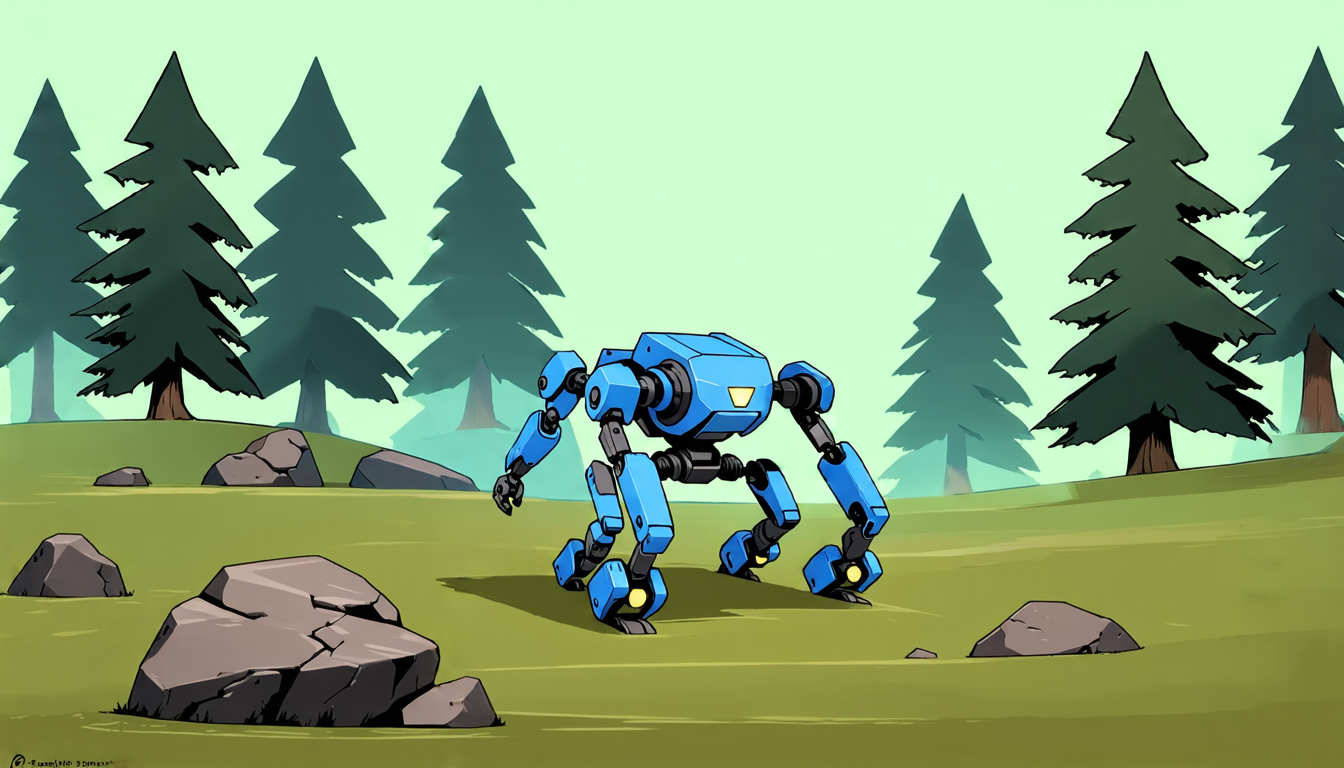
As we navigate the complex world of robotics, a new approach to controlling quadruped robots has emerged. The traditional method of using a centralized controller has been replaced by a decentralized system that allows individual robots to make decisions for themselves.
This shift in strategy is made possible by the development of a distributed model predictive control (DMPC) framework. Unlike traditional methods, DMPC uses multiple controllers working together to achieve a common goal. This allows each robot to respond quickly and adapt to changing situations, making it ideal for applications such as search and rescue missions or environmental monitoring.
The system works by using a combination of model predictive control (MPC) and control barrier functions (CBFs). MPC is a type of optimization technique that predicts the future behavior of a system and makes adjustments accordingly. CBFs are used to ensure safety by creating a virtual boundary around the robots, preventing them from colliding or entering hazardous areas.
The DMPC framework uses SAPIE (Scale-Adaptive Permutation-Invariant Encoding), an encoding mechanism that enables the robots to share information with each other while preserving permutation invariance. This allows the robots to learn and adapt to new situations without requiring retraining.
One of the key benefits of this system is its ability to handle complex scenarios, such as navigating through dense forests or around obstacles. The decentralized nature of the system also makes it more resilient to failures, as if one robot fails, the others can continue to operate independently.
The DMPC framework has been tested in simulations and on real-world robots, with promising results. In one test, a team of quadruped robots was able to navigate through a challenging environment filled with obstacles, demonstrating their ability to adapt and respond to changing situations.
As robotics continues to evolve, it’s clear that decentralized control systems will play an increasingly important role in shaping the future of the field. The DMPC framework is just one example of how this technology can be used to create more efficient, adaptable, and resilient robots. As researchers continue to push the boundaries of what’s possible, we can expect to see even more innovative applications of decentralized control systems in the years to come.
Cite this article: “Autonomous Quadrupedal Robot Swarms: Distributed Formation Control and Safety-Critical Obstacle Avoidance”, The Science Archive, 2025.
Quadruped Robots, Decentralized Control, Dmpc, Distributed Model Predictive Control, Mpc, Cbfs, Control Barrier Functions, Sapie, Scale-Adaptive Permutation-Invariant Encoding, Robotics





