

Tuesday 08 April 2025
A new approach to understanding chemical reactions has been developed, which could revolutionize the way we study and predict these complex processes.
Chemical reactions are a fundamental part of our daily lives, from the combustion of fossil fuels to the breakdown of organic matter in our bodies. However, despite their ubiquity, many aspects of these reactions remain poorly understood. One major challenge is that chemical reactions involve both electrons and nuclei moving around each other, making it difficult to accurately model and predict how they will behave.
To tackle this problem, scientists have developed a new method called nuclear-electronic orbital multireference configuration interaction (NEO-MRCI). This approach takes into account the quantum properties of both the electrons and nuclei involved in the reaction, allowing for a more accurate description of the chemical bonds that form between them.
The NEO-MRCI method was tested on several small molecules, including hydrogen and fluorine compounds. The results showed that this new approach is able to accurately predict the energies and structures of these molecules, even when traditional methods fail.
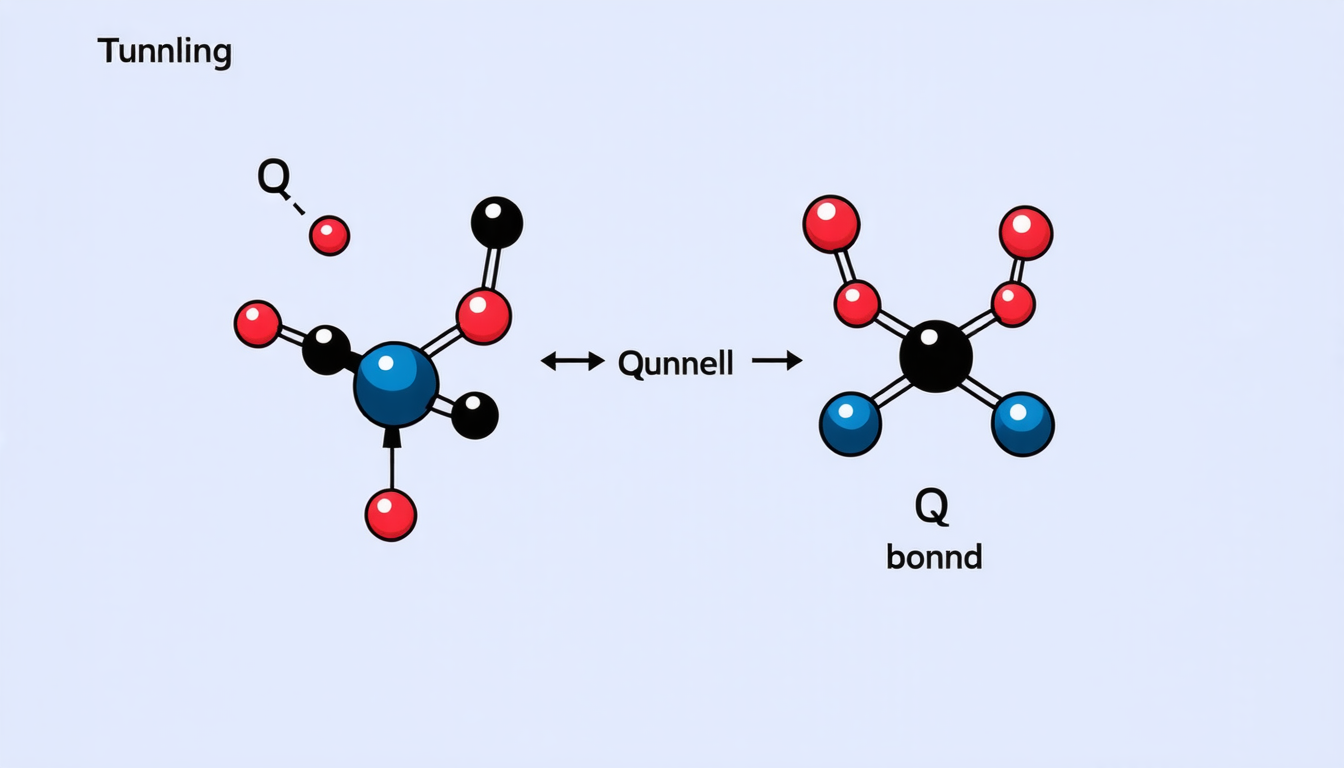
One of the key benefits of the NEO-MRCI method is its ability to account for the effects of quantum tunneling, which allows nuclei to pass through energy barriers in certain situations. This phenomenon is particularly important in chemical reactions involving hydrogen, as it can significantly affect the outcome of the reaction.
The NEO-MRCI method also has implications for our understanding of chemical reactions on a larger scale. For example, it could be used to study the behavior of molecules in complex systems, such as biological cells or industrial catalysts.
While this new approach is still in its early stages, it has the potential to greatly improve our understanding of chemical reactions and how they occur. As scientists continue to develop and refine the NEO-MRCI method, we can expect to see major advances in fields such as materials science, biotechnology, and environmental science.
The development of the NEO-MRCI method is a testament to the power of interdisciplinary research, bringing together experts from chemistry, physics, and mathematics to tackle some of the most fundamental questions in science. As scientists continue to push the boundaries of what we know about chemical reactions, we can expect to see even more exciting breakthroughs in the years to come.
Cite this article: “Unlocking Quantum Secrets: A Breakthrough in Predicting Proton Dynamics in Molecules”, The Science Archive, 2025.
Chemical Reactions, Quantum Mechanics, Nuclear-Electronic Orbital Multireference Configuration Interaction, Neo-Mrci, Chemical Bonds, Hydrogen Compounds, Fluorine Compounds, Quantum Tunneling, Materials Science, Biotechnology.





