

Tuesday 08 April 2025
Scientists have long been fascinated by the mysterious glass transition, a phase change that occurs when certain materials, like polymers, suddenly become rigid and non-flowing. But despite decades of research, the underlying mechanisms behind this phenomenon have remained elusive.
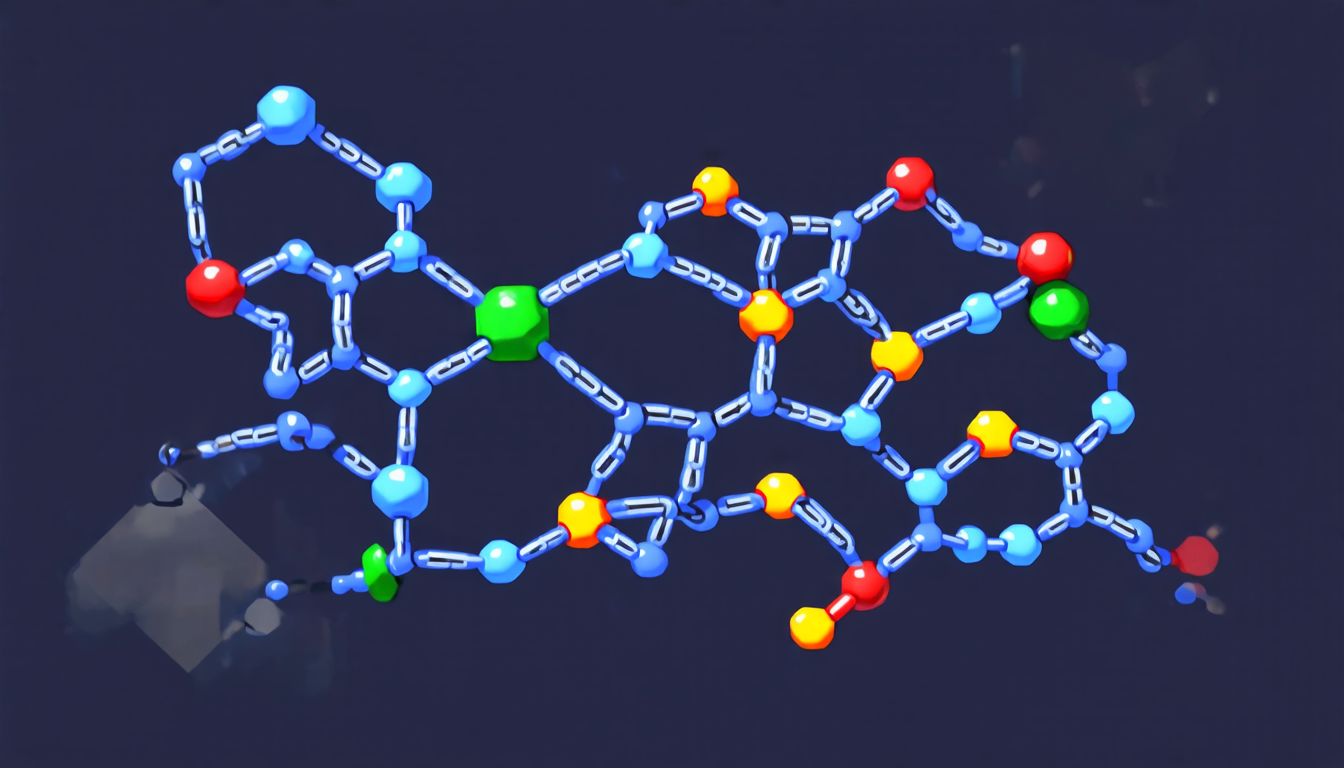
Now, a team of researchers has made significant strides in understanding the glass transition by developing a new theoretical framework called Mean Area (MA) theory. By analyzing the behavior of polymer chains at the molecular level, the scientists were able to identify a critical parameter that determines whether a material will undergo a glass transition or not.
The MA theory is built upon the concept of non-equilibrium thermodynamics, which studies how systems respond to changes in their environment when they’re not in equilibrium. In other words, it’s like trying to understand how your car behaves when you accelerate from 0 to 60 mph – it’s not just about the engine’s performance at a steady speed.
The researchers found that the critical parameter is linked to the degree of non-equilibrium entropy, which measures how much disorder exists in the system. By analyzing the relationships between this entropy and other physical properties, such as temperature and pressure, they were able to derive a mathematical equation that accurately predicts when a material will undergo a glass transition.
The implications are significant. For one, it could lead to the development of new materials with tailored glass transition temperatures, allowing for more efficient energy storage or advanced technologies like smart windows that can change their transparency on demand.
But perhaps even more exciting is the potential to apply this framework to other fields beyond materials science. The researchers believe that the MA theory could be used to understand and predict phase transitions in complex systems, such as biological networks or social networks.
The team’s findings have been published in a recent paper, which provides a detailed mathematical treatment of the Mean Area theory. While it may seem like dry academic fare, the significance of this work cannot be overstated – it represents a major advance in our understanding of the fundamental physics that governs phase transitions.
In the past, scientists have struggled to develop accurate models for glass transition due to its complex and non-linear nature. But by combining cutting-edge mathematical techniques with deep physical insights, the researchers have cracked the code.
The next step is to experimentally test the MA theory and see how well it holds up in real-world materials. If successful, this could pave the way for the development of new technologies that take advantage of the unique properties of glassy materials.
Cite this article: “Cracking the Code of Glass Transition: A Breakthrough in Understanding Non-Equilibrium Phase Transitions”, The Science Archive, 2025.
Glass Transition, Mean Area Theory, Non-Equilibrium Thermodynamics, Polymer Chains, Entropy, Phase Transitions, Materials Science, Complex Systems, Biological Networks, Social Networks.





