

Tuesday 08 April 2025
The Amazonian wilderness is a vast and unforgiving environment, where communication networks are notoriously unreliable. But what if we could find a way to transmit educational resources to remote communities in this region, using nothing but mobile devices and opportunistic networking? That’s exactly what a team of researchers has achieved in a new study.
The problem with traditional cellular networks is that they rely on fixed infrastructure, which can be expensive and time-consuming to deploy in areas where there are no roads or buildings. In the Amazon, this means that many communities are left without access to essential services like education and healthcare. But what if we could use mobile devices to create our own networks, relying on chance encounters between nodes to transmit data?
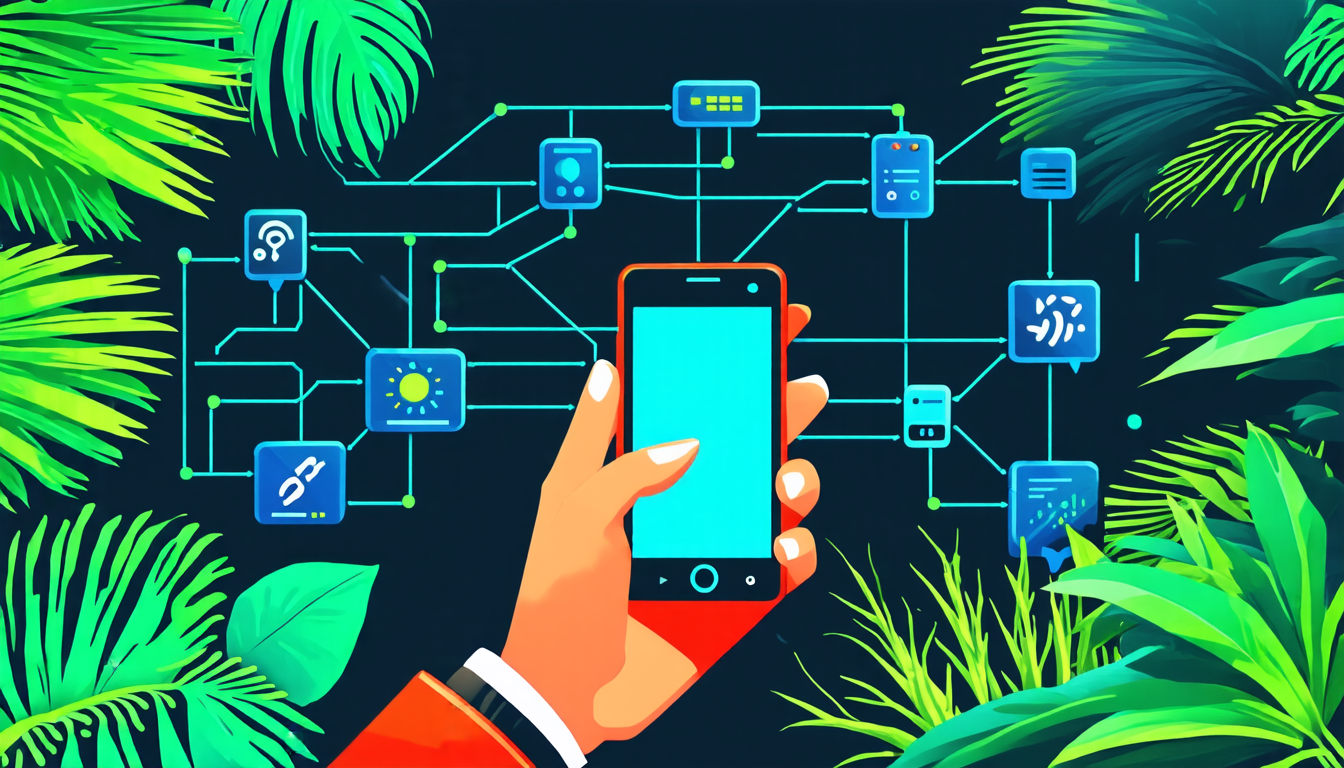
That’s exactly what the researchers did. They created a system called AmazonNetLink, which uses Bluetooth-enabled devices to create an opportunistic network in the Amazonian wilderness. The devices are designed to move around and encounter each other randomly, forming a mesh network that can be used to transmit data.
The team tested their system by transmitting educational resources between nodes in a simulated environment, and found that it was able to deliver files at speeds of up to 100 kilobits per second – not bad for a network made up of nothing but mobile devices. But what’s really impressive is that the system was able to adapt to changing conditions, such as node failures or changes in network topology.
The implications of this technology are huge. Imagine being able to access educational resources and healthcare services from anywhere in the Amazonian wilderness, without having to rely on expensive infrastructure. It could be a game-changer for communities that have been left behind by traditional networks.
Of course, there are still many challenges to overcome before this technology can be widely adopted. For one thing, the devices need to be able to withstand the harsh conditions of the Amazonian environment – heat, humidity, and insects can all take their toll on electronics. And the system needs to be designed with security in mind, to prevent unauthorized access to sensitive information.
But if these challenges can be overcome, the potential benefits are enormous. AmazonNetLink could be just the thing that brings education and healthcare services to remote communities that have been left behind by traditional networks. And who knows – it might even pave the way for new forms of community development and entrepreneurship in the Amazonian wilderness.
Cite this article: “Unlocking Education in the Amazon: A Novel Delay-Tolerant Network Solution for Remote Communities”, The Science Archive, 2025.
Amazon, Networking, Mobile Devices, Opportunistic Networks, Bluetooth, Education, Healthcare, Remote Communities, Amazonian Wilderness, Iot.





