
Tuesday 08 April 2025
Wearable devices have revolutionized the way we track our daily activities, from steps taken to calories burned. But these gadgets often rely on inaccurate and power-hungry sensors that can be bulky and uncomfortable to wear. A new approach is needed to create more efficient and accurate wearable technology.
Enter human body capacitance sensing, a technique that uses the electrical properties of the human body to detect movement and activity. This method has been around for decades, but recent advances have made it possible to miniaturize the sensors and integrate them into wearable devices.
The idea is simple: when we move our bodies, we create small changes in the electrical fields surrounding us. By detecting these changes using a tiny sensor, scientists can infer what activities we are performing. This approach has several advantages over traditional methods, which often rely on accelerometers or gyroscopes that require more power and can be less accurate.
One of the key benefits of human body capacitance sensing is its ability to detect subtle movements that other sensors might miss. For example, it can distinguish between different types of exercises, such as running versus jumping, based on the unique patterns of electrical activity generated by each movement.
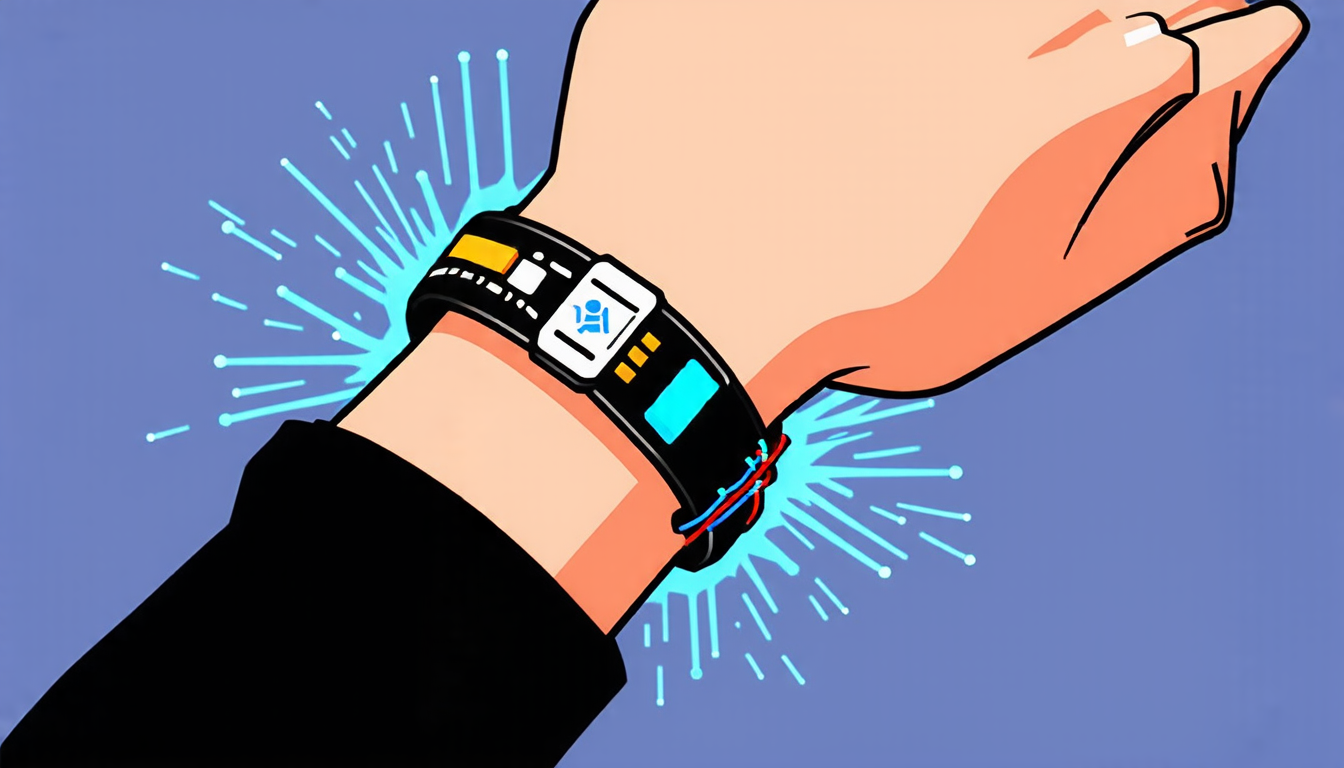
In a recent study, researchers tested this technology using a small wrist-worn device that detected changes in the electrical fields around the wearer’s body. They found that the device was able to accurately recognize a range of activities, including walking, jogging, and even specific exercises like push-ups and squats.
But human body capacitance sensing has another trick up its sleeve: it can also detect social interactions and proximity between people. By monitoring changes in the electrical fields around two or more people, scientists can infer whether they are standing close to each other, facing each other, or even engaged in physical contact.
This technology has a range of potential applications, from tracking social distancing during pandemics to monitoring the behavior of individuals with autism or other developmental disorders. It could also be used to create more intuitive and natural interfaces for devices like smartphones or smart glasses.
Despite its promise, human body capacitance sensing is still a relatively new field, and there are many challenges to overcome before it becomes widely adopted. For one thing, the sensors need to be miniaturized further to make them wearable and comfortable. They also need to be more accurate and reliable, especially in noisy environments or when worn by people with varying levels of mobility.
But the potential rewards are worth the effort.
Cite this article: “Unlocking Wearable Motion Sensing with Human Body Capacitance”, The Science Archive, 2025.
Wearable Technology, Human Body Capacitance Sensing, Electrical Fields, Movement Detection, Activity Tracking, Sensors, Miniaturization, Accuracy, Reliability, Social Interactions, Proximity Monitoring