

Tuesday 08 April 2025
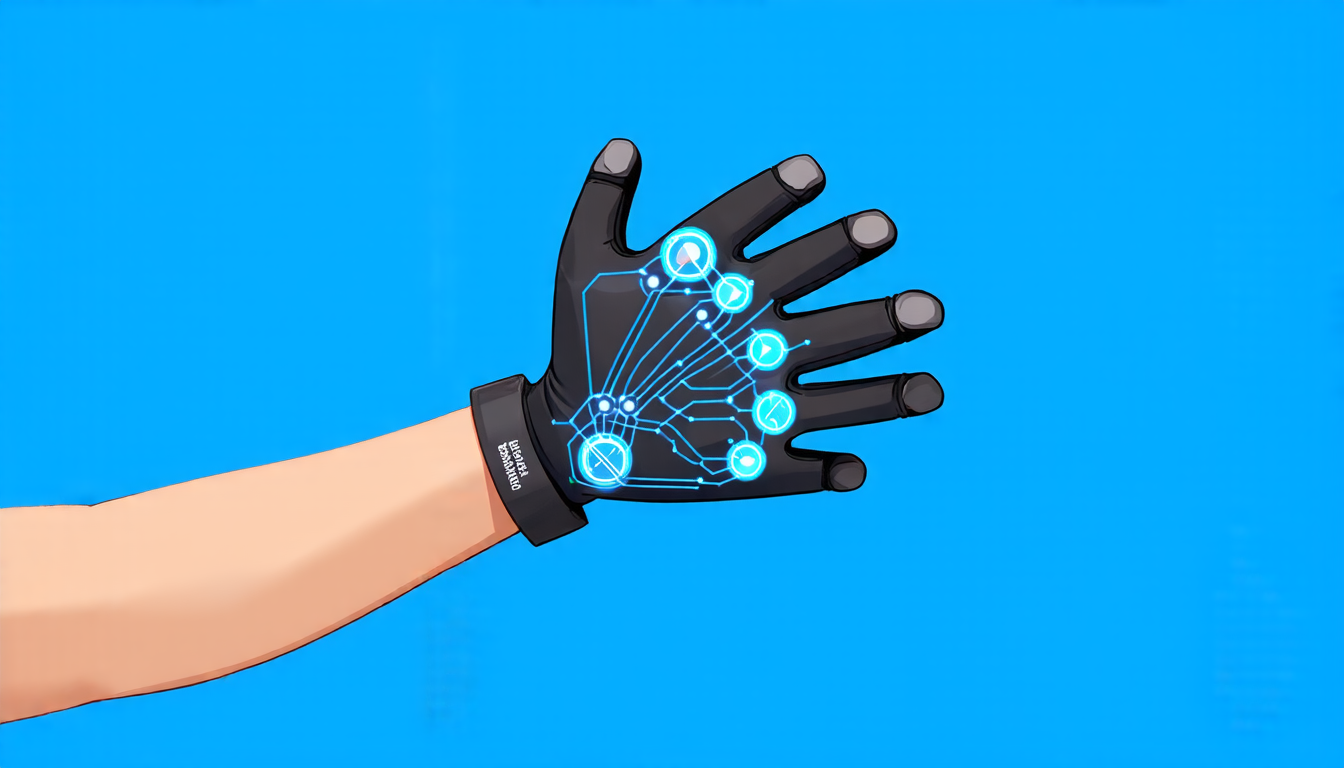
Researchers have developed a novel approach to designing tactile sensing gloves that can detect subtle changes in hand movements, opening up new possibilities for human-computer interaction and prosthetic limb control.
The team’s innovative method relies on flexible printed circuit boards (FPCBs) to create personalized gloves that can be manufactured quickly and affordably. By leveraging accessible board house manufacturing, the researchers have made it possible to produce customized gloves with high sensitivity and precision.
One of the key advantages of this approach is its ability to detect subtle changes in hand movements, allowing for more nuanced control over devices and prosthetic limbs. This could have significant implications for individuals with disabilities who rely on assistive technology to interact with their environment.
The researchers used a combination of machine learning algorithms and computer vision techniques to develop a pipeline for automatically designing personalized FPCB-based tactile sensing gloves. This allowed them to quickly generate manufacturing files for customized gloves, which can be ordered from commercial board houses.
In testing, the gloves demonstrated impressive sensitivity and consistency, with users reporting improved comfort and reduced effort when performing tasks such as typing or grasping objects. The results suggest that these gloves could have a range of practical applications in fields such as medicine, robotics, and gaming.
One potential challenge for widespread adoption is the mechanical robustness of the copper electrodes used in the FPCBs. However, further research has shown that increasing the trace width can significantly improve durability, making it possible to create more resilient gloves.
The development of these tactile sensing gloves represents a significant step forward in the field of human-computer interaction and prosthetic limb control. By enabling more precise and nuanced control over devices, this technology could have far-reaching implications for individuals with disabilities and others who rely on assistive technology to interact with their environment.
The researchers’ approach also highlights the potential benefits of using flexible printed circuit boards in wearable device design. FPCBs offer a unique combination of flexibility, durability, and affordability, making them an attractive option for developers looking to create innovative and practical wearable devices.
As the field continues to evolve, it will be exciting to see how these tactile sensing gloves are used to improve human-computer interaction and prosthetic limb control. With their potential applications ranging from gaming and medicine to robotics and beyond, these gloves have the potential to make a significant impact on our daily lives.
Cite this article: “Soft Robotics: The Future of Tactile Sensing in Wearable Technology?”, The Science Archive, 2025.
Tactile Sensing, Wearable Technology, Human-Computer Interaction, Prosthetic Limbs, Flexible Printed Circuit Boards, Machine Learning Algorithms, Computer Vision Techniques, Assistive Technology, Disability, Robotics.





