
Tuesday 08 April 2025
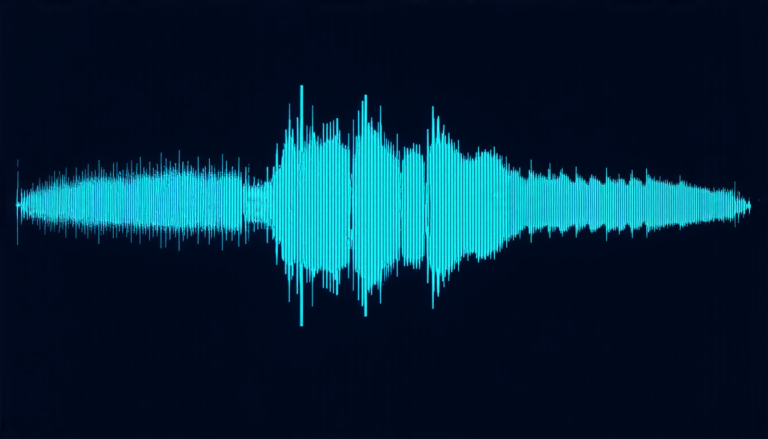
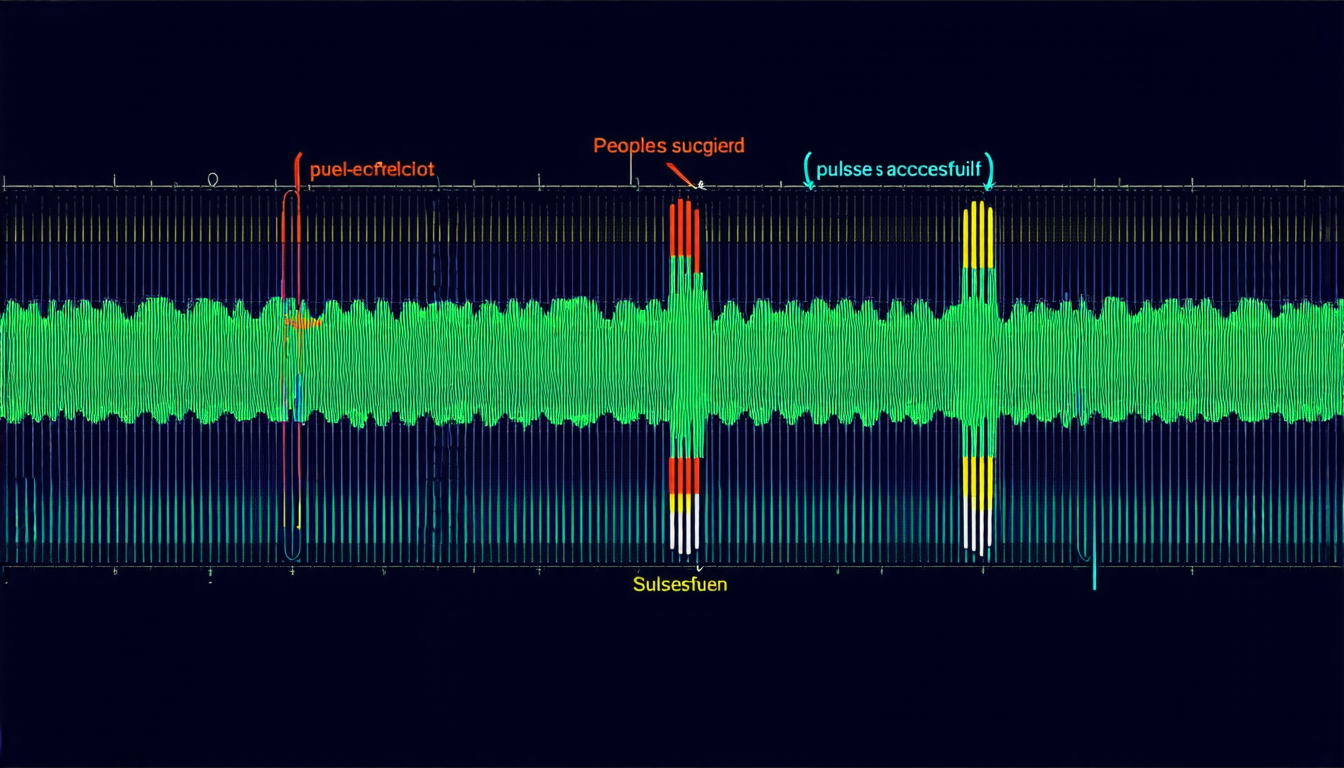
The quest for a reliable way to detect and identify individual pulses in noisy signals has been ongoing for decades, with applications in fields such as nuclear spectroscopy, flow cytometry, and seismic signal processing. In a recent paper, researchers tackled this challenge by developing new algorithms that can effectively handle the complexities of pulse pile-up, where multiple pulses overlap and become indistinguishable from one another.
The problem arises when trying to analyze signals that are composed of individual pulses with varying amplitudes and arrival times. Noise and interference can distort these signals, making it difficult or impossible to accurately identify each pulse. This is particularly problematic in applications such as radiation detection, where the ability to distinguish between different types of radiation is crucial.
The researchers’ approach involved developing a new statistical framework that takes into account the distribution of pulse amplitudes and arrival times. They used this framework to design algorithms that can efficiently identify individual pulses in noisy signals, even when they are heavily overlapped or distorted by noise.
One key innovation was the development of a new method for estimating the amplitude distribution of the pulses, which is critical for accurately identifying each pulse. This method involves using the observed signal to estimate the distribution of pulse amplitudes, and then using this distribution to inform the pulse identification process.
The researchers also developed a novel approach to handling pile-up, which involves identifying clusters of pulses that are likely to be related to one another. By grouping these pulses together, they can reduce the impact of noise and interference, making it easier to accurately identify each individual pulse.
To test their algorithms, the researchers used simulated signals that mimicked real-world scenarios, such as radiation detection and seismic signal processing. They found that their methods were able to accurately identify individual pulses even in the presence of significant noise and interference.
These findings have important implications for a range of fields, from nuclear spectroscopy to biomedical imaging. By developing more effective algorithms for pulse identification, researchers can improve the accuracy and reliability of their experiments, leading to new insights and discoveries.
The paper’s authors also highlighted the potential for future work in this area, including the development of more advanced statistical models and the exploration of new applications for these algorithms. As research in this field continues to evolve, we can expect to see even more innovative solutions to the challenges of pulse identification and processing.
Cite this article: “Unraveling the Complexity of Pulse Processing: A Review of Challenges and Opportunities in Nuclear Spectroscopy”, The Science Archive, 2025.
Pulse Identification, Noise Reduction, Signal Processing, Statistical Framework, Amplitude Distribution, Pulse Pile-Up, Radiation Detection, Seismic Signal Processing, Biomedical Imaging, Nuclear Spectroscopy
Reference: Jonathan H. Manton, “Pulse Processing — Overview and Challenges” (2025).