

Tuesday 08 April 2025
Artificial Intelligence has long been touted as a revolutionary technology that will change the way we live and work. But for it to truly become an integral part of our daily lives, it needs to be able to understand and interact with complex systems like workflows. A team of researchers has made significant progress in this area by developing a new framework called Performant Agentic Framework (PAF).
Workflows are the series of steps that we follow to achieve a specific goal, such as booking a flight or ordering groceries online. They can be simple or complex, and they require AI systems to make decisions based on the information available at each step. The problem is that traditional AI systems are not designed to handle these types of workflows, which can lead to errors and inefficiencies.
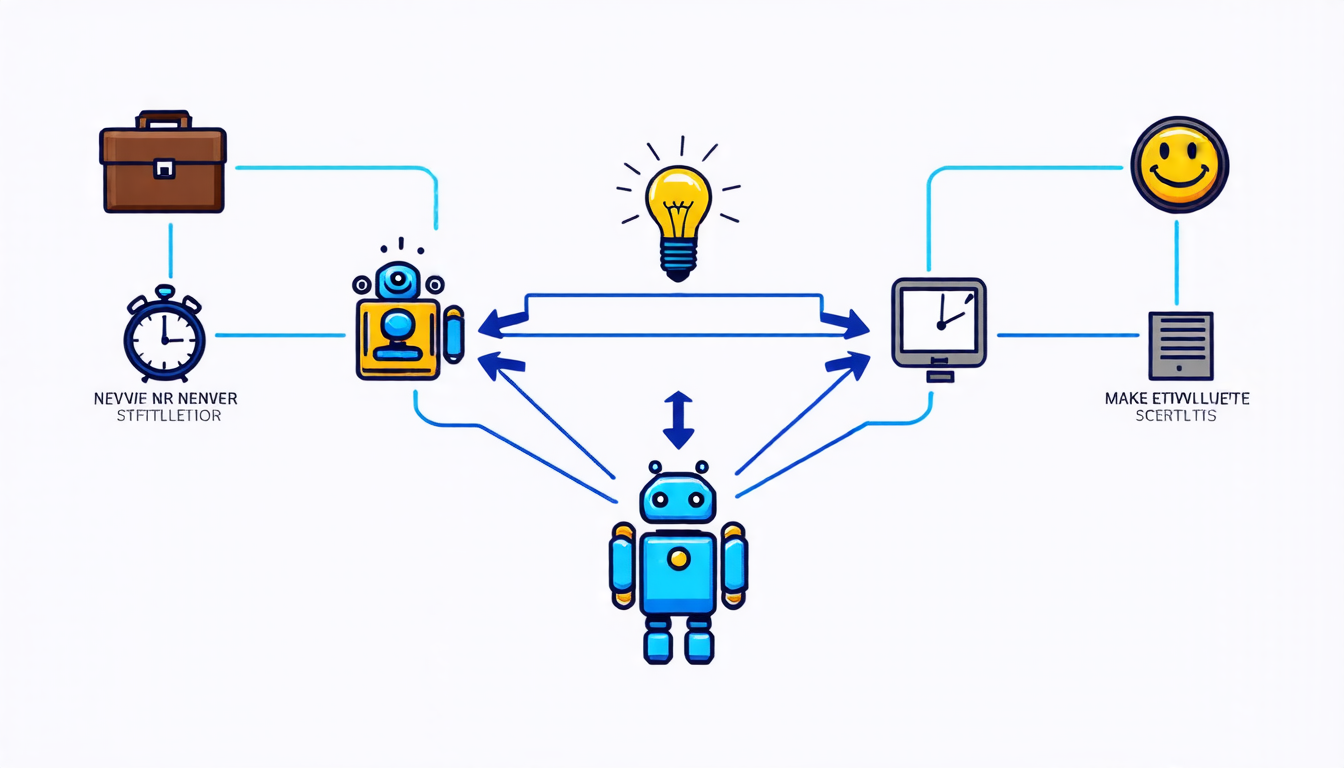
PAF changes this by introducing a new way of thinking about workflow execution. Instead of using a single AI system to control the entire workflow, PAF uses multiple systems working together in a coordinated fashion. Each system is responsible for making decisions at specific points in the workflow, and they communicate with each other through a shared database.
One of the key innovations of PAF is its use of a technique called vector-based scoring. This allows the AI systems to evaluate the relevance of different nodes (or steps) in the workflow and determine which one to move on to next. This approach reduces the need for extensive planning phases, which can be time-consuming and error-prone.
The researchers tested PAF using a simulated dataset that mimicked real-world workflows. They compared it to two other approaches: a naive method that treated the entire conversation as a single prompt, and a basic AI system that used a step-by-step logic tree to navigate the workflow. The results showed that PAF significantly outperformed both of these methods in terms of alignment with the desired outcome.
PAF also has the potential to be integrated into a wide range of applications, from customer service chatbots to autonomous vehicles. By allowing AI systems to work together seamlessly, it could revolutionize the way we interact with technology and make our lives easier and more efficient.
The researchers are excited about the possibilities that PAF presents, but they also acknowledge that there is still much work to be done. They plan to continue refining the framework and exploring its potential applications in various fields.
In short, PAF represents a significant step forward in the development of AI systems that can understand and interact with complex workflows.
Cite this article: “Unlocking Efficient Conversational AI with Performant Agentic Frameworks”, The Science Archive, 2025.
Artificial Intelligence, Workflow Management, Performant Agentic Framework, Vector-Based Scoring, Ai Systems, Decision-Making, Automation, Efficiency, Integration, Collaboration
Reference: Alex Casella, Wayne Wang, “Performant LLM Agentic Framework for Conversational AI” (2025).





