

Tuesday 08 April 2025
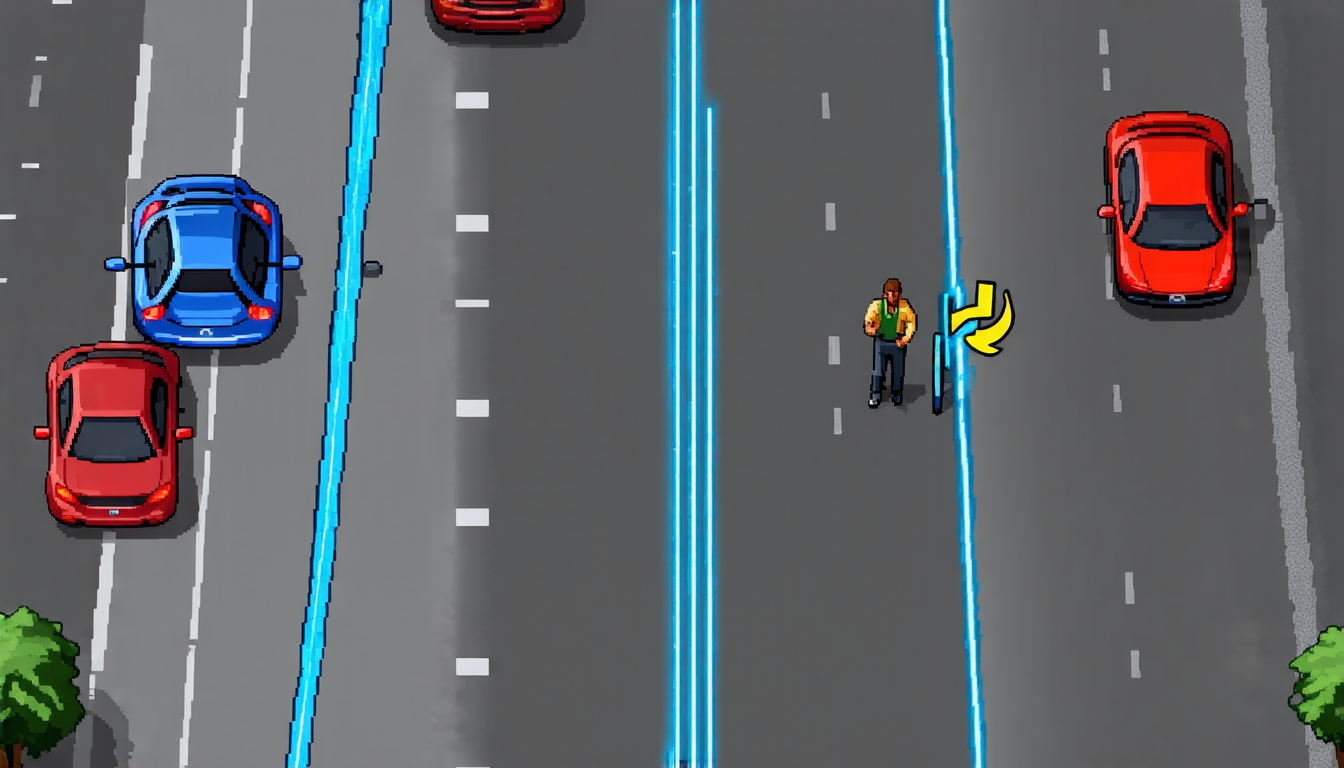
As we navigate our way through increasingly congested roads, a team of researchers has been working on developing a more intelligent and adaptive system for controlling merging traffic flow. The goal is to create a safer and more efficient driving experience, reducing the likelihood of accidents and minimizing delays.
The problem lies in the complex behavior of human drivers, who often fail to anticipate and respond correctly to changing circumstances on the road. This can lead to a domino effect, as one driver’s mistake triggers a cascade of errors among other vehicles. To combat this, researchers have been exploring ways to incorporate artificial intelligence into traffic control systems.
One promising approach is the development of a perception-based fuzzy controller, which uses data from actual drivers to create a more nuanced and adaptive system for predicting and responding to merging traffic flow. By incorporating human driving behaviors into the algorithm, the controller can better anticipate and prepare for potential hazards, reducing the risk of accidents and improving overall traffic flow.
The researchers have been testing their system using simulated trials and real-world data from actual drivers. The results are promising, with the perception-based fuzzy controller showing improved performance compared to traditional methods. Not only does it reduce the likelihood of accidents, but it also helps to minimize delays and optimize traffic flow, making for a more efficient and enjoyable driving experience.
The implications of this research extend beyond just improving traffic control systems. As autonomous vehicles become increasingly prevalent, the need for more advanced and adaptive AI systems will only continue to grow. By developing more sophisticated algorithms that can better understand and respond to human behavior, we can create safer and more effective autonomous driving systems.
In addition, the researchers’ work has potential applications beyond transportation, such as in healthcare or manufacturing settings where complex systems require real-time monitoring and control. The ability to incorporate human behaviors into AI algorithms could lead to breakthroughs in fields such as robotics or artificial intelligence itself.
The future of traffic control is likely to be shaped by the intersection of human behavior and artificial intelligence. As we continue to develop more sophisticated AI systems, it’s clear that incorporating human insights will play a critical role in creating safer, more efficient, and more effective transportation networks.
Cite this article: “Unlocking Safer and More Efficient Merging Behavior in Autonomous Vehicles Using Fuzzy Logic Control”, The Science Archive, 2025.
Traffic Control, Artificial Intelligence, Human Behavior, Merging Traffic Flow, Fuzzy Controller, Simulation, Real-World Data, Autonomous Vehicles, Ai Systems, Robotics





