

Tuesday 08 April 2025
The quest for autonomous aerial capture has long been a fascinating area of research, with many scientists and engineers working tirelessly to develop innovative solutions. Recently, a team of researchers from Westlake University has made significant strides in this field by proposing a novel approach that combines time-optimal planning (TOP) and reinforcement learning (RL) methods.
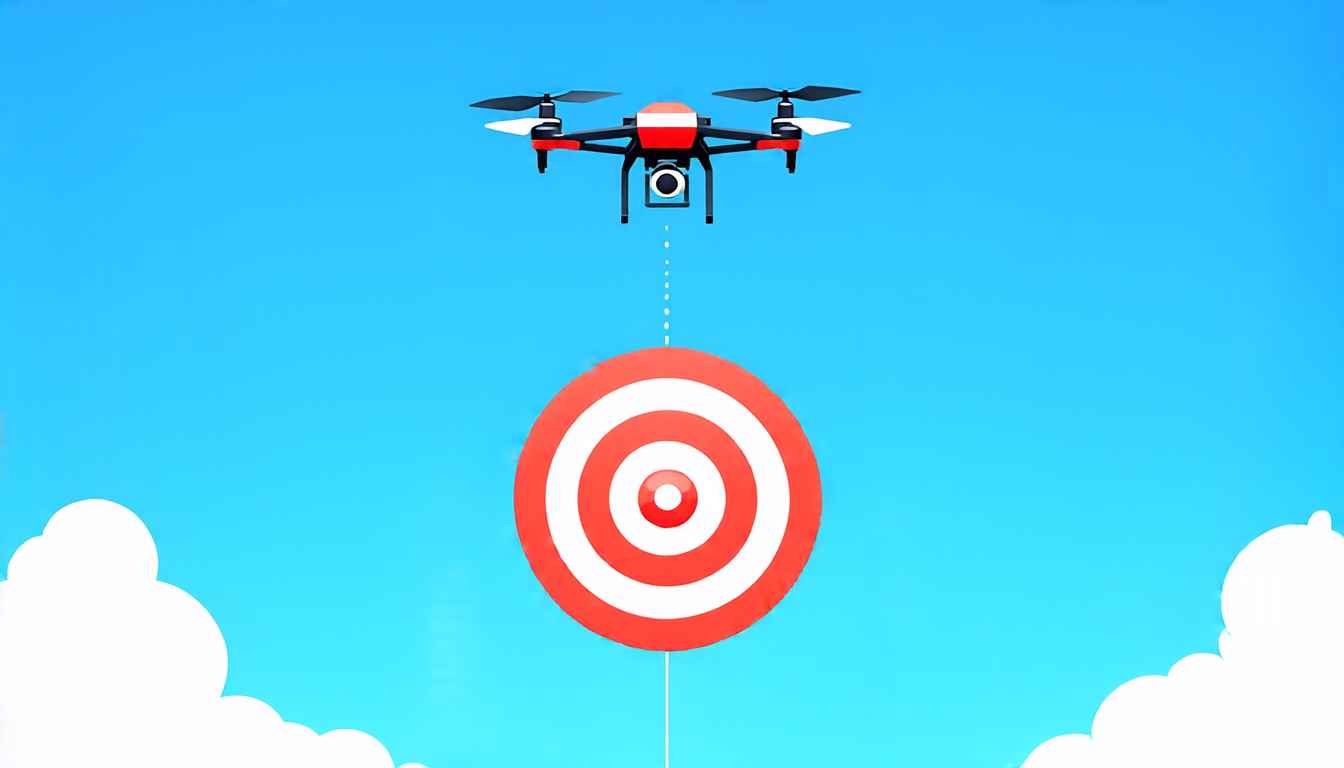
The researchers’ goal was to design a capture system capable of grasping high-maneuverability targets, such as micro aerial vehicles (MAVs). To achieve this, they developed a custom-designed capture MAV equipped with a launching device, allowing it to launch a rubber ball towards the target. The system’s performance was tested through simulations and real-world experiments.
One of the key innovations in this approach is the use of TOP, which enables the capture MAV to optimize its trajectory for time-optimal capture. This involves calculating the shortest path between the starting position and the target, while also taking into account the ball’s dynamics and the initial state of the system. The results showed that TOP can successfully capture the target in a shorter amount of time compared to traditional methods.
However, TOP has limitations, particularly when dealing with uncertain or changing environments. To address this, the researchers incorporated RL into their approach. This allows the capture MAV to learn from its experiences and adapt to new situations, making it more robust and reliable.
The team conducted extensive simulations to evaluate the performance of their system, testing various scenarios such as stationary and moving targets. The results demonstrated that both TOP and RL methods can successfully capture the target, with each approach having its strengths and weaknesses. TOP excelled in stationary scenarios, while RL performed better in dynamic environments.
To further validate their findings, the researchers conducted real-world experiments using a custom-built capture MAV and a DJI Nio drone as the target. The results showed that the RL-based system was capable of capturing the target even in unstable states, highlighting its adaptability and robustness.
The implications of this research are significant, particularly in the field of autonomous aerial capture. By combining TOP and RL methods, scientists can develop more effective and reliable systems for grasping high-maneuverability targets. This technology has potential applications in various fields, such as surveillance, search and rescue, and even defense.
In addition to its practical applications, this research also sheds light on the importance of interdisciplinary collaboration between experts from different fields.
Cite this article: “Autonomous Aerial Capture of Agile Targets: A Time-Optimal Planning and Reinforcement Learning Approach”, The Science Archive, 2025.
Autonomous Aerial Capture, Time-Optimal Planning, Reinforcement Learning, Micro Aerial Vehicles, Mavs, Robotic Grasping, Target Tracking, Trajectory Optimization, Machine Learning, Drone Technology





