

Tuesday 08 April 2025
The field of graph neural networks has been making rapid strides in recent years, and a new approach is shaking things up. Researchers have developed a framework that reformulates node classification as a subgraph classification task, allowing for more accurate predictions on heterophilic graphs.
For those unfamiliar, graph neural networks (GNNs) are designed to process data represented as nodes and edges. These networks typically rely on message-passing mechanisms between neighboring nodes to learn node representations. However, when dealing with heterophilic graphs – where different types of nodes have varying relationships – this approach can lead to subpar performance.
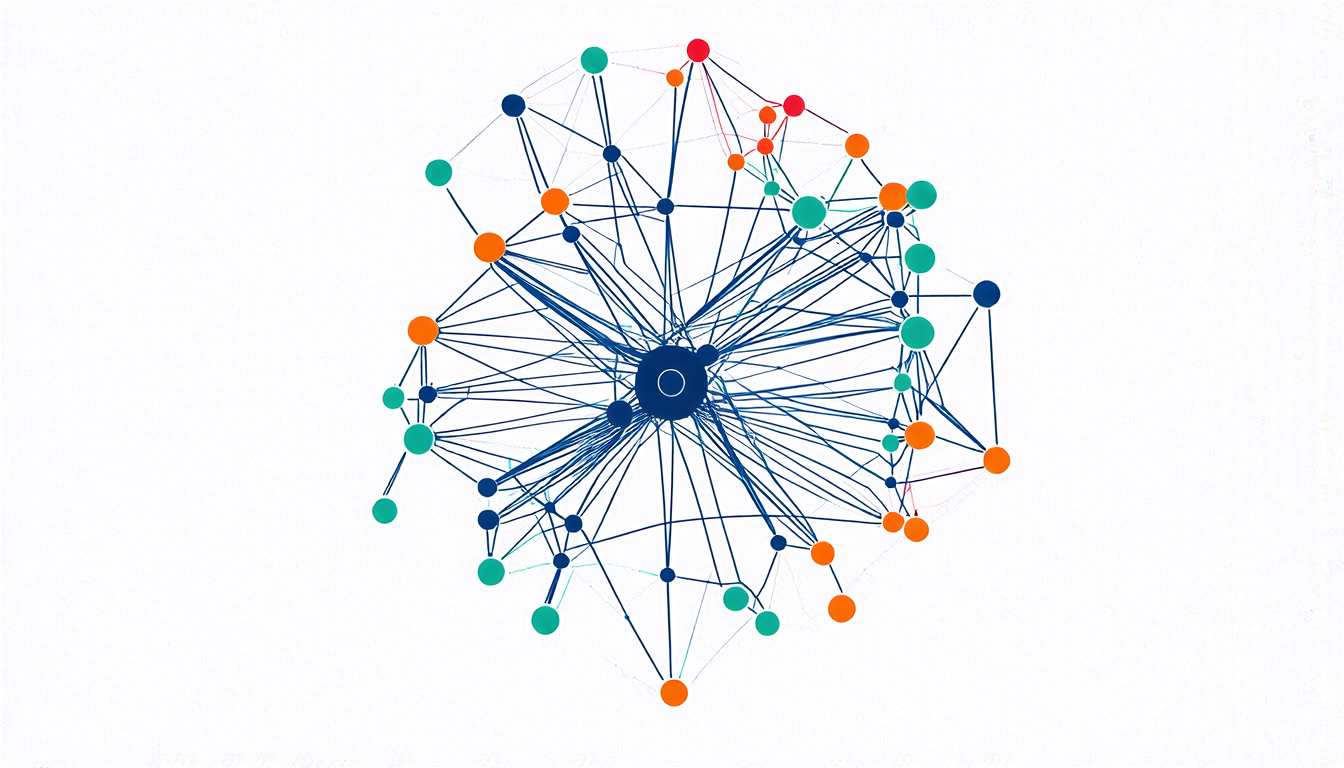
The new framework, dubbed SubGND, tackles this issue by transforming the original graph into a set of induced subgraphs. Each subgraph represents a local neighborhood around a central node, effectively reducing the complexity of the graph while preserving its essential characteristics. By focusing on these subgraphs rather than the entire graph, SubGND can better capture the unique relationships between different types of nodes.
One key innovation in SubGND is the use of differentiated zero-padding (DZP), which helps resolve label conflicts that arise when multiple nodes have identical neighboring subgraphs but require distinct labels. This issue is particularly troublesome on heterophilic graphs, where nodes with similar neighbors may still belong to different classes. DZP ensures that each node’s features are weighted according to their relevance to the task at hand, effectively mitigating this problem.
Another important component of SubGND is an adaptive feature scaling mechanism. As different datasets exhibit varying dependencies between node features and labels, this mechanism dynamically adjusts the importance of each feature group based on dataset-specific characteristics. This allows SubGND to learn more effective representations that are tailored to the specific task at hand.
Experiments conducted by the researchers demonstrate the efficacy of SubGND in handling heterophilic graphs. On six benchmark datasets, SubGND outperformed state-of-the-art methods, achieving comparable or even better performance on homophilic graphs while excelling on heterophilic ones.
While SubGND is not without its limitations – it does introduce additional computational overhead during preprocessing – its potential benefits are significant. As graph neural networks continue to play an increasingly important role in a wide range of applications, from natural language processing to recommender systems, the ability to accurately classify nodes on heterogeneous graphs will become ever more critical.
In the future, researchers may explore ways to further optimize SubGND’s performance or develop new techniques that build upon its innovations.
Cite this article: “Reimagining Node Classification: A Novel Framework for Heterophilic Graphs”, The Science Archive, 2025.
Graph Neural Networks, Node Classification, Subgraph Classification, Heterophilic Graphs, Message-Passing Mechanisms, Node Representations, Differentiated Zero-Padding, Adaptive Feature Scaling, Graph Preprocessing, Computational Overhead.





